
Law Minister Stresses Difficulty in Renouncing or Obtaining Indonesian Citizenship
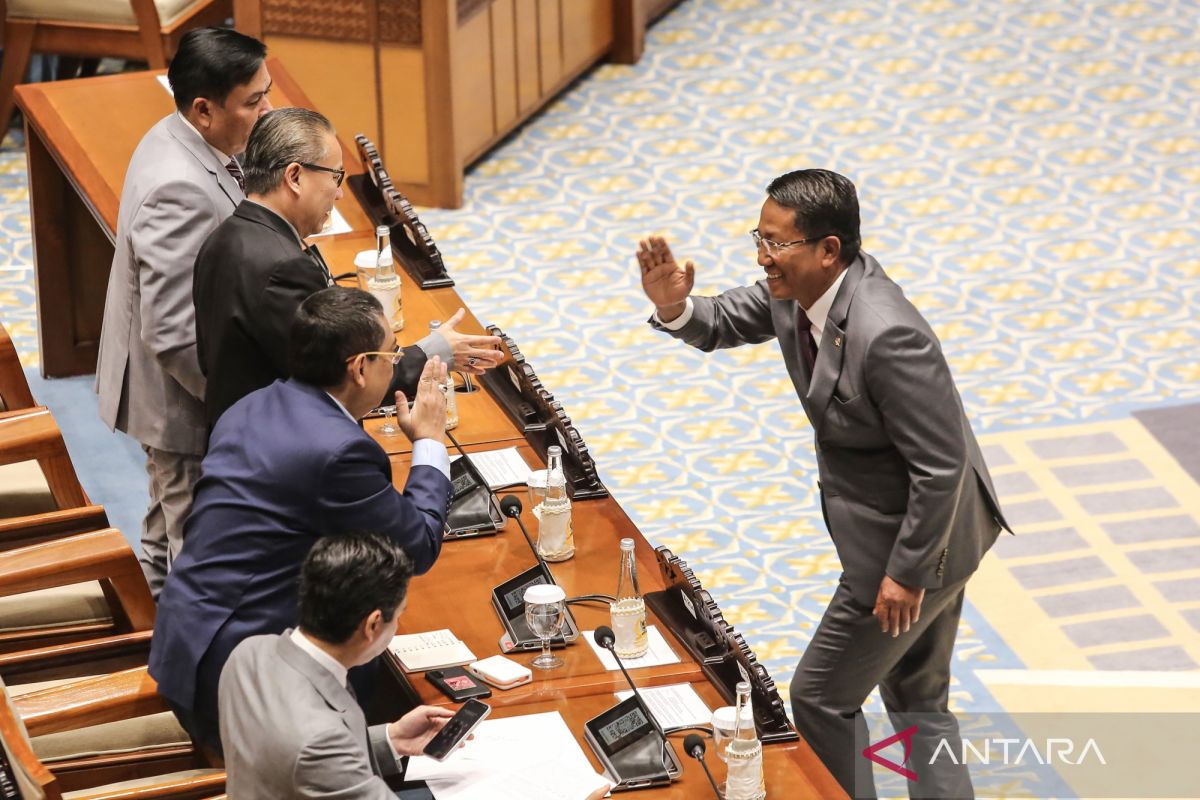
Jakarta (ANTARA) - Minister of Law Supratman Andi Agtas has affirmed that the process of renouncing or acquiring Indonesian citizenship (WNI) is not an easy one.
Speaking at the DPR building in Jakarta on Tuesday, Supratman explained that to obtain Indonesian citizenship, foreign nationals (WNA) must meet various requirements, including those concerning length of residence.
“For those who wish to become citizens, they must reside in Indonesia for five consecutive years or ten non-consecutive years. They must certainly also have financial capability,” he said.
Regarding applications to renounce Indonesian citizenship, he said the government, through 15 ministries and agencies, conducts checks on the individual applicant. This is to ensure the applicant has fulfilled all obligations during their time as an Indonesian citizen.
“We must ensure that a person seeking to renounce their citizenship has no outstanding tax arrears and is not involved in any ongoing criminal cases. This must be verified by 14 to 15 ministries and agencies,” said Supratman.
According to him, applications by foreign nationals to become Indonesian citizens currently number around 1,000 to 1,500 people, while requests to renounce Indonesian citizenship stand at around 300.
“And even those are not necessarily all approved,” he said.
The Law Minister made the statement in response to public concern over the increased fees for renouncing Indonesian citizenship and for naturalisation, as regulated under Government Regulation (PP) Number 30 of 2026.
The regulation stipulates that a change of citizenship from foreign national to Indonesian citizen incurs a fee of Rp75 million, while naturalisation through marriage costs Rp25 million. Meanwhile, an application for a decree on the loss of citizenship at one’s own request costs Rp5 million.
The Law Minister urged the public not to worry about the adjustment, as it went through extensive deliberation. He also noted that the fees in question do not directly affect the general public.