
Law Minister: President Wants Asset Forfeiture Bill Discussed Soon, Government Awaits DPR's Move
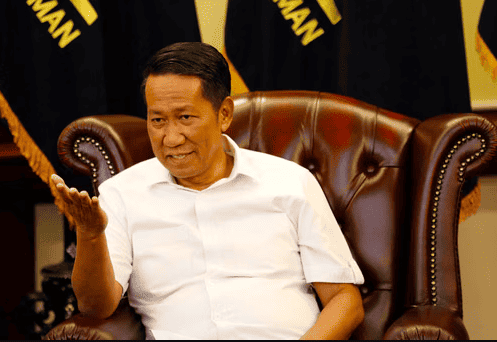
The government has affirmed its commitment to accelerating the discussion of the Draft Law (RUU) on Asset Forfeiture. However, as the regulation is a proposal initiated by the Indonesian House of Representatives (DPR RI), the government is currently still waiting for the process underway in parliament. Law Minister Supratman Andi Agtas said President Prabowo Subianto wants the Asset Forfeiture Bill to be discussed and completed soon. Nevertheless, the government cannot take over the process because the authority for discussion currently lies with the DPR. “The government’s principle is that the President wants it to be faster, but because the initiative proposal is already in the DPR, we are waiting,” Supratman said at Graha Pengayoman, Jakarta, Friday (19/6). He stressed that the discussion process is currently still within the DPR as the proposer of the regulation. “This is a DPR initiative proposal and the process is now taking place there,” he said. Meanwhile, during a public hearing at the parliament complex, member of Commission III of the DPR RI, Rikwanto, highlighted the importance of regulating the mechanism for managing assets resulting from state forfeiture in the bill. According to him, a special body responsible for managing assets needs to be established so that their value does not plummet after being seized by the state. “Do not let an asset worth around Rp100 million when seized and becoming state property, over time drop to Rp1 million due to depreciation and other factors,” Rikwanto said. He explained that the existence of a special institution is crucial to ensure that assets which have become state property retain optimal economic value. With professional management, assets resulting from criminal acts can provide maximum benefits for the state. According to Rikwanto, the management body could be placed under the Attorney General’s Office, stand independently, or take another institutional form to be agreed upon during the bill’s discussion. “The regulation concerning asset management is one of the important aspects that must be discussed in depth in the Asset Forfeiture Bill,” he said. Rikwanto added that assets potentially subject to forfeiture are not only vehicles, houses, or land, but can also include high-value assets such as plantations and mines. Therefore, the management mechanism must be designed professionally so as not to cause losses to the state. On the other hand, he reminded that the implementation of asset forfeiture rules must still adhere to the principles of the rule of law and respect the constitutional rights of citizens. According to him, the DPR’s Expertise Body has formulated the nomenclature of the regulation as the Bill on Asset Forfeiture Related to Criminal Acts, which emphasises that every forfeiture action must have a clear criminal act basis. “The law must not be used as a repressive instrument. The entire law enforcement process must continue to respect the rights of related parties, including third parties with legal interests such as inheritance rights,” he asserted.