
Law Minister explains basis for citizenship service tariff adjustments
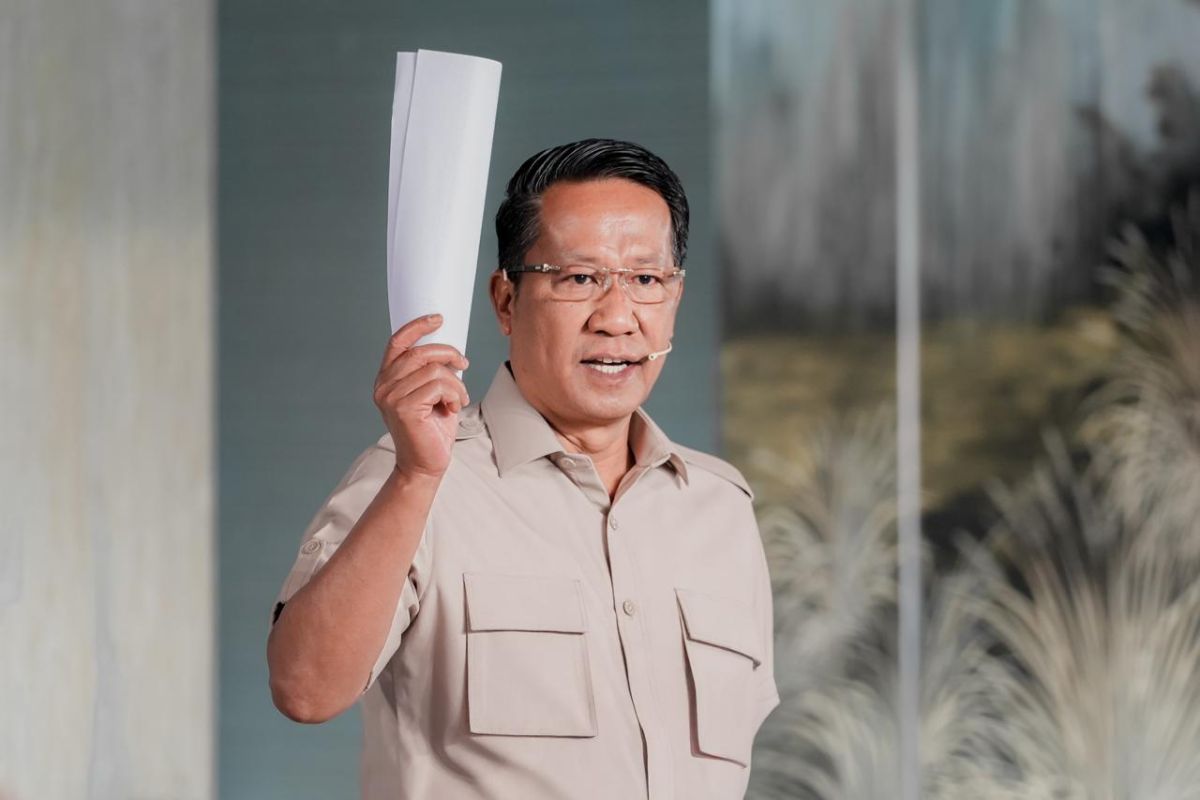
Jakarta (ANTARA) - Minister of Law Supratman Andi Agtas has explained that the adjustment of citizenship service tariffs was carried out to improve service quality, support digital transformation, and align with current economic conditions.
In a written statement received in Jakarta on Saturday, Supratman said the tariff setting took into account improvements in service quality, information technology investment, changes to the ministry’s nomenclature, and adjustments to the current economic situation.
“More importantly, the government continues to improve service quality so that the public gains legal certainty, transparent processes, and increasingly easy services through the digital transformation we are undertaking,” he said.
According to him, the public will receive citizenship administrative services that are faster, more transparent, and more accountable. In addition, the tariffs set remain competitive compared with various other countries.
Under Government Regulation (PP) Number 30 of 2026, the fee for a foreign citizen becoming an Indonesian citizen (WNI) is set at Rp75 million. Meanwhile, an application to renounce Indonesian citizenship at one’s own request is charged Rp5 million per application.
He explained that the regulation, signed by President Prabowo Subianto on 2 July 2026, governs the adjustment of a number of service tariffs within the Ministry of Law, including intellectual property and citizenship services, in order to support the sustainability of legal service transformation.
“Every rupiah of non-tax state revenue received by the state will be returned to the public in the form of services that are increasingly fast, accurate, secure, and of high quality,” he said.
According to Supratman, the government applies the principle of justice to realise legal services that are professional, modern, transparent, and digitally based.
In addition to regulating citizenship service tariffs, the regulation maintains the trademark registration tariff for micro, small, and medium enterprises (UMKM) at Rp500,000 per class without any increase.
He added that the government has also simplified the administrative requirements for trademark registration for UMKM so that more business actors can obtain intellectual property protection.
“Trademarks for UMKM remain at Rp500,000 per class, and the requirements have even been simplified so that more business actors can protect their intellectual property,” said Supratman.
Furthermore, the government has introduced an affirmative policy in the field of copyright. Starting 1 August 2026, the tariff for recording copyrights for songs and/or musical works is set at Rp0.
According to him, this policy is expected to encourage more creators to register their works, thereby strengthening the Song and/or Music Data Centre as the foundation of a more accurate, transparent, and accountable royalty governance system.
“The principle we hold to is professional and equitable public service, while continuing to guarantee the public’s access to legal services,” he said.