
Law Minister Ensures Journalistic Works Are Protected, Commercial Use Requires Royalty Payment
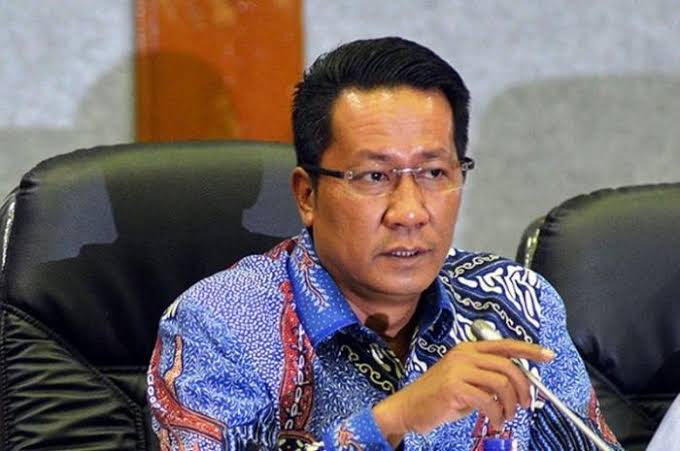
The Indonesian Minister of Law, Suprram Andi Agtas, has emphasised that the government intends to ensure journalistic works obtain clear copyright protection within the revision of Law Number 28 of 2014 concerning Copyright.
One of the key points emphasised is the obligation to pay royalties for the use of journalistic works for commercial purposes, whether by digital platforms or through business-to-business (B2B) arrangements. Supratman stated that the government does not oppose the proposed hybrid scheme for managing the economic rights of journalistic works, provided the primary goal is achieved: providing certainty of protection and royalties for the owners of journalistic works.
“If it is subsequently published by a platform or other B2B entities for commercial purposes, royalties must be paid. That is the most important part. As for the royalty collection mechanism, that agreement will be discussed further,” Supratman said in Jakarta on Thursday.
According to him, the government is currently prioritising the firm recognition that journalistic works are objects of copyright that must be protected by the state. Therefore, technical discussions regarding royalty payment channels, whether through Collective Management Organisations (LMK) or B2B cooperation, remain open for further deliberation.
“Regarding the royalty mechanism, whether through LMK or direct B2B, that is not an issue. The most important thing is that the Ministry of Law, after coordinating with journalists, ensures that journalistic works receive certainty as a form of copyright that must be protected,” he added.
Supratman also revealed that the government has held discussions with owners and leaders of media companies regarding the economic rights protection scheme. He believes that input from the press industry is vital to ensure the Copyright Act revision does not disadvantage journalists or media companies as the holders of rights to journalistic works.
Furthermore, Supratman mentioned that the government has finalised the Draft List of Identified Problems (DIM) for the Copyright Bill. He stated that this document will be submitted to the House of Representatives (DPR) in the near future for discussion during the next legislative stage.
Previously, the Press Council proposed a hybrid scheme for regulating the economic rights of journalistic works in the Copyright Act revision. A member of the Press Council and Chairman of the Digital and Sustainability Commission, Dahlan Dahi, explained that under the proposed regulation, journalistic works would be directed towards economic rights protection that allows for royalty collection.
“Therefore, all use of journalistic works for commercial purposes must obtain permission from the economic rights holder. Upon receiving such permission, users of journalistic works must pay royalties,” said Dahlam.
Under the proposed scheme, royalties for the use of journalistic works for commercial purposes could be paid through an LMK. This organisation would serve as the channel for managing and distributing royalties to the holders of economic rights for journalistic works.
However, Dahlan noted that the LMK should not be the sole pathway for royalty payments. He proposed that the Copyright Act revision should also accommodate a direct cooperation model between business actors, or B2B, so that media companies retain the space to enter into direct commercial agreements with users of journalistic works.
“This means the B2B mechanism recognises royalty payment procedures through company-to-company deals. For the press industry, this is not a new concept,” said Dahlan.
He added that the hybrid scheme is considered more realistic as it combines two models: payment through LMK and direct business-to-business cooperation. According to him, such a pattern has been implemented in several other countries.
“A hybrid pattern. We can see that in the United States, their system focuses more on B2B, but in Europe, it is hybrid, involving both B2B and collective organisations,” he concluded.
Source: jawawa.id (https://jawawa.id/newsitem/law-minister-ensures-journalistic-works-are-protected-commercial-use-requires-royalty-payment-1782989471)
Originally published by Media Indonesia (https://mediaindonesia.com/politik-dan-hukum/906727/menkum-pastikan-karya-jurnalistik-dilindungi-penggunaan-komersial-wajib-bayar-royalti), translated from Indonesian