
Law Minister: Domestic Workers Protection Act Proves Government's Support for Safeguarding Small-Scale Workers
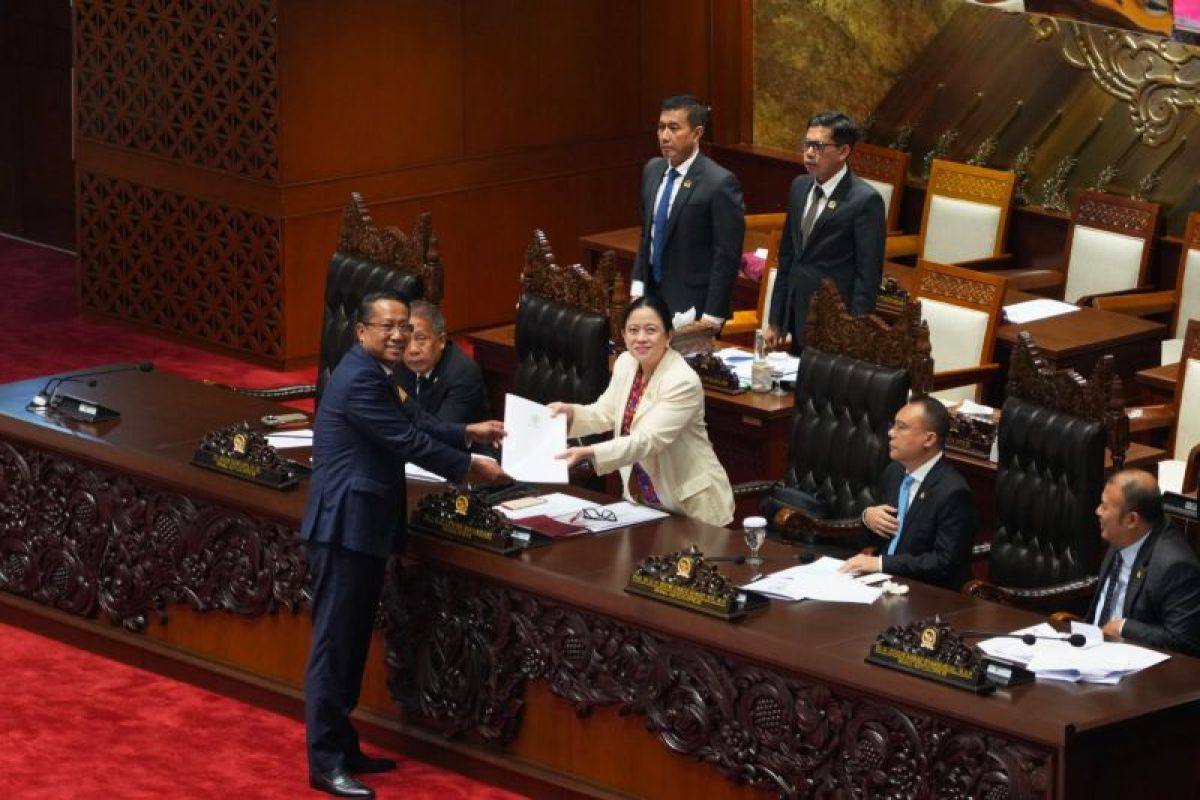
Jakarta (ANTARA) - Minister of Law Supratman Andi Agtas stated that the ratification of the Domestic Workers Protection Bill (RUU PPRT) serves as evidence of the government’s support in protecting small-scale workers.
During the Plenary Session at the Building of the House of Representatives (DPR) RI in Jakarta on Tuesday (21/4), he said the ratification affirms the state’s commitment to strengthening protection and supervision of domestic workers’ employment practices.
“The government has obligations in the field of employment to provide protection and supervision of domestic workers’ practices,” said Supratman as confirmed in Jakarta on Wednesday.
He explained that the scope of regulation in the Act includes recruitment and the scope of domestic work as well as employment relations based on agreements between domestic workers and employers.
In addition, it regulates the rights and obligations of workers, employers, and domestic worker placement companies.
The Minister of Law stated that other regulations include vocational training for prospective and domestic workers, business licensing for domestic worker protection, as well as guidance and supervision of domestic worker protection practices.
It is mentioned that the policy also regulates mechanisms for resolving disputes and encourages community involvement in protecting domestic workers.
Therefore, Supratman said the regulation aims to provide legal certainty for domestic workers and employers, while preventing discrimination, exploitation, and harassment.
The regulation, he said, also encourages harmonious employment relations by upholding humanitarian values and justice.
“This Act provides legal certainty, protects workers from various forms of unfair treatment, and promotes improvements in skills and welfare for domestic workers,” he stated.
Previously, in the level I discussion working meeting, Supratman revealed that the state is obligated to protect every Indonesian citizen (WNI) from all inhumane treatments that ultimately result in human rights violations.
Therefore, domestic workers as part of citizens have basic rights that must be fulfilled by the state.
“The purpose of this Bill is to resolve various problems, including from unfair wages, improper payments, unreasonable working hours to harassment or violence, whether physical, psychological, and sexual or household neglect,” said Supratman in Jakarta on Monday (20/4).