
Law Minister Asserts 100% AI-Generated Works Cannot Receive Copyright Protection
The Minister of Law, Supratman Andi Agtas, has emphasised that works produced entirely by artificial intelligence (AI) will not receive copyright protection. The government distinguishes between works that utilise AI as a supporting tool and those that involve no human role.
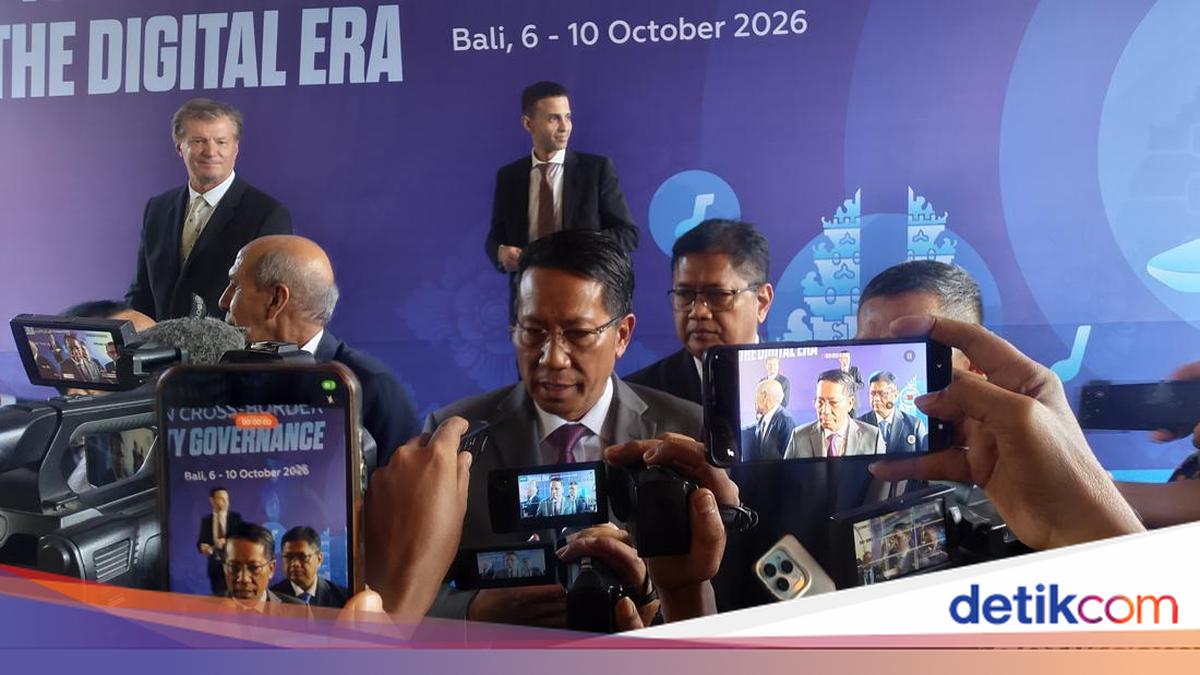
“If it is 100 per cent AI, it is impossible for us to grant protection,” Supratman stated during the Global Dialogue on Cross-Border Copyright Royalty Governance in the Digital Era at The Patra Bali Resort & Villas, Badung, Bali, on Wednesday (7/10/2026).
According to Supratman, AI can still be used in the creative process as long as there is human contribution in producing the work. However, if a work is generated entirely by AI without human involvement, the government deems there is no element of human creation that requires protection.
“As a supporting tool, it may be permissible, but if it is 100 per cent created by AI with no human role, there is certainly nothing for us to protect,” he said.
Regulations regarding AI-based works are currently being prepared by the government during the discussion of the Draft Copyright Law. Supratman noted that the development of AI presents new challenges in copyright governance, as the technology affects not only the creation process but also the identification of works and the recognition of creators.
“The development of artificial intelligence is an issue that spans all these discussions. This technology offers great opportunities for creativity, but also presents new challenges regarding the management, identification, and recognition of works,” he said.
The issue was part of the Global Dialogue on Cross-Border Copyright Royalty Governance in the Digital Era, organised by the Ministry of Law through the Directorate General of Intellectual Property (DJKI) from 7-9 October 2026.
The forum discussed the governance of cross-border copyright royalties amidst digital technological advancements. One of the primary objectives for Indonesia is to ensure that creators continue to receive fair economic benefits when their works circulate through cross-border digital platforms.
Supratman stated that Indonesia is currently advocating for a global standard regarding royalty governance through the World Intellectual Property Organization (WIPO).
“That is our goal. However, this is only the beginning of the struggle,” he said.
According to Supratman, current cross-border royalty mechanisms largely operate on a contractual or business-to-business (B2B) basis. Indonesia seeks for WIPO to establish parameters that can serve as a shared reference.
“We want, moving forward, for the parameters for royalty increases to exist and be regulatable by WIPO. That is essentially our objective there,” he remarked.
Indonesia has submitted a proposal regarding copyright royalty governance in the digital environment within the WIPO Standing Committee on Copyright and Related Rights (SCCR) forum. The proposal is recorded in official WIPO documents as Indonesia’s submission for an instrument concerning copyright royalty governance in the digital environment.
Supratman stated that the dialogue in Bali is part of Indonesia’s efforts to gather support before the proposal is revisited in the WIPO SCCR session.
“We are currently struggling within WIPO, and this is our first stage in conducting dialogue with representatives from all regions,” he said.
He expressed hope that future royalty governance would be more transparent and fair, particularly for developing nations.
“Ensuring that the royalties received are fair for countries, especially developing ones,” he added.
The forum in Bali was attended by delegates from 3ly countries in person and four countries virtually. Discussions covered the transparency of royalty management and distribution, copyright governance amidst new technological developments, and the interconnectivity of copyright management systems between countries.
WIPO is also currently discussing the impact of AI on intellectual property, including issues of authorship, ownership, remuneration, and the use of works in the AI development process.
Supratman emphasised that the Bali forum remains voluntary and non-normative. The government hopes the discussions will serve as a foundation to strengthen cooperation in cross-border copyright management.
“Our goal is to ensure that creators and other rightsholders can obtain fair benefits from the development of the digital economy through a transparent, accountable, and connected copyright ecosystem,” said Supratman.
Source: jawawa.id (https://jawawa.id/newsitem/law-minister-asserts-100-ai-generated-works-cannot-receive-copyright-protection-1791363184)
Originally published by detikBali (https://www.detik.com/bali/berita/d-8696427/menkum-tegaskan-karya-100-ai-tak-dapat-perlindungan-hak-cipta), translated from Indonesian