
Law Enforcement Process and Wealth Transparency of Public Officials Under Student Scrutiny
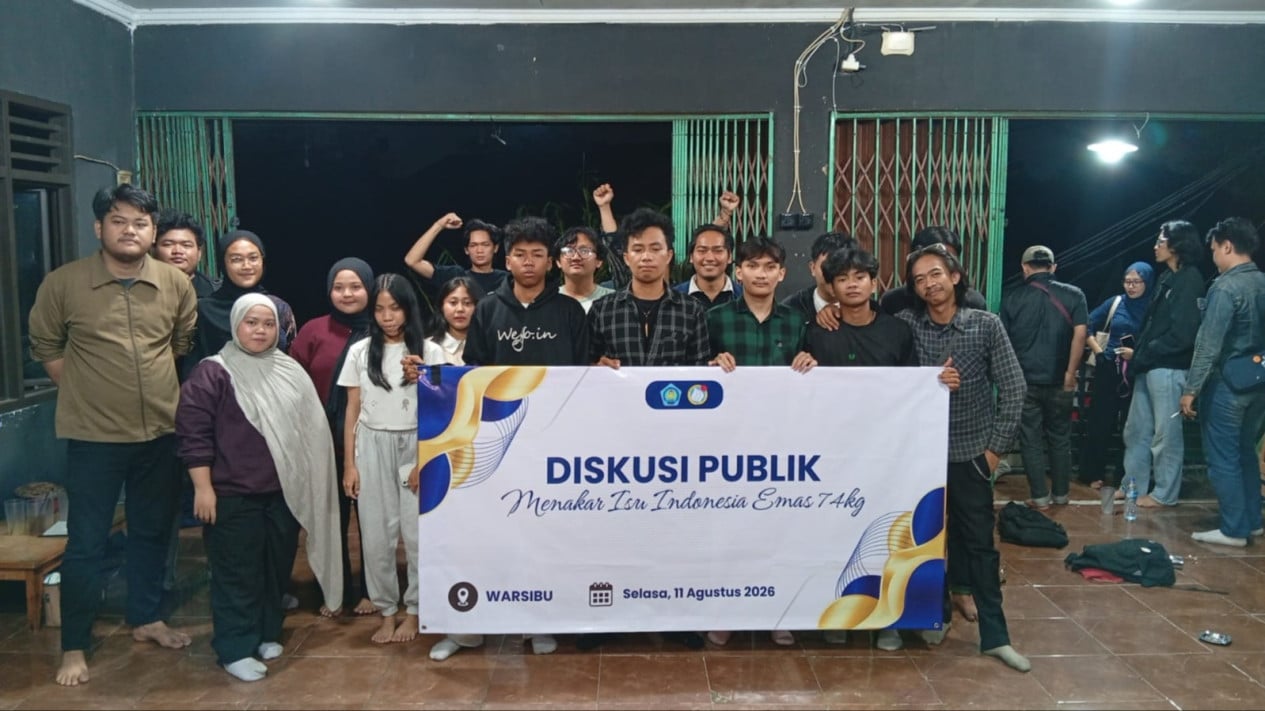
The Student Executive Board of Indraprasta PGRI University (BEM Unindra) is encouraging students and the public to continue monitoring the law enforcement process and to strengthen the tradition of critical study of various legal and governance issues in Indonesia.
This emerged during a public discussion titled ‘Measuring the Golden Indonesia 74 Kg Issue’, which addressed a number of issues relating to law enforcement, the transparency of public officials’ wealth, and the role of students in overseeing the course of democracy.
During the discussion, several participants highlighted various irregularities deemed to require public attention, including developments in a case linked to Febrie. The forum questioned how the legal process was proceeding, the involvement of several institutions in handling the case, and the status of parties who had previously been in different positions within the legal process.
Beyond the legal process, participants also highlighted the importance of disclosing information about the sources and total wealth of public officials that has drawn public attention.
According to the forum, wealth transparency is an important part of the principle of accountability in state administration and must be answerable through legal mechanisms and authorised institutions.
The discussion also paid attention to the role of the media in reporting cases of public interest. The media was considered to have a responsibility to present balanced, verified information and not to remove important context from a case.
In the forum, participants also questioned how law enforcement institutions carry out their duties, functions and authority. Criticism of law enforcement agencies, according to discussion participants, should be positioned as part of public oversight in a democratic country, not as a form of weakening state institutions.
One participant, Rahma BD, questioned the issue of corruption from a more structural perspective. She argued that discussion of corruption should not stop at individual perpetrators, but also needs to examine the system that allows corrupt practices to keep recurring.
“Corruption has happened many times. But have we ever examined the system for resolving corruption cases? Why can people working within that system actually commit corruption?” she said.
Other questions also arose regarding the possible connection between the case under discussion and a number of other events that occurred around the same time. Participants questioned whether there was a link to a figure named Reza as well as several incidents relating to electricity disruptions in parts of Indonesia. The forum stressed that such questions must be answered through data and a verification process, not through speculation.