
Law and Human Rights Minister: Election Bill Not Urgent to Discuss; Stages Can Use the Existing Law
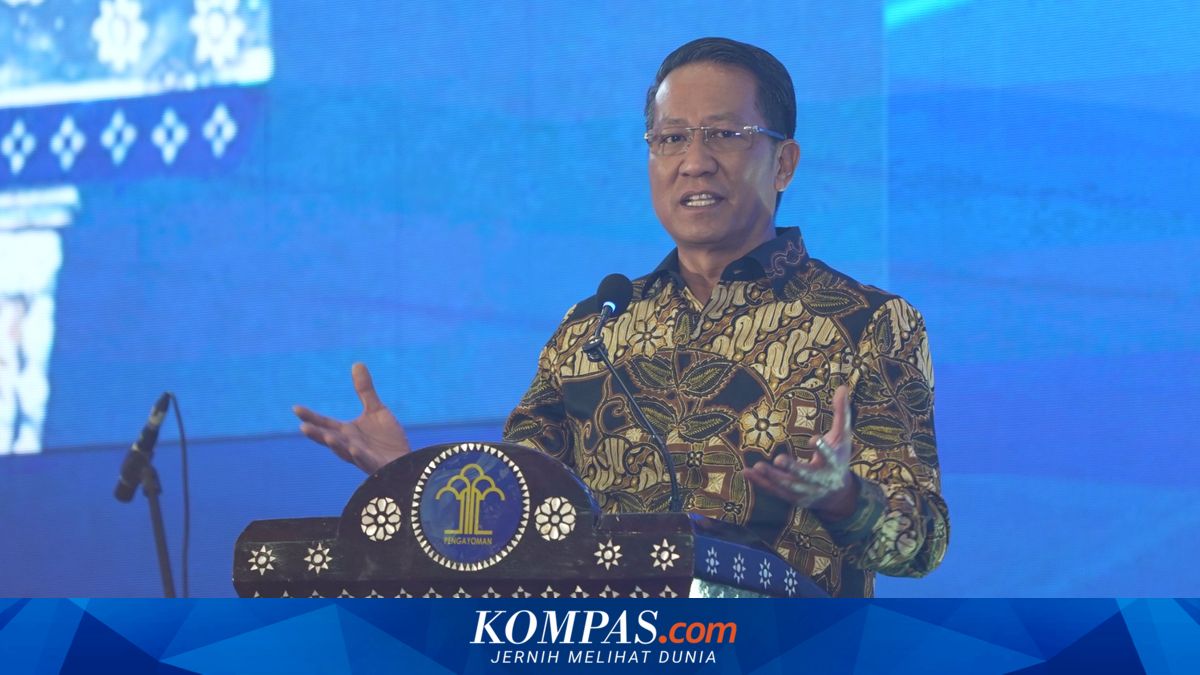
JAKARTA, KOMPAS.com - Law and Human Rights Minister Supratman Andi Agtas said that revising the Election Law is not yet urgent for immediate discussion. He stated that the electoral stages for the 2029 contest could still proceed under the rules currently in force. ‘There is no urgency at the moment; the election time is still a long way off, and the current election law remains in place. If the process has already entered a stage, it is possible to use the existing law,’ Supratman told reporters at the Indonesian House of Representatives building, Jakarta, on Wednesday (20 May 2026). According to Supratman, this is because the substance of the Election Law largely relates to the interests of political parties. ‘As for the Election Bill, it is a proposal initiated by the DPR; the government waits, similar to the Police Act. The stakeholders in the Election Law are mostly related to political parties. Therefore, the Election Law has typically seen its initiative originate in the DPR. For a long time, in fact,’ he said. ‘Therefore we are waiting for the time when the government is ready to discuss it, but we are waiting for the DPR,’ he concluded. A number of factors—from the draft not being ready, to lawmakers’ caution, to competing political interests—are cited as the reasons for the stall in the discussion of the act. DPR Speaker Puan Maharani stressed that communications related to the Election Bill are actually ongoing within political parties, even though formal parliamentary discussion has not yet begun. ‘As for the Election Bill, there is a timetable. And political communications continue within political parties, and they are not conducted in secret,’ Puan said at the DPR Building, Senayan, Jakarta, Tuesday (21 April 2026). ‘Communication can be formal or informal. Yet political communication is always ongoing,’ she added. ‘And it proceeds well; the spirit of democracy should not harm the nation or the state,’ she concluded.