
Lava, Lahar, and Pyroclastic Flows: Understanding the Differences and Dangers
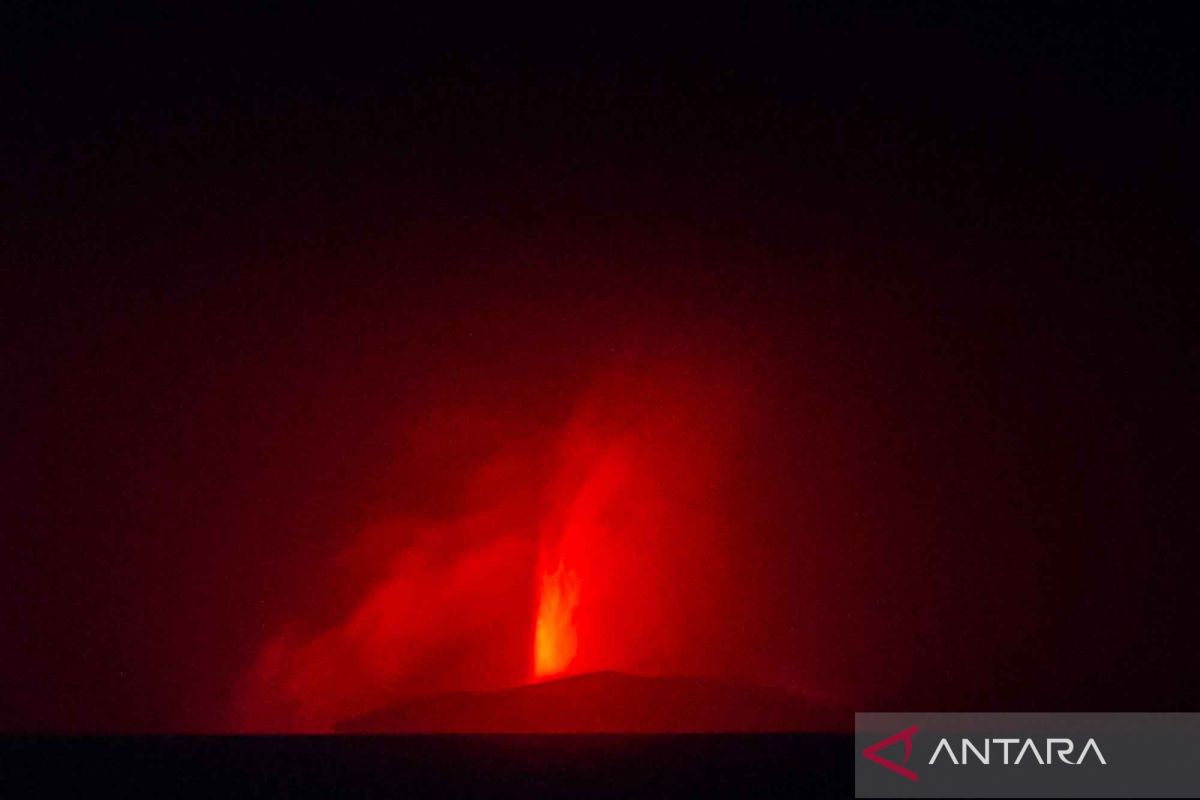
Jakarta (ANTARA) - Activity at Mount Anak Krakatau in the Sunda Strait has returned to the spotlight after undergoing continuous eruptions for approximately 25 hours between 4-6 September 2026. Following the conclusion of this episode, the volcano continues to experience Strombolian eruptions, and its activity level remains at Level III (Alert). The Geological Agency also continues to warn of potential hazards including pyroclastic flows, lava, incandescent rock projections, and heavy ashfall.
The terms lava, lahar, and pyroclastic flows (awan panas) frequently appear when discussing volcanic eruptions. While all three are related to volcanic activity, they represent fundamentally different phenomena. The differences lie not only in the form of the material but also in how it is formed and how it moves.
Lava is magma that has reached the surface. Simply put, lava is magma that has emerged from within the earth and reached the surface. Magma is molten rock at extremely high temperatures located beneath the surface. When magma exits through a crater or fissure during an eruption, the material is then referred to as lava.
Lava flows according to the shape of the terrain. Its flow velocity depends heavily on the properties of the magma, particularly its viscosity, as well as the slope of the terrain. In some eruptions, lava may move relatively slowly, allowing it to be observed from a safe distance. However, lava maintains extremely high temperatures and can burn or bury anything in its path. In reports regarding Mount Anak Krakatau in September 2026, the Geological Agency noted that the continuous eruption phenomenon resembled a lava fountain, producing lava flows.
Unlike lava, lahar does not necessarily consist of molten rock. A lahar is a flow of a mixture of volcanic material and water that moves along slopes or riverbeds. The material can include ash, sand, gravel, rocks, and other volcanic deposits. The water that triggers a lahar can originate from heavy rain, crater lakes, or other water sources.
Because deposited volcanic material can be carried by water, lahars can occur even when a volcano is not actively erupting. Deposits from previous eruptions can become the source of lahars when heavy rain falls in the volcanic area. Research in the Indonesian Journal of Geology explains that lahars at Mount Merapi can form from volcanic deposits subsequently carried by high rainfall. Since they follow valleys and rivers, areas near riverbeds of volcanoes are critical zones to monitor during heavy rain following an eruption. Therefore, a lahar is more accurately understood as a flow of volcanic material mixed with water, rather than lava melting due to rain.
Pyrclastic flows (awan panas) move as a flow of hot gas and volcanic material. This term often causes misunderstanding. A pyroclastic flow is not merely hot smoke exiting a crater. In the context of volcanic hazards, it can be a mixture of hot volcanic gases, ash, and rock fragments moving down slopes at high speeds. One cause is the collapse of eruptive material or parts of a lava dome. When this hot material moves down a slope, it forms an extremely dangerous flow.
Pyrclastic flows follow valleys and terrain contours. Because they carry high-temperature materials and can move rapidly, this phenomenon is one of the primary threats during certain types of eruptions. The Geological Agency has included pyroclastic flows as a potential hazard to be wary of around Mount Anak Krakatau during Level III activity.
To summarise the differences:
Lava: magma that exits to the surface and flows as molten rock.
Lahar: a mixture of water and volcanic material flowing along slopes, valleys, or rivers.
Pyrclastic flow: a mixture of hot volcanic gases and volcanic material moving as a hot flow, generally at high speeds.
All three have different movement paths and hazard characteristics. Lava tends to follow the surface and lower paths, lahars largely follow riverbeds, while pyroclastic flows can move rapidly down slopes and valleys.
Why is it important to know the difference? Understanding these terms is not just about volcanic knowledge. The differences in characteristics help the public understand the types of hazards that may arise when a volcano increases in activity. For example, heavy rain after an eruption must be monitored as it can turn volcanic deposits into lahars. Meanwhile, when eruptive activity produces hot material or occurs via collapses around the crater, the threat of pyroclastic flows must also be addressed. Because every volcano has different characteristics, the potential hazards are not always the same. This is why communities in high-risk areas must follow official information from the Geological Agency and the Centre for Volcanology and Geological Hazard Mitigation (PVMBG), including updates on activity status and exclusion zones.