
‘Laut Bercerita’ explores the grief and hope of families left behind
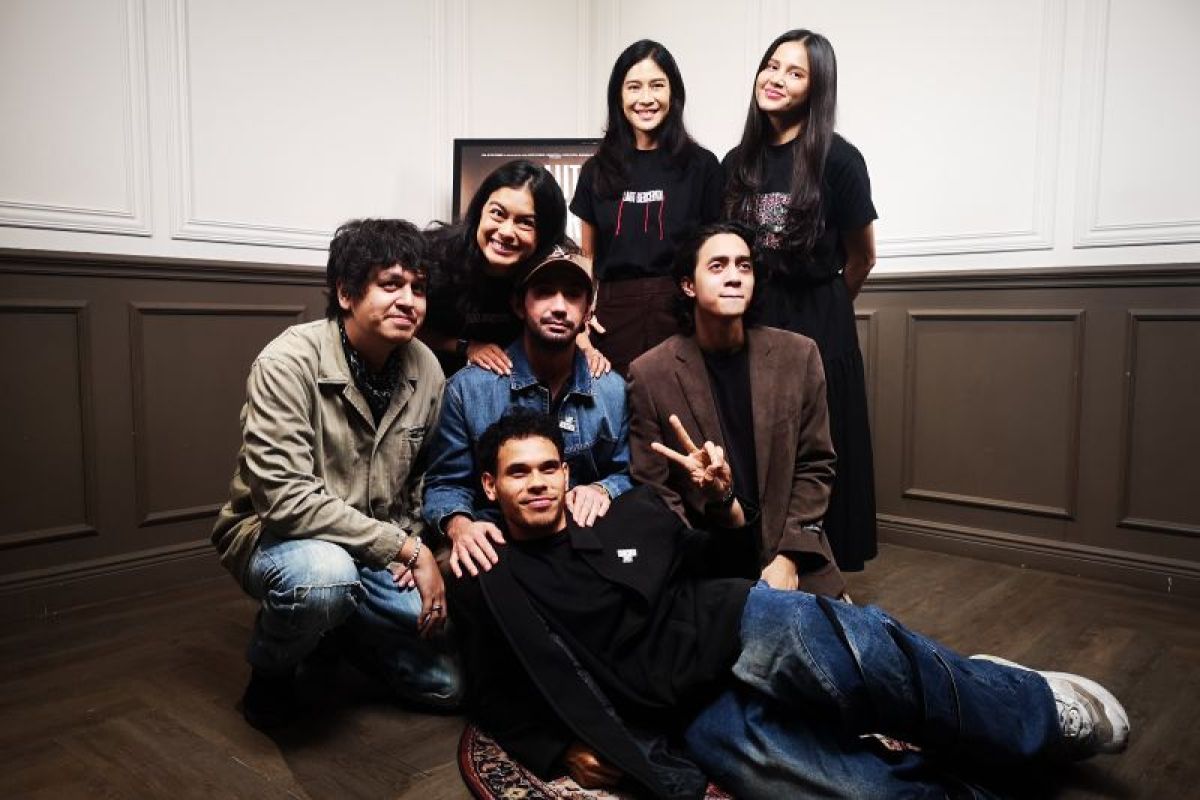
Jakarta (ANTARA) — Adapting Leila S. Chudori’s popular novel “Laut Bercerita” for the big screen was no easy task. The story, with its many characters, events and layers of emotion, had to be condensed into a 135-minute film.
The challenge lay not only in preserving the heart of the story, but also in creating a meaningful viewing experience for audiences, including those already familiar with the novel.
Director Yosep Anggi Noen, who co-wrote the screenplay with Chudori, appears to have understood that a film need not be a visual copy of every chapter in a book.
Rather than reproducing every event literally, they chose to place the human dimension at the centre of the narrative.
The result is a work with its own cinematic identity that nevertheless retains the spirit of a story about young people’s courage, loss and families forced to carry on amid uncertainty.
From the outset, the film’s storytelling approach feels different from that of some of Noen’s previous work.
The director, often known for films with a slow pace, a quiet atmosphere and powerful symbolism, such as “Istirahatlah Kata-Kata” (2017) and “Hiruk-Pikuk si Alkisah” (2020), opts here for a plot that is relatively easy to follow.
Tension builds through a series of fairly brisk events, before the story gradually turns the audience’s attention to the impact of loss on those left behind.
The film is divided into two broad sections with contrasting but complementary emotional tones.
The first draws viewers into an atmosphere of fear amid the student movement. The lives of a group of young people are portrayed through activities conducted in secret, vigilance in the face of threats and efforts to maintain trust in an unsafe environment.
Public spaces that should be places for everyday activity become sites of risk. Meetings, conversations and friendships no longer unfold under ordinary circumstances. Every move seems to require careful consideration, as danger can appear at any moment.
This tension provides the foundation for showing how courage, friendship and conviction are tested when people choose to stand by their principles.
The film’s limited running time inevitably means that some secondary stories are cut.
As a result, viewers may not form as strong an emotional bond with Biru Laut, the central character, as they might through reading the novel.
At times, the shifts from one event to another leave too little room for the audience to get to know him in depth.
Viewers who have not read the novel may also need time to understand the relationships and backgrounds of the supporting characters.
Even so, this does not entirely diminish the film’s strength, as its second half finds a firmer emotional footing.
When the story moves from the students’ activities to family life, the film’s atmosphere changes significantly.
The tension built through dramatic events gives way to a silence heavy with grief.
The camera shows how loss does not end with a person whose whereabouts are unknown; it spreads into the lives of family members who continue to wait for certainty.
Here the film finds its dramatic strength. The issue is no longer only what happened to the victims, but also how those closest to them cope with uncertainty.
The shift in mood is conveyed through a strong visual approach.
Cinematographer Batara Goempar uses contrasting light and shadow to create an isolated, sombre atmosphere. Narrow corridors, dim rooms and poorly lit corners do more than provide a setting; they also reflect the characters’ psychological states.
Close-up shots in several scenes bring viewers closer to the characters. Facial expressions, glances and shifts in emotion are shown without always needing to be explained through dialogue.
This approach makes the characters’ suffering easier to feel. The audience is made to seem present in the same space, witnessing fear and sadness gradually take hold of their lives.
Careful direction keeps the emotions from becoming overplayed. Reza Rahadian, for example, portrays Biru Laut’s psychological transformation from an enthusiastic young man into someone shattered by the violence and betrayal he experiences.
The performance of Biru Laut’s younger sister adds another emotional layer. Asmara Jati, played by Yunita Siregar, tries to remain clear-headed amid her family’s grief.
In several scenes, restrained expressions and silence prove to be the most powerful ways to convey pain. Not every sorrow needs to be expressed through tears or lengthy dialogue. Sometimes the effort to hold back tears reveals a deeper emotional burden.
The presence of veteran actors Christine Hakim and Arswendy Bening Swara as the parents also makes the family dynamic feel close to everyday life.
They portray parents trying to endure, even as they face the uncertainty surrounding their child’s fate. This warm yet fragile family relationship is one of the film’s emotional strengths.
Beyond the lead performances, production details also help recreate the past.
The casting of hundreds of student demonstrators as extras, with faces suited to the 1990s setting, helps make the period more convincing.
This approach lends the period an organic feel, as young Indonesians of that era were often perceived as looking older than their years.
A sequence edited by Dinda Amanda, in which scenes from different moments are assembled in a montage, may be one of the film’s most emotional passages. Anger, sadness and poignancy come together in the sequence.
Editing is crucial because the film moves between two narrative spaces of differing intensity. The opening section needs a rhythm that sustains tension, while the following section requires room for viewers to absorb the emotions and understand the impact of loss.
As an adaptation, “Laut Bercerita” also makes creative choices in adjusting characters’ backgrounds. One change concerns the background of the female leader of the student group.
Such changes may make the story more painful for readers who have formed their own understanding of the character and her arc in the novel.
Noen has said he sought to avoid stating what happened to the female character played by Dian Sastrowardoyo, leaving it entirely to the film’s audience to decide whether she survived.
A film adaptation has different storytelling requirements from a novel. Changes do not necessarily mean the story’s essence has been lost; they can instead emphasise conflict and create an emotional experience suited to the language of cinema.
The students’ story serves as an entry point to a wider issue: how an event can have a lasting impact on the lives of those around it.
The use of genuine video footage of real events in the montage adds another layer of meaning.
After following the characters through a fictional world, viewers are brought back to the reality behind the story.
This helps explain why the montage can linger so powerfully in the minds of those who have seen the film. It reinforces that the story is not merely a dramatic construction, but is connected to historical experience and human lives.
Ultimately, “Laut Bercerita” invites viewers to see loss from two perspectives: those who suffered violence and those who must live with the wait.
The film may not capture all the depth of the relationships between characters as depicted in the novel. Some early sections feel rushed, particularly in establishing the audience’s connection to the central character and his background.
But its family drama, performances, cinematography and creative treatment of the source material give the film a distinct emotional impact.
More than an adaptation of a novel, the film is a reminder of the importance of preserving memory and understanding how loss affects human lives.
Through the story of a family that continues to wait, “Laut Bercerita” presents grief not as the end of a story, but as part of the struggle to hold on to hope. It is a tribute to those who disappeared, and to the families who continue with unanswered questions.
Source: jawawa.id (https://jawawa.id/newsitem/laut-bercerita-explores-the-grief-and-hope-of-families-left-behind-1793616870)
Originally published by Antara (Indonesian) (https://www.antaranews.com/berita/5826791/laut-bercerita-menatap-duka-dan-harapan-keluarga-yang-ditinggalkan), translated from Indonesian