
Launch of 100 GWp Solar Power Programme Seen as Momentum to Accelerate National Energy Transition
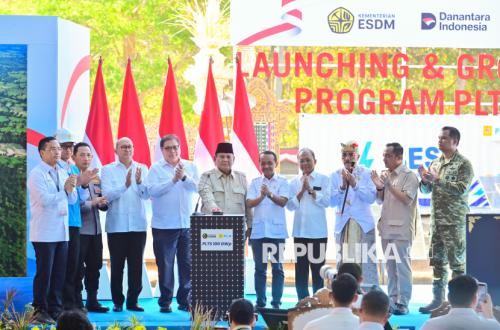
The launch of the 100 gigawatt peak (GWp) Solar Power Plant (PLTS) Programme has become a strategic momentum in accelerating the energy transition while strengthening Indonesia’s energy security and independence.
With 14 initial projects totalling 5,300 MWp in capacity, the programme represents a concrete form of government action in translating the energy self-sufficiency target through the development of renewable energy infrastructure on a large scale.
The 100 GWp PLTS Programme also opens space for Indonesia to further optimise its domestic solar energy potential, reduce dependence on fossil energy, and expand the use of clean electricity to support national economic and industrial growth.
Head of the Energy and Food Centre at INDEF, Abra Talattov, said that large-scale solar power development can strengthen energy security by optimising domestic resources while reducing dependence on fossil energy.
The programme also opens opportunities to reduce the use of fuel oil in power generation, expand electrification in underdeveloped, frontier and outermost (3T) regions, and provide green electricity supply for industry.
“This potential can only be realised if solar power development is designed as part of a comprehensive transformation of the electricity system, not merely as an addition to generation capacity,” Abra told the media in Jakarta on Thursday (27/8/2026).
According to Abra, large-scale solar power development needs to proceed in line with projections of electricity demand growth, the condition of the electricity system in each region, grid readiness, and the stages of generation additions in the Electricity Supply Business Plan (RUPTL).
Measured planning will be an important foundation so that the growth of solar energy capacity can provide optimal benefits for the national electricity system.
Along with the development of solar power generation, the strengthening of supporting infrastructure also presents an opportunity to improve the quality of the national electricity system.
The production characteristics of solar power plants, which depend on weather conditions, can be offset through the strengthening of transmission, inter-system interconnection, grid digitalisation, and the provision of energy storage facilities.
The plan to develop a 1,000 MWp solar power plant with a 3,300 MWh Battery Energy Storage System (BESS) in Bali can serve as an initial model for the development of an integrated renewable energy ecosystem.
This development also opens space for strengthening national experience and capacity in managing large-scale renewable energy generation and energy storage technology.