
Latest Update on Plans to Make the NIK a Single Identity Number
The government and the House of Representatives (DPR RI) plan to revise Law No. 24 of 2013 on Population Administration. One of the provisions under discussion is strengthening the Population Identification Number (NIK) as a single identity number, or Single Identity Number.
According to a report compiled by detikcom on Wednesday (28 October 2026), the proposal to make the NIK a single identity number has been discussed since 2025. At the time, House Commission II chairman Rifqinizamy Karsayuda said the commission would revise the Population Administration Law.
Rifqinizamy explained that the bill would address the creation of a single identity number, enabling one NIK to be used for a range of purposes.
“With just an NIK, we can identify ourselves as citizens for various purposes, including, for example, finding out which land we own and where the certificates are,” Rifqinizamy told reporters at the parliamentary complex in Senayan, Jakarta, on Wednesday (29 October 2025).
Government discusses the bill’s inventory of issues
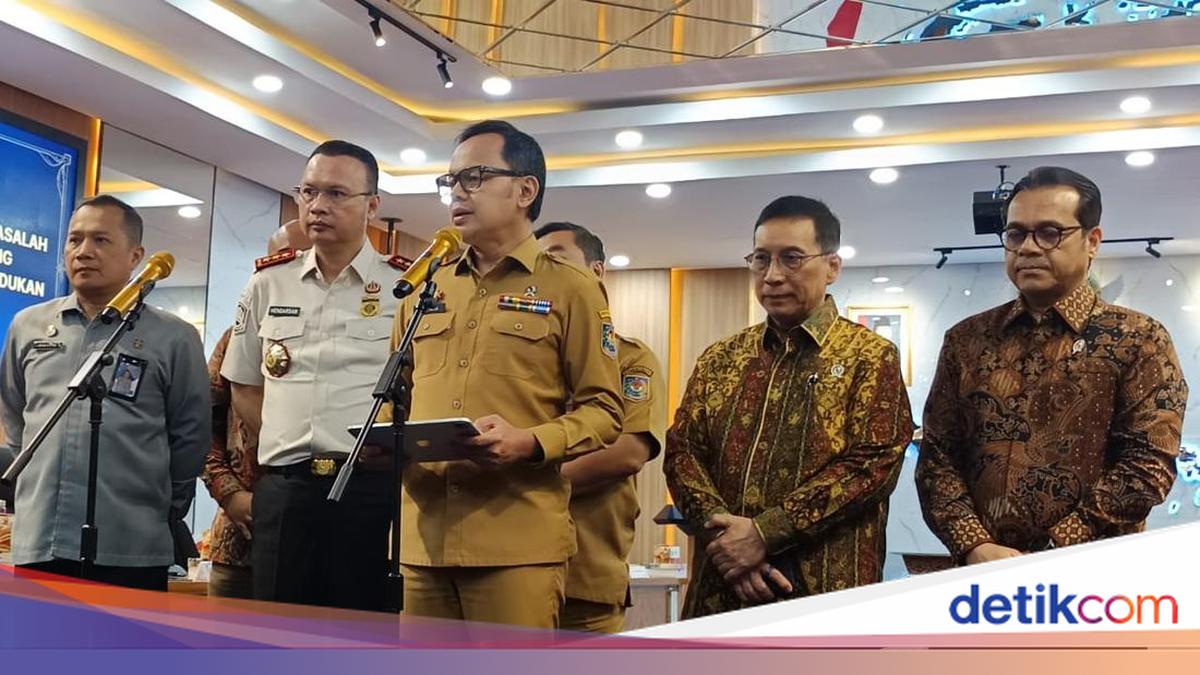
Most recently, the government discussed its Inventory of Problems (DIM) for the Population Administration Bill on Tuesday (27 October 2026). The meeting was held in the main conference room of the Ministry of Home Affairs in Central Jakarta and chaired by Deputy Home Affairs Minister Bima Arya.
Bima said the bill was initiated by the House. He explained that the DIM would be submitted to the House for further discussion.
“The Population Administration Bill is a House initiative under the 2025–2029 National Legislative Programme. Today, we initialled the DIM together with ministries and agencies; it will then be submitted to the House as soon as possible,” Bima said.
He said the bill is intended to create an integrated population administration system, which he believes will improve public services.
“The substance of this bill is that we want to establish a population administration system that is integrated and adaptable to changing times, support more precise and targeted development planning, provide quality public services, and protect personal data,” he said.
One issue covered by the bill is strengthening the NIK as a single identity number. Bima said this would integrate population data across all institutions.
“It also regulates several highly strategic matters, including strengthening the NIK as a single identity number. A unified population database will integrate all ministries and agencies to ensure every citizen can access the basic services they need. The bill also clearly sets out the respective authorities of central and regional government institutions in relation to population data,” he said.
Bill aligned with Indonesia’s One Data Law
Deputy Minister of Communication and Digital Affairs Nezar Patria said the bill would establish a single source for residents’ identities. He said it was aligned with the One Data Indonesia Law.
“The Population Administration Law will become one of the single sources of truth for population identity. Among the points we raised in inter-ministerial coordination was data interoperability, which must be consistent with the One Data Indonesia Law,” he said.
Immigration studying NIK and passport data integration
Director General of Immigration Hendarsam Marantoko said making the NIK a single identity number would affect public services, making it easier for people to access them.
“Our concern going forward is that we share the same goal of having a single identity number, with the NIK becoming our single number. This will have a major impact on public services, which must be made easier to access,” he said.
He then discussed aligning passport numbers with the NIK. Hendarsam said this would require special adjustments because passport numbering is governed by the International Civil Aviation Organization (ICAO).
“Because we issue passports with their own numbers and are bound by ICAO, this is something we must take into account. But it will not prevent us from moving forward. We will take progressive steps, as another country has already done this, so we can do it too,” he said.
Hendarsam said further research would be conducted into passports carrying the NIK as a single identity number. He set a target of completing the assessment within two months.
“I have asked my team to aim to complete this within no more than two months, so that the next passport procurement can include a single identity number,” he said.
Hendarsam said the NIK would not necessarily be the same as the passport number. In his view, passport numbers have traditionally been assigned in accordance with international requirements.
“The NIK does not have to be the same as the passport number. There will be two identity numbers: the NIK will be recorded, while the passport number will remain recorded as well. For security, passport replacement and other variables, we must continue to follow ICAO’s international requirements,” he said.