
Latest Update on Nepal-Tibet Flash Floods, Hundreds Dead and Missing
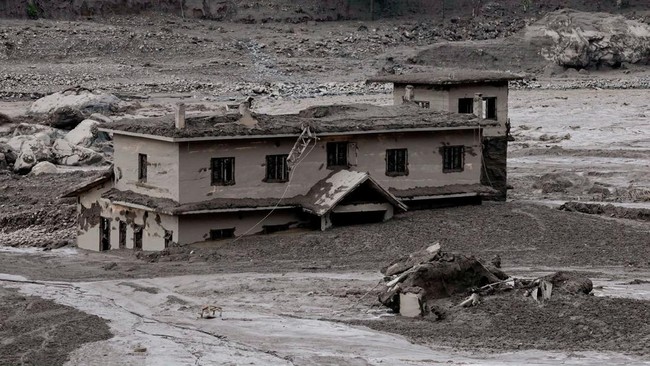
A major disaster has struck the border region between Nepal and Tibet, China, after a large amount of mud and rock material slid into a river on Wednesday (26/8/2026). The flow of water mixed with mud then swept through Nepal and caused a devastating flash flood that killed at least 157 people and left hundreds of tourists reported missing.
Verified video shows dozens of people being swept away by the current in the border area. Authorities on both sides of the border estimate the number of casualties could increase significantly, while the damage caused is also very extensive.
In Nepal, homes, roads, and power plant projects were swept away by the flood and landslides. Meanwhile, officials in Tibet warned of the possibility of a large number of casualties after a mudslide hit one of the border crossing routes in Gyirong County.
Keshav Prasad Baral, a 68-year-old survivor, recounted how mud suddenly struck his home. When interviewed while receiving treatment at a small hospital, he said his wife was swept away by the landslide material.
“It was a very large mudflow that came directly at us. As it got closer, the flow kept rising higher and higher. When I saw the mud enter our house, I tried to grab my wife’s hand and bring her to the terrace. However, she was swept away by the mud,” said Baral, as reported by Reuters.
“Four or five hours later, a helicopter came to rescue me. My wife is still somewhere under the mud. She is gone.”
Another survivor said he managed to survive by holding onto a mango tree. From there, he saw the house where he worked disappear, struck by the disaster.
The exact cause of the disaster is still under investigation. Initial reports from Nepali officials said an earthquake that occurred in the area likely caused the lower part of a glacier to collapse and then triggered the flood.
As night fell, officers were still carrying out search efforts, evacuating bodies, and trying to identify the victims. Nepali police said that as of Wednesday evening local time, 157 bodies had been found.
Meanwhile, officials from Nepal’s Ministry of Tourism told several media outlets that more than 400 tourists were still missing, including around 340 foreign nationals.
Sunil Sharma, spokesperson for the Nepal Tourism Board, told the Associated Press that 133 of the missing tourists were Indian nationals who were on a pilgrimage.
In addition, 47 missing tourists were from the United States, 34 from Australia, 33 from the United Kingdom, and 24 from Canada.
A spokesperson for the US State Department said the government continues to monitor the condition of American citizens affected by the disaster.
Canada is also following the developments of the disaster. Canadian Prime Minister Mark Carney, via X, called the flood a “truly devastating” disaster.
The affected area is part of a popular route to Kailash Manasarovar in Tibet. The location is visited annually by hundreds of Hindu devotees from India and other countries for pilgrimage, especially during periods like now.
On the Chinese side, Xinhua reported three people dead and 265 others still missing in Gyirong. However, the number is still in the process of verification and search and rescue operations continue.
South Korea separately said eight of its citizens working at a hydroelectric power plant in the area were also missing.
CCTV footage from the Chinese side of the Nepal-Tibet border showed many people trying to save themselves before a wave of rock, mud, and water destroyed buildings and vehicles and swept away a number of victims.
The German Research Centre for Geosciences recorded an earthquake with a magnitude of 4.4 about seven minutes before the time shown in the timestamp of the security camera footage.
In the affected areas of Nuwakot and Dhading, residents were seen gathering outside a Nepali military training centre. The facility became one of the bases for helicopter rescue operations.
They came to seek information about family members who had not been found.
Police recorded the names of missing residents outside the barracks gate. Because the hydroelectric power infrastructure was damaged, the area was still without electricity. Police used light from mobile phone torches to record residents’ reports.
In the affected areas, homes, trees, and vehicles were submerged or buried by landslide material. Helicopters continued to operate throughout the day to bring survivors out of the disaster area.
Initial analysis of Planet Labs satellite imagery showed that an ice and rock avalanche likely triggered the flood that carried a large amount of debris material in the Lhende River.
Nepal’s National Disaster Risk Reduction and Management Authority said via X that the location was about 20 kilometres northeast of the Rasuwagadhi border crossing between Nepal and China.
However, rescue helicopters were reported unable to land in the Syapru Besi and Timure areas of Rasuwa District, Nepal. The mountainous area is inhabited by around 50,000 people.
Officials said the overflowing river conditions above the normal route made rescue operations increasingly difficult.
Television footage showed collapsed houses, cars swept away, and a metal bridge washed away by the current. Meanwhile, eyewitnesses told Reuters that water had submerged entire settlements.
“There is destruction everywhere we look,” said Tula Bahadur BK, a health worker in Rasuwa, to Reuters.
“Settlements next to the river have been completely swept away. Five of my own relatives are still missing.”
Source: jawawa.id (https://jawawa.id/newsitem/latest-update-on-nepal-tibet-flash-floods-hundreds-dead-and-missing-1787788239)
Originally published by CNBC Indonesia (https://www.cnbcindonesia.com/news/20260827060431-4-762559/update-terkini-banjir-bandang-nepal-tibet-ratusan-tewas-dan-hilang), translated from Indonesian