
Latest Tech Trend: French AI Duck Powered by Chinese Hardware Sells Rapidly
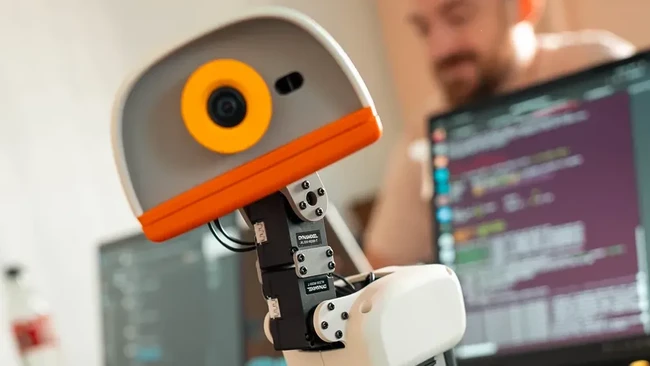
The personal robot shaped like a duck, known as Microduck, is currently capturing market attention. Developed by a French-American company, the robot has sold over 10,000 units within just a few days of its launch.
Hugging Face reports that Microduck sales have exceeded US$5 million, or approximately Rp88 billion. The high demand has even caused delivery timelines for new orders to slip beyond the initial Christmas 2026 target.
Microduck is priced at US$399, or about Rp7 million per unit. Weighing 800 grams, the robot is equipped with sensors, motors, and on-device computing capabilities powered by the RK3566 chip manufactured by the Chinese company, Rockchip.
This chip utilises technology licensed from the British semiconductor firm, ARM. This situation demonstrates that the global technology supply chain remains interconnected, even as competition in the technology industry between China and Western nations continues to intensify.
Omdia analyst Lian Jye Su stated that Rockchip is a vital supplier for AI technology that runs directly on-device rather than through the cloud. Rockchip chips are also widely used in machine vision technologies, such as object detection and image recognition.
“Despite having a very broad footprint, this company’s chips are not designed for complex edge AI devices due to a lack of computing resources,” said Su, as quoted from CNBC International on Thursday (3/9/2026).
On-device computing capabilities allow smartphones, robots, and other electronic devices to run generative AI more securely without the need to transmit data via the internet.
Rockchip has recorded strong business performance. In the first half of 2026, the company’s operating revenue rose 40% year-on-year to 2.88 billion yuan, or approximately US$428 million. Net profit, excluding certain one-off items, also surged by more than 60%.
Microduck is more than just a toy robot. The product also serves as a development platform using open-source software. The robot is claimed to be capable of learning through virtual simulations and goal-based instructions.
Microduck is the second robot developed by Pollen Robotics, a French startup acquired by Hugging Face last year. The first robot developed by the two has also sold more than 10,000 units.
Pollen Robotics stated that the use of the Rockchip chip in Microduck was chosen because it features an NPU of 1 TOPS for on-device AI processing. For comparison, the upcoming Nvidia Jetson Orin Nano 2 robotics chip is claimed to have capabilities of up to 78 TOPS.
Amidst this surge in demand, Hugging Face has also come into the spotlight following reports that Nvidia has agreed to acquire the company for US$12.9 billion.
Competition in the personal robot sector is also intensifying. The startup Zeroth has launched a child-sized humanoid robot priced at 8,888 yuan, offering learning capabilities through virtual simulation.
Meanwhile, Mondo Robotics is developing a Wall-E style cameraman robot that resembles a GoPro on wheels. Its crowdfunding campaign on Kickstarter has already raised more than 80 times its initial target of US$50.