
Latest Survey: The Special UK-US Relationship is Fading
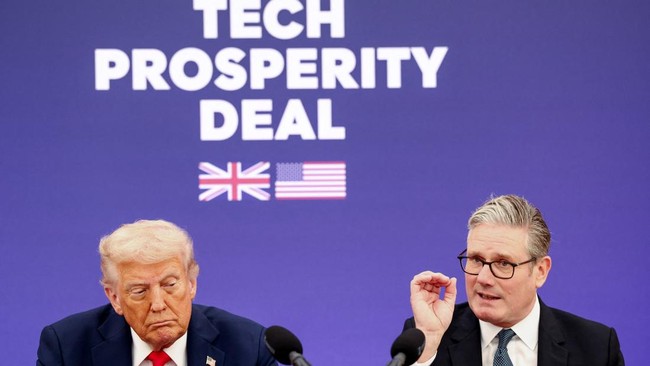
The close relationship between the United Kingdom and the United States is now facing a serious test. King Charles III’s visit to Washington at the end of April 2026, originally ceremonial, has turned into a diplomatic mission to ease tensions. Behind it lies a strategic question: will the UK remain in America’s orbit, or begin to realign closer to Europe?
From Close Allies to Tension: Iran and Eroding Trust
The UK-US relationship began heating up when Washington took aggressive steps in the Iran conflict, while European countries, including the UK, adopted a more cautious stance. America was disappointed that its allies were seen as not providing full support, even limiting the use of military facilities.
The situation peaked when Trump publicly called European allies “cowards”. The UK was dragged into the criticism, despite being known as America’s closest partner. On the other hand, UK Prime Minister Keir Starmer is tired of constantly flattering Donald Trump and has asserted that the UK will not bow to pressure from Washington.
This tension is exacerbated by differing approaches to Russia and Ukraine, as well as controversy over America’s proposal to take control of Greenland. All of this shows that strategic alignment between the two countries is beginning to fade.
Brexit and Global Shifts: The UK Loses Key Role
For years, the UK played an important role as a “bridge” between America and Europe. However, since Brexit, that position has weakened dramatically.
At the same time, America has begun shifting its focus to Asia, particularly to counter China’s rise. As a result, Europe and the UK have become less of a priority in Washington’s global strategy.
Differences in values are also becoming more pronounced. The UK remains committed to multilateralism and international rules, while Trump’s approach tends to be unilateral and transactional.
Public opinion in America and the UK is increasingly disappointed with each other. Opinion surveys show that in the early 2000s, citizens of the US and UK still viewed each other very positively, with more than 80% of respondents in each country saying they had a good view of the other nation.
However, in the last five years, the approval rate of Americans towards the UK has dropped from 91% to 76%. British views have worsened more gradually but more deeply, with now only 34% expressing a positive view of America.
Both American and British citizens now rate other countries such as Denmark, France, and Japan more highly.
Views of the most prominent public figures in each country are also not overly complimentary.
Senior UK figures say the relationship with America is like the sea: “choppy on the surface, but calm underneath.” Donald Trump and Keir Starmer may see political gain in sniping at each other, but their subordinates continue to work well together, especially on military and intelligence matters.
One problem for the United Kingdom is that even the Republican Party, which usually defends allies, tends to take a hard line on Iran and is annoyed by European countries’ hesitancy.
Military Power Shrinking, Dependence on the US Increasing
Amid this tension, the UK’s military capacity is also under scrutiny. Although it has advanced arsenal like the F-35 Lightning II fighter jets, aircraft carriers, and nuclear weapons, its real capabilities are assessed as declining.
If during the Gulf War and the Iraq invasion the UK was able to deploy up to 28,000 troops, now even sending one brigade—around 3,000 to 5,000 troops—feels burdensome. Shortages in air defence systems and artillery are further weakening the UK’s combat power.
Currently, the UK also has two large aircraft carriers that are a source of military pride, but both ships are not yet operational due to technical issues. Donald Trump even mocked the two carriers as mere “toys” compared to the American military fleet.
This situation leaves the UK increasingly cornered on security matters. On one hand, its political relationship with America is strained, but on the other, the UK lacks military strength without American assistance.
Intelligence Still Solid, But Beginning to Crack and Be Questioned
Amid the widening political and military relationship, intelligence cooperation between the UK and America remains relatively strong, at least for now. The UK is seen as bolder in the Ukraine conflict, including sending officers to coordinate directly on the ground for more accurate information.
Additionally, the UK is part of the Five Eyes intelligence alliance with America, Australia, Canada, and New Zealand, which has long been the backbone of Western strategic information sharing.
However, this foundation is starting to waver. The UK once halted sharing intelligence on Latin American drug cartels after America’s aggressive policy of sinking ships with missiles.
Even more extreme ideas have emerged from Mark Dubowitz of the Foundation for Defense of Democracies, a Washington think tank. He proposes that the US leave Five Eyes and form a new alliance with Israel, Poland, Ukraine, the United Arab Emirates, Japan, and South Korea.
On the other side, Peter Ricketts, former UK national security adviser, suggests that the UK reconsider its relationship with America and draw closer to European countries again. Although there is a chance America will return as the UK’s close partner, the UK cannot fully rely on America.