
Latest Survey: America Can No Longer Be Relied Upon, Trust Has Collapsed
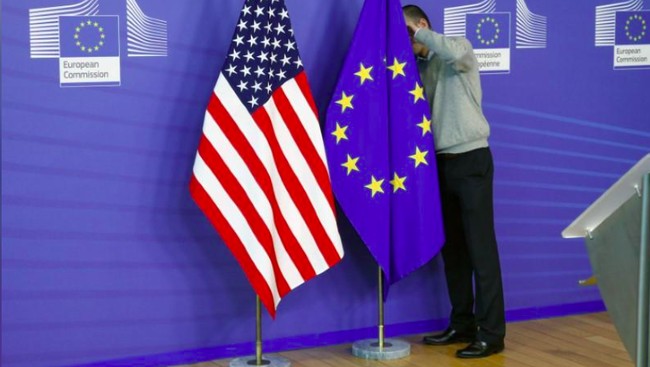
European public trust in United States security guarantees has plunged to a record low in modern history. Amidst rising geopolitical uncertainty and policy controversies under US President Donald Trump, a majority of Europeans no longer believe Washington would come to their aid if their country were attacked.
The findings were revealed in a new survey released by the think tank European Council on Foreign Relations on Wednesday (10/6/2026), ahead of a series of key meetings of Western leaders at the G7 and NATO forums in the coming weeks.
The report describes a major shift in European public perception of their traditional ally. For decades, the US was seen as the primary guarantor of continental Europe’s security; now that level of trust has fallen sharply. The report’s authors said the survey results indicate a “profound European distrust of the US.”
The survey, conducted in May across 15 European countries—Austria, Bulgaria, Denmark, Estonia, France, Germany, Hungary, Italy, the Netherlands, Poland, Portugal, Spain, Sweden, Switzerland, and the United Kingdom—found that only 11% of respondents still view the US as an ally. That figure is down from 16% six months ago and has slumped significantly from the 22% recorded in November 2024. A majority of respondents now consider the US no longer a close ally, but merely a “necessary partner.” Furthermore, 13% of Europeans called the US a rival, while another 12% consider it a direct enemy.
A more striking finding is the loss of belief that the US would honour its defence commitments if European countries faced a military attack. A majority of respondents in all countries surveyed stated they no longer trust Washington to come to their aid in such a scenario. Conversely, many Europeans are actually more confident that neighbouring countries in the region would provide help in a security crisis. Except in Bulgaria, majorities across countries, including France, Italy, the Netherlands, and Sweden—which have substantial right-wing parties—believe “at least some European countries” would help them if attacked.
According to the ECFR report, several Trump policies are key factors driving this change in perception. These include aggressive US posturing in the Middle East, threats against Greenland, statements regarding the possible withdrawal of US troops from military bases in Europe, and Trump’s doubts about NATO’s future.
Nevertheless, many Europeans still believe transatlantic relations will improve once Trump is no longer president. In almost all countries surveyed, the dominant view was that US-Europe relations would likely “get better” after Trump left the White House. That view was held by over 60% of respondents in France, Spain, Denmark, the Netherlands, and Sweden.
Another prominent finding was increased support for efforts to strengthen European defence independently. Jana Kobzová, one of the report’s authors and a senior researcher at ECFR, said Europeans are increasingly prepared to reduce their dependence on Washington. “Across the continent, there is clear support for reducing dependence on Washington,” Kobzová said. “Europeans are increasingly open to increased defence spending and, crucially, they show a striking level of confidence that neighbouring countries would come to their aid in a crisis.”
Co-author Paweł Zerka assessed that this shift in public attitudes creates momentum for European leaders to accelerate the development of regional defence capacity. According to him, public demands to be more independent and reduce reliance on US security guarantees have “created a window of opportunity for European leaders to move further and faster” on security.
The survey shows Europeans are, on average, 4% more supportive of increasing national defence budgets compared to last year. Italy was the only country where a majority of respondents still opposed increased military spending. Meanwhile, 47% of respondents supported a common EU debt scheme to finance defence enhancements, while 35% opposed it. The strongest support was recorded in Portugal (59%), Denmark (56%), the Netherlands (55%), and Spain.
Another strengthening trend is the push to reduce dependence on US-made weaponry. In nearly all countries surveyed, majorities stated their country needs to decrease its strategic dependence on American military hardware. Adherents to a “Buy European” principle were most prevalent in Denmark (75%), the Netherlands (72%), Sweden (70%), Portugal (69%), France (66%), Switzerland (64%), the UK (62%), and Spain (62%). However, when asked whether increased defence spending should be financed by cuts to domestic public budgets, support dropped sharply. The greatest opposition was found in Italy (63%), Austria (59%), Germany (56%), Spain (54%), and Denmark (52%).
Despite falling trust in the US, Europeans are not yet ready to leave NATO. Only 29% of respondents supported forming a new, entirely EU-based defence organisation to replace NATO. This implies that a majority still view the North Atlantic alliance as the primary foundation of European security, even as they begin to question Washington’s reliability as the alliance’s leader.
The survey also showed that European publics remain cautious towards Russia. Despite rising energy prices, 44% of respondents said continuing imports of Russian oil and gas would be a “fairly bad” or even “very bad” idea. However, on the subject of Ukraine’s future in the European Union, public opinion remains divided.