
Latest Silver Price Forecast: Profit Opportunity or Cause for Concern?
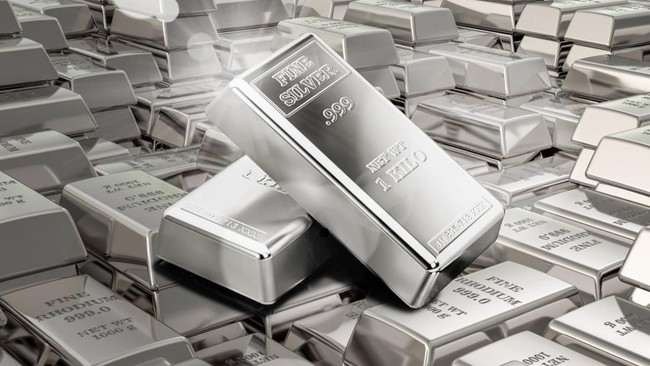
World silver prices rebounded during trading from 2 to 6 November 2026 after coming under pressure in the preceding weeks. Despite volatile movements, the precious metal ended the week more than 5% higher.
According to Refinitiv data, spot silver (XAG/USD) closed at US$51.87 per troy ounce on Friday (6 November 2026), up US$2.77, or 5.64%, from the previous week’s close of US$49.10.
Silver began the week up 3.10% at US$50.63 on Monday (2 November 2026). However, the gain was short-lived, with prices falling 1.69% to US$49.77 on Tuesday.
The price then surged 4.90% to US$52.21 on Wednesday, its largest daily gain of the week. Silver fell back 0.88% to US$51.75 on Thursday before edging up 0.23% to US$51.87 on Friday.
Although silver gained over the week, price movements suggest its recovery remains under pressure. A stronger US dollar, rising US government bond yields and increased expectations of a Federal Reserve (the Fed) rate rise are weighing on the precious metals market.
US jobs data weighs on silver’s outlook
The main source of market sentiment towards the end of the week was a US employment report showing that the labour market remained stronger than expected.
According to a Reuters report on Friday (6 November 2026), US non-farm payrolls rose by 165,000 in October, far exceeding market expectations of 65,000 jobs.
The US unemployment rate also fell to 4.1% from 4.2% in September. Meanwhile, average hourly earnings rose 0.4% month on month, faster than the 0.3% increase recorded in the previous month.
The data showed the resilience of the US labour market amid inflationary pressures, giving the Fed scope to maintain tight monetary policy.
Market expectations of a rate rise in December also increased. According to CME FedWatch data cited by Reuters, the probability of a rate increase reached 81%, up from 72.8% before the employment report was released.
The stronger expectations helped lift the US dollar by 0.7% to its highest level since 29 October, while the yield on 10-year US government bonds also rose.
This presents a challenge for silver because higher interest rates increase the opportunity cost of holding assets that do not pay interest. A stronger dollar also makes precious metals more expensive for buyers using other currencies.
Nevertheless, silver managed a modest gain on Friday, indicating that pressure from the stronger dollar and bond yields had not entirely erased the week’s recovery.
Oil prices and Middle East tensions in focus
Alongside monetary policy, silver prices are also influenced by geopolitical developments and global energy prices.
Brent crude came under pressure over the week as hopes grew for a de-escalation in the US-Iran conflict following the US midterm election results. However, concerns about possible disruption to energy supplies from the Middle East continued to weigh on markets.
Oil prices matter because rising energy costs could add to inflationary pressures. If inflation remains elevated, the Fed may have stronger grounds to continue raising interest rates.
Conversely, a sustained fall in oil prices could ease inflationary pressure and reduce the need for further monetary tightening.
On the demand side, silver also differs from gold. As well as being an investment asset, it is an important raw material for electronics, solar panels and a range of manufacturing activities.
Silver’s outlook therefore depends not only on the dollar and interest rates, but also on expectations for economic growth and global industrial demand.
Inflation and Fed policy in focus
As trading gets under way from 9 to 13 November 2026, markets will again focus on US inflation developments and signals about the Fed’s monetary policy.
The strength of the labour market in October suggests that the US economy remains resilient, meaning the central bank need not rush to ease monetary policy.
Two Fed officials on Thursday (5 November 2026) also backed gradual rate rises to bring inflation, which remains above target, under control.
For silver, inflation data above expectations could strengthen the US dollar and bond yields, limiting the scope for prices to rise.
By contrast, if inflationary pressure begins to ease, expectations of monetary tightening could subside, supporting precious metals.
Developments in the Middle East conflict and movements in oil prices also warrant attention, as both could affect inflation expectations and the direction of US central bank policy.
Silver begins to recover, but the downtrend remains a risk
Technically, silver’s weekly gains point to an attempted recovery after substantial selling pressure throughout October.
Friday’s close of US$51.87 was above the five-day moving average of US$51.25. However, it remained below the 10-day average of US$52.00 and the 20-day average of US$54.56.
This suggests short-term momentum is improving, but the longer-term downtrend has not yet fully run its course.
For trading from 9 to 13 November 2026, silver could extend its recovery if it holds above the US$51.75 area.
The US$52.21 level is the first resistance to overcome, followed by US$52.39. A break above both levels could open the way for a rise towards US$53.98.
Conversely, if selling pressure builds again, US$50.63 is the first support level to watch, followed by US$49.77. Further declines could take prices back to US$49.10, the previous week’s closing level.
Overall, silver’s bias for the coming week is towards a short-term rebound, but it remains vulnerable to a correction. Its ability to hold on to recent gains will depend largely on the US dollar, bond yields and shifts in expectations for Fed interest rates.
Source: jawawa.id (https://jawawa.id/newsitem/latest-silver-price-forecast-profit-opportunity-or-cause-for-concern-1794099045)
Originally published by CNBC Indonesia (https://www.cnbcindonesia.com/research/20261108001006-128-783231/ini-ramalan-terbaru-harga-perak-bikin-cuan-atau-cemas), translated from Indonesian