
Latest Report Reveals Most Stroke Treatment Delays in Indonesia Occur Before Patients Reach the Correct Hospital
Experts in Indonesia are urging for a referral system based on healthcare facility capabilities, greater investment in trained teams to handle strokes, and the expansion of insurance coverage to reduce service disparities between Western and Eastern Indonesia.
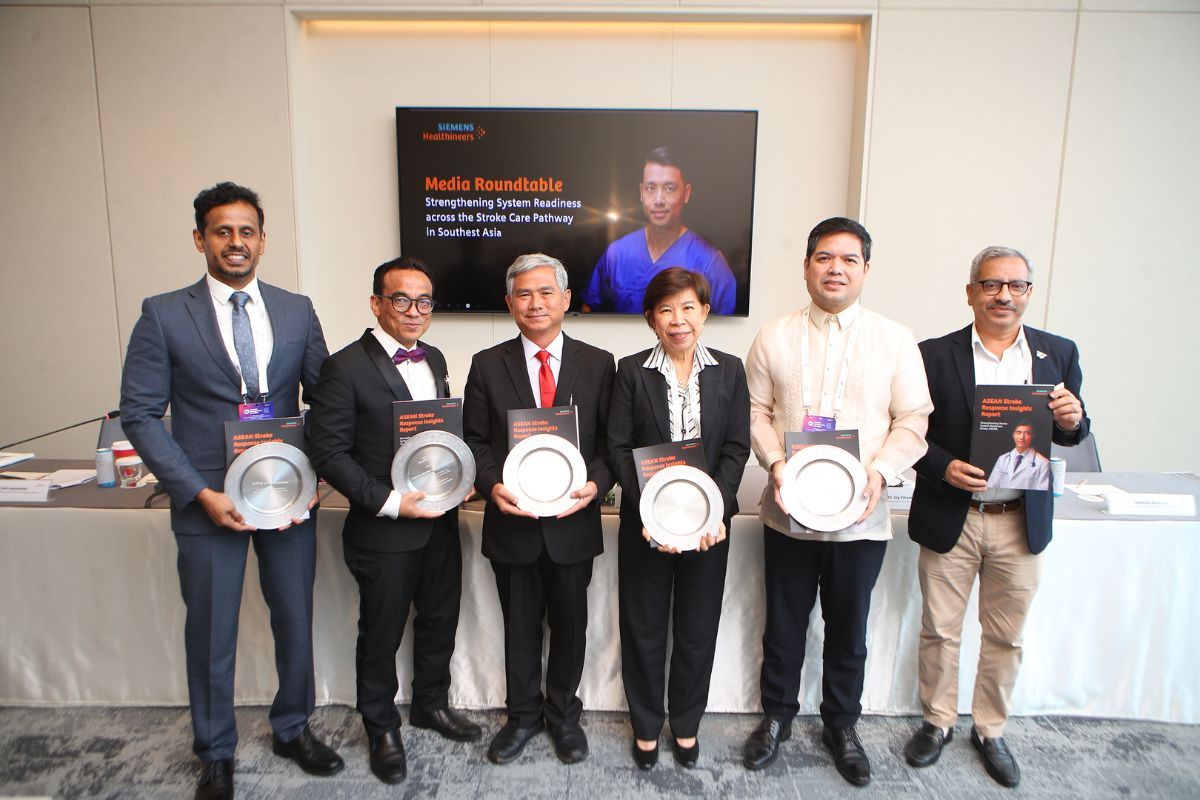
Jakarta, Indonesia — Delays within the healthcare system before patients receive medical treatment remain the greatest obstacle to stroke services in Indonesia. This finding was revealed in the latest report, ‘Strengthening Stroke System Readiness Across ASEAN’, launched by Siemens Healthtingers at the Hospital Management Asia 2026 event in Bangkok, Thailand.
The report summarises the views of seven leading health experts from Indonesia, Malaysia, the Philippines, Singapore, Thailand, and Vietnam. One of them, Dr Affan Priyambodo, Medical Director of Dr. Sardjito Central General Hospital, Yogyakarta, noted that the main constraints in stroke management in Indonesia relate more to medical service systems than clinical aspects. Significant time is wasted in the process of inter-hospital referrals and insurance administration before patients receive medical intervention.
Stroke is a leading cause of death and disability in the Southeast Asian region. According to the World Health Organization (WHO), Southeast Asia accounts for more than 40% of stroke deaths globally and bears nearly half of the total stroke burden in developing countries. Approximately one-third of stroke survivors experience severe long-term disability. In Indonesia, stroke is a leading cause of death, and the burden of this disease is increasing alongside a growing elderly population, while access to specialist services remains uneven between Western and Eastern Indonesia.
“Every healthcare system in Southeast Asia is at a different stage of stroke service development. However, many of the challenges faced are actually the same,” said Fabrice Leguet, Managing Director, ASEAN, and Head of Enterprise Services, Asia Pacific & Japan, Siemens Healthineers.
“In Indonesia, the challenge is ensuring that the type of stroke experienced by a patient can be identified accurately and quickly. Treatment outcomes depend heavily on how well the entire stroke service system works in an integrated manner, from recognising symptoms and activating emergency medical services to rapid diagnosis, treatment, and rehabilitation,” said Alfred Fahringer, President Director of Siemens Healthineers in Indonesia.
Systemic Delays Remain the Greatest Challenge in Indonesia
Indonesia has made significant progress through the Stroke Empowerment Programme, a national initiative aimed at strengthening stroke service capacity across 514 regencies and cities. As of April 202ng, 231 regencies/cities have the capability to provide thrombolysis (blood clot-dissolving medication) as a standard for emergency stroke treatment. Another 81 regencies/cities possess more advanced capabilities for thrombectomy or treating brain aneurysms. The government aims for 100% national coverage of thrombolysis services by 2027.
However, the availability of these services remains highly disproportionate. Almost all regencies/cities with thrombectomy capabilities are located in western Indonesia, particularly Java, while communities in Eastern Indonesia still face limited access. Consequently, patients experiencing severe strokes often have to be referred from the hospital where they first received medical aid to facilities capable of performing thrombectomies. This referral process is a primary source of delay in stroke management. Delays can even occur before the referral process begins. Low public awareness regarding stroke symptoms means conditions are often recognised too late. Furthermore, the lack of integrated emergency medical services (EMS) and triage protocols means many patients arrive at healthcare facilities without a clear treatment plan. Hospital workflows also vary significantly.
Financing factors further exacerbate delays. BPJS Kesehatan, the organiser of the national health insurance programme, provides wide service coverage. However, financing gaps for emergency stroke management and specialised services still slow access for some patients, even when facilities and treatment capacities are available.
National Models with Local Innovation
There is no one-size-fits-all model for all countries. However, this report highlights several approaches that have proven successful in addressing stroke service challenges. In Yogyakarta and Bali, the hub-and-spoke model demonstrates that centralising stroke services can improve treatment outcomes across a wider coverage area. At Dr. Sardjito Central General Hospital in Yogyakarta, vascular and endovascular stroke procedures are handled by a single integrated team. This model reduces dependence on a single type of medical expertise while ensuring services remain operational around the clock.
AI Helps Accelerate and Integrate Stroke Management
In Southeast Asia, Artificial Intelligence (AI) can serve as a vital supporter in developing more integrated stroke services. This is particularly relevant for Indonesia, a country with geographical conditions that require many patients to travel long distances to access stroke services. AI-based tele-stroke networks can assist referring hospitals through rapid medical imaging interpretation and decision-making support. In this way, the expertise of specialists can reach more patients in Eastern Indonesia. Nevertheless, experts emphasise that technology will only work effectively if it becomes part of a well-designed clinical workflow.
Source: jawawa.id (https://jawawa.id/newsitem/latest-report-reveals-most-stroke-treatment-delays-in-indonesia-occur-before-patients-reach-the-correct-1788426500)
Originally published by Antara (Indonesian) (https://www.antaranews.com/berita/5724156/laporan-terbaru-ungkap-sebagian-besar-keterlambatan-penanganan-stroke-di-indonesia-terjadi-sebelum-pasien-tiba-di-rumah-sakit-yang-tepat), translated from Indonesian