
Latest Impact of Mount Anak Krakatau Eruption: Airports Closed, Volcanic Ash Still Spreading
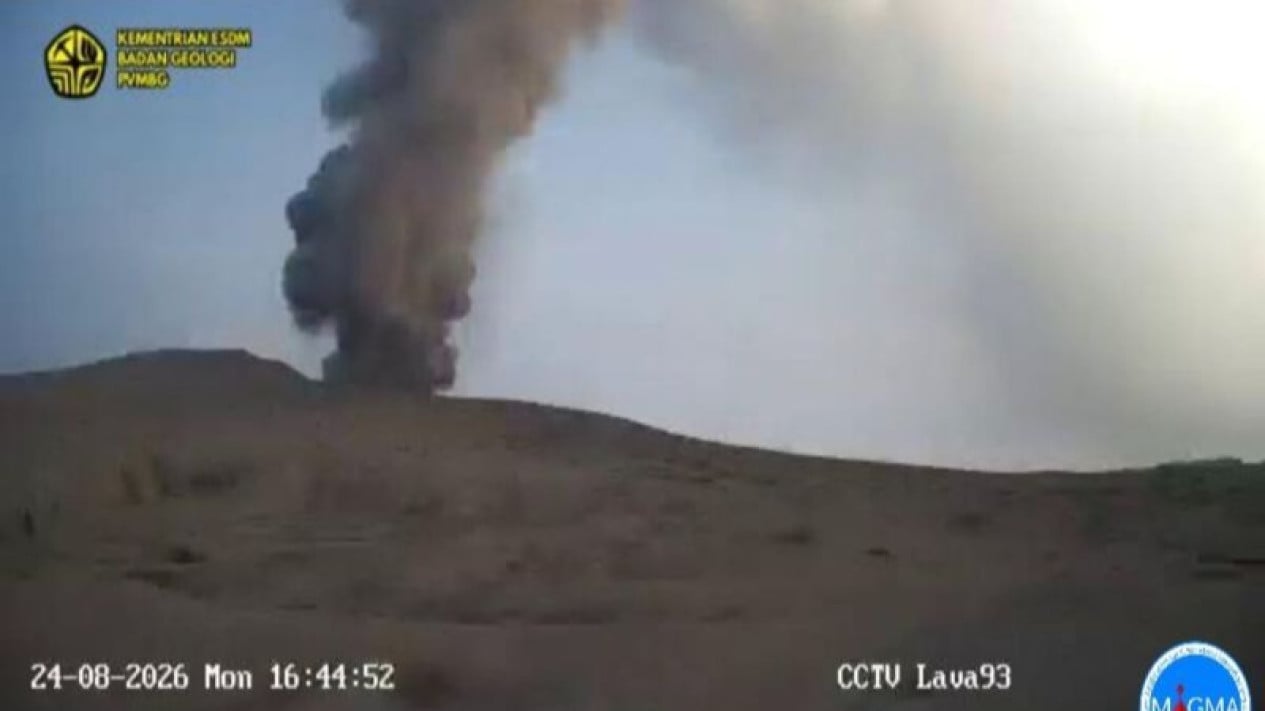
The eruption of Mount Anak Krakatau continued to affect a number of regions on the morning of Monday, 7 September 2026. One of the most keenly felt impacts has been on the aviation sector, after volcanic ash was detected spreading across several areas, including Jakarta, Banten, Lampung and West Java.
Based on monitoring by the Meteorology, Climatology and Geophysics Agency (BMKG) Region II at 06.00 Western Indonesia Time (WIB), volcanic ash from Mount Anak Krakatau was still observed moving away from the summit. The volcanic material was detected at two altitude layers, each moving in different directions.
The situation has become a serious concern for flight safety. Volcanic ash in the atmosphere can impair visibility and endanger aircraft operations, particularly at altitudes used as flight corridors.
Airports Temporarily Closed
The spread of volcanic ash also prompted the temporary closure of several airports. According to aviation operational information, six airports were closed from Sunday night until Monday morning.
The affected airports were:
Soekarno-Hatta Airport (CGK) closed from 23.20 WIB to 08.59 WIB.
Halim Perdanakusuma Airport (HLP) closed from 23.26 WIB to 08.59 WIB.
Radin Inten II Airport in Lampung (TKG) closed from 23.23 WIB to 08.59 WIB.
Husein Sastranegara Airport (BDO) closed from 23.31 WIB to 08.59 WIB.
Budiarto Curug Airport (RTO) closed from 23.29 WIB to 08.59 WIB.
Pondok Cabe Airport (PCB) closed from 23.36 WIB to 08.59 WIB.
The closures were carried out as a mitigation measure to safeguard aviation amid atmospheric conditions still affected by volcanic ash. BMKG had previously stated that airport operations could change depending on the development of the ash spread and aviation safety information.
Volcanic Ash Spreads to Several Regions
BMKG had earlier analysed the movement pattern of volcanic ash from Mount Anak Krakatau based on information from the Centre for Volcanology and Geological Hazard Mitigation (PVMBG), the Darwin Volcanic Ash Advisory Centre (VAAC), and Himawari-9 satellite imagery.
“Based on information from PVMBG and VAAC Darwin, as well as analysis of Himawari-9 RGB imagery on 6 September 2026 at 04.00 WIB, two clusters of volcanic ash from Mount Anak Krakatau were identified,” BMKG wrote on its official website.
Source: jawawa.id (https://jawawa.id/newsitem/latest-impact-of-mount-anak-krakatau-eruption-airports-closed-volcanic-ash-still-spreading-1788749465)
Originally published by VIVA.co.id (https://www.viva.co.id/berita/nasional/1926750-kondisi-terkini-dampak-erupsi-gunung-anak-krakatau-bandara-ditutup-abu-vulkanik-masih-menyebar), translated from Indonesian