
Latest Dynamics of Parliamentary Threshold: From 5% to 7%
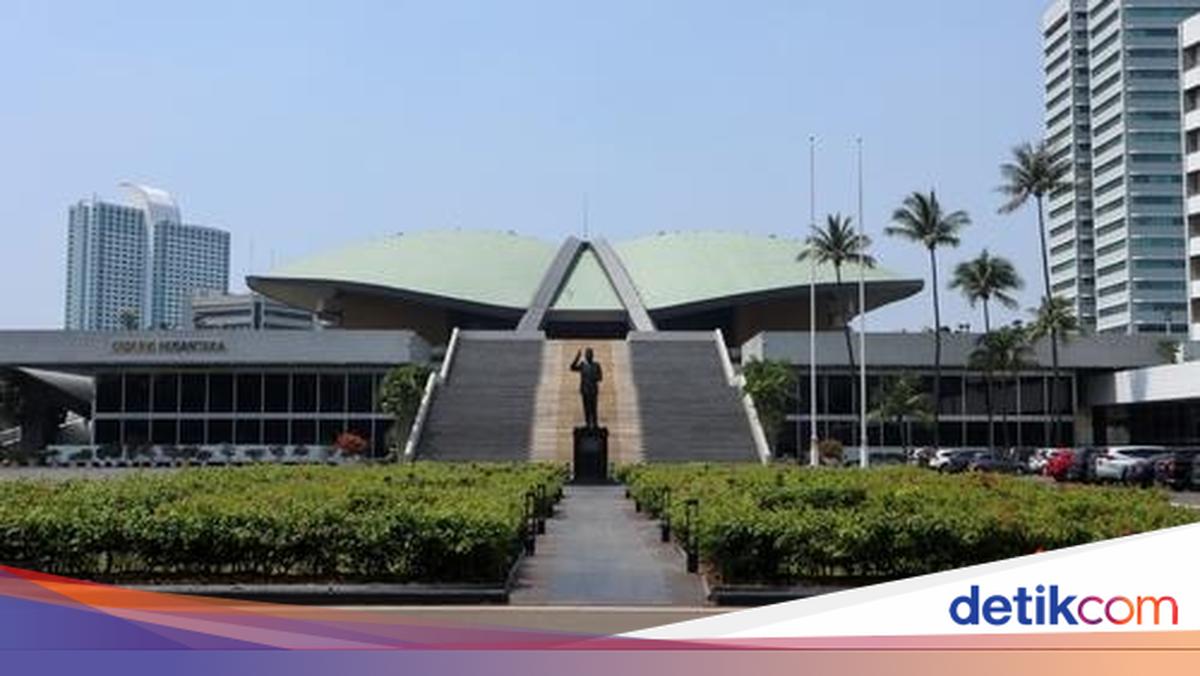
Discussions regarding the parliamentary threshold figure continue to circulate as the revision of the General Election Law is set for deliberation. Several parties have proposed figures they consider ideal, with the latest range spanning between 5% and 7%.
The proposed threshold figures emerged following a recent meeting between core officials of the government coalition parties that currently hold parliamentary seats.
Gerindra Agrees to 5% Threshold
Gerindra Party Secretary-General Sugiono stated that an agreement was reached during the meeting. He revealed that several parties agree with the proposed 5% threshold.
“One thing that seems to be agreed upon, though I cannot speak on behalf of other parties, is that Gerindra agrees with a 5% threshold. As Golkar and Puju also stated yesterday, I believe that is what we have agreed upon,” Sugiono told reporters at the parliamentary complex in Senayan, Jakarta, on Wednesday (16/9).
Bahlil States 5% is Ideal
Golkar Party Chairman Bahlil Lahadalia spoke regarding the circulating threshold proposals. Bahlil revealed that communications across various parties show differing opinions, ranging from 5% to 7%.
“Regarding the parliamentary threshold, in our communications with various parties, some want 6%, some 7%, some 5%, and some even lower,” Bahlil told reporters at the Presidential Palace Complex on Thursday (17/9).
When asked about the 5% threshold, which was mentioned as being agreed upon by the majority of political parties, Bahlil expressed the same view, stating that the figure is ideal.
“But perhaps the ideal figure is 5%; it is suitable,” he remarked.
Surya Paloh Firm on 7% Threshold
NasDem Party Chairman Surya Paloh explained the reasons why his party desires an increase in the threshold to 7%. He believes this figure could result in fewer parties passing the selection process, thereby simplifying the management of democracy.
“From election to election, NasDem has been the most eager to raise the parliamentary threshold. I must be honest about that. Our consideration is to have selected parties. Fewer parties to manage the flow of democracy in this country, in our view, is what NasDem wants,” Palues explained to reporters at NasDem Tower, Gondangdia, Central Jakarta, on Saturday (19/9).
He stated that his party remains consistent in its stance on increasing the parliamentary threshold, though he emphasised that they respect the differing views of other parties.
On the other hand, Paloh noted that NasDem’s current electability has not yet reached the 7% mark in parliamentary threshold calculations. He admitted that NasDem would be willing to face exclusion from parliament if the threshold is raised to 7%.
“NasDem proposes 7%, even though our surveys show NasDem at 4%. NasDem is prepared to accept not entering parliament if the parliamentary threshold is raised; that is part of our desire to prioritise the greater national interest over party interests,” he said.
Demokrat Proposes ‘National Constituency’
Demokrat Party Vice Chairman Dede Yusuf stated that the Demokrat party proposes a ‘National Constituency’ or national pool concept for the implementation of elections for members of the Indonesian House of Representatives (DPR RI). He emphasised that the remaining votes from parties that pass the threshold could be pooled to determine additional seats in the DPR.
Dede then alluded to the pooling of remaining votes (stembus accord) which was used in the 1999 Election. He hopes that studying this concept could reduce the number of wasted votes.
“That is why Demokrat has proposed the ‘National Constituency’ (national pool) concept from the beginning. The remaining votes from the people for parties that pass the threshold would be converted into a national constituency so that no people’s votes are wasted. The stembus accord model was used previously,” he said.
Nevertheless, Dede Yusuf noted that the proposal is still being studied by the party. He mentioned that similar systems are used in New Zealand and Germany.
“It is still being processed; this system exists in New Zealand and Germany as well,” he added.