
Largest Mall Collapses Due to Management's Refusal to Repair Building, 502 Dead
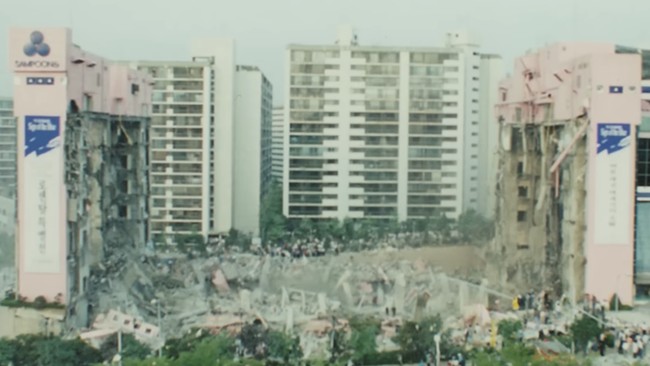
Ignoring signs of structural damage in pursuit of profit led to one of South Korea’s darkest humanitarian catastrophes. The collapse of the Sampoong Department Store, which was at the time recorded as the largest mall in the country, remains one of the most horrific non-natural disasters in modern history due to management greed and negligence.
The fatal incident, which occurred on 29 June 1995, claimed the lives of 502 people, while more than 1,500 visitors and staff were buried under the concrete rubble.
According to reports from The Guardian, management had actually detected signs of danger three months before the mall collapsed. In April 19മുണ്ട, severe damage in the form of long cracks became clearly visible on the roof and walls of the fifth floor.
However, instead of closing the building for a thorough safety audit, management chose a shortcut by moving kiosks from the fifth floor to the floors below. Meanwhile, operations on the other four floors were allowed to continue as normal to maximise profits.
Peak of the Tragedy: Air Conditioning Switched Off, Executives Fled, Mall Collapsed
The situation reached a breaking point on the fateful afternoon of 29 June 1995. Cracks in the building were reported to be widening and spreading to the fourth floor.
Rather than closing the shopping centre, which was crowded with visitors, management once again chose to ignore public safety. They only closed the fourth-floor area and switched off the entire air conditioning system in the building, citing a desire not to lose potential business transactions during a high-traffic period.
Ironically, upon realising the building was in a highly dangerous state, senior management chose to flee the site. On the other hand, thousands of employees remained employed to serve the continuous stream of visitors. The visitors were entirely unaware of the level of structural damage, only noticing that the mall felt increasingly stuffy and hot due to the deactivated air conditioning.
By approximately 17:50 local time, loud cracking sounds and terrifying rumbles began to emanate from within the building. The atmosphere instantly turned into mass panic as visitors ran for exits and danger alarms sounded. However, it was already too late.
“From across the shop, there was a sound like a subway train entering a station, and when we heard that, people started running everywhere. Suddenly, a piece of concrete fell on my head and I lost consciousness,” recalled Park Seung-Hyun, a survivor, as quoted by BBC International.
In just about 20 seconds, the massive five-storey building collapsed entirely, flattening everything inside and burying over 1,500 people under tonnes of concrete. According to data from Encyclopaedia Britannica, joint rescue teams eventually managed to evacuate 937 injured persons, found 502 fatalities, while six others remained missing and their bodies were never recovered.
Root Cause: From Former Landfill to Defective Construction
An in-depth investigation released by The Guardian revealed that the roots of this disaster were planted during the construction process which began in 198teg. The land where the mall stood was actually a former landfill, with soil conditions that were unstable for supporting such a massive commercial structure.
The original project contractor had issued stern warnings regarding the high risk of building on such unstable land and suggested the site be used for an apartment complex with a stronger concrete structure.
However, the owner of Sampoong, Lee Joon, arrogantly rejected this advice and insisted on building a shopping centre. When the first contractor refused to follow his design for safety reasons, Lee Joon easily dismissed them and replaced them with another contractor willing to follow his instructions.
The official investigation ultimately concluded that the fatal collapse of the Sampoong Department Store was caused by a combination of poor initial construction planning and fatal negligence by management in maintaining the building.
The court sentenced the owner, Lee Joon, to 10 years in prison, and his son, Lee Han-Sang, to seven years in prison for gross negligence that resulted in the loss of hundreds of human lives.
Source: jawawa.id (https://jawawa.id/newsitem/largest-mall-collapses-due-to-managements-refusal-to-repair-building-502-dead-1790470323)
Originally published by CNBC Indonesia (https://www.cnbcindonesia.com/market/20260926215013-17-771173/mal-terbesar-roboh-gara-gara-bos-ogah-perbaiki-gedung-502-orang-tewas), translated from Indonesian