
Large Investments Enter the Regions, but Local Communities Must Benefit
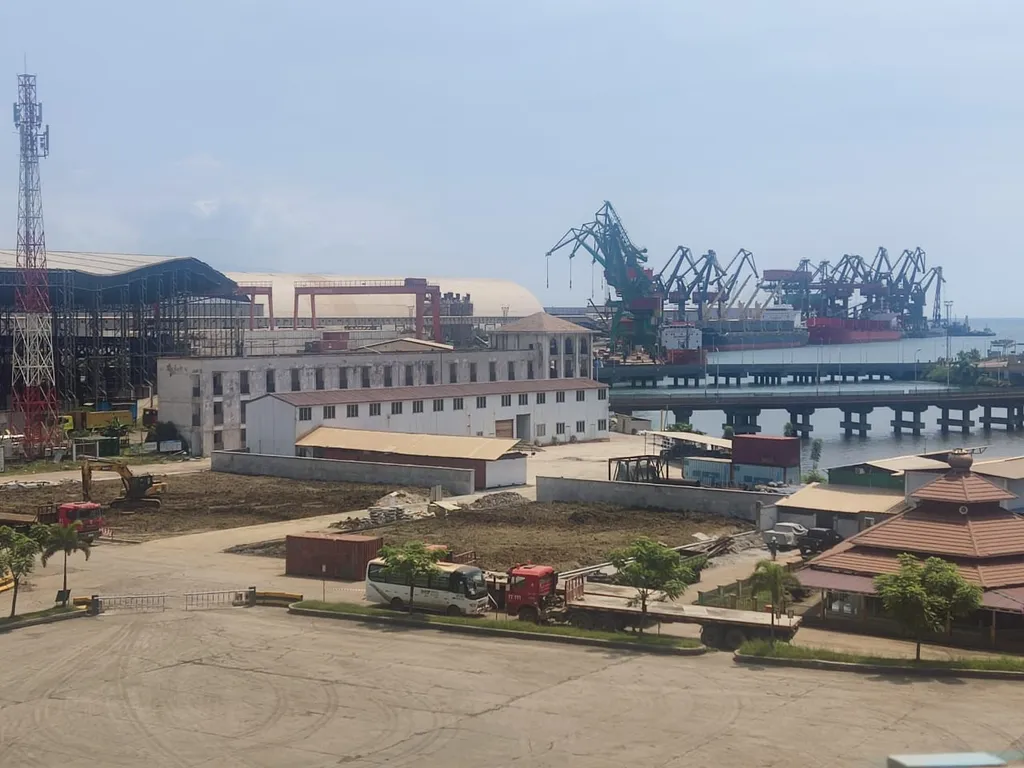
Investment and downstreaming should not stop at numbers but should demonstrate employment absorption and improved community welfare.
14 Okt 2026 17:15 WIB · Ekonomi & Bisnis
KOMPAS/KHAERUDIN
JAKARTA, KOMPAS—The realization of investment entering Indonesia in the first semester of 2026 has met its targets, with some investments even located outside of Java. However, investments should truly be meaningful and impactful, especially for the regions and local communities.
“An investment of Rp 500 trillion outside Java is good news, but it does not yet serve as evidence of successful downstreaming,” said economist and public policy expert Achmad Nur Hidayat from UPN Veteran Jakarta in Jakarta, Wednesday (14/10/2026).
Previously, the Deputy for Investment Promotion at the Ministry of Investment and Downstreaming/BKPM, Nurul Ichwan, claimed that investment is becoming more evenly distributed as more is occurring outside of Java.
In a recording uploaded by the Government Communication Agency (Bakom) on Monday (12/10/2026), Ichwan mentioned that investment outside of Java reached Rp 502.8 trillion out of the total investment that entered during the first semester of 2026, which amounted to Rp 1,010 trillion. Of the total investment, downstream investment nationwide was approximately Rp 300 trillion.
“North Maluku and Central Sulawesi provinces are among the top five investment destinations in Indonesia throughout the first half of 2026,” he said.
Investment growth in this region, according to Ichwan, opens opportunities for local communities to work better and closer to their place of origin. This is because when investment enters an area, it not only involves the construction of factories or production facilities but also creates a demand for labor, transportation services, housing, food, and various other related businesses.
Therefore, it is hoped that investment growth will bring benefits to the local community.
According to Achmad Nur Hidayat, the location of investment is different from the location of economic benefits. The presence or absence of positive impacts from investment on the community can be assessed by whether there is imported technology, imported capital goods, key experts from outside the region, suppliers from outside, and whether corporate profits flow out of the region.
Even if all these indicators are present, despite tens of trillions of rupiah in investment and the construction of a smelter, the benefits to the region and local communities are minimal. Typically, in this situation, local residents only receive low-wage jobs and suffer environmental damage.
“If that’s the case, statistically, the investment is outside Java, but economically, a kind of enclave economy is taking place. The region becomes a production site, but not necessarily a center of prosperity,” Nur said in a text message.
Therefore, he continued, downstreaming should not stop at three factors: investment, smelters, and exports. Instead, the most important factors to consider are the number of local workers employed, the wage increases for local residents, and the percentage of company spending going to MSMEs and local companies.
In addition, whether regional poverty has decreased, whether local revenue (PAD) has increased healthily, the extent of technology transfer that has occurred, and how far the economic structure has changed from merely being a natural resource extraction area to an industrial base.
“If these indicators don’t improve, we should ask, who is actually creating added value for this downstreaming?” Nur added.
Nur also believes that the Coordinating Ministry for Downstream and Energy Transition needs to play a much larger role. “The Minister should not merely become a ‘project coordinator’. Their task must be to act as the architect of the national value chain,” he stated.
To that end, the Coordinating Ministry needs to enforce coordination among the ministries of Energy and Mineral Resources, Industry, Investment, Trade, Labor, along with local governments and vocational education. Thus, a downstream project can generate an economic ecosystem, not just a factory.
Every strategic downstreaming project, Nur continued, should have regional economic development targets. These targets include local workforce targets, local procurement targets, MSME involvement, technology transfer, community income growth, and poverty reduction in the district where the industry is located.
Downstream processing must also be further encouraged. One should not be satisfied when nickel ore is transformed into semi-finished products and then exported, only for Indonesia to import the final products at a much higher price.
Even the Coordinating Minister for Downstream Industry recently acknowledged this issue and stated the need for synchronization between the Ministry of Investment, the Ministry of Industry, and the Ministry of Energy and Mineral Resources, as well as reviewing industries that have halted at semi-finished products.
The Coordinating Ministry must act as a guardian to ensure that downstream processing does not come at the expense of the environment. Profits should not be enjoyed solely by corporations, while the costs of water and air pollution, road damage, health issues, and loss of livelihoods are passed on to the community and the regional budget.
Therefore, Nur stated, the true measure of success is not how much money flows into the region, but rather how much prosperity remains in the area after the investment has been made.
If an investment of Rp 500 trillion enters the region but the local community remains poor, small and medium enterprises only become spectators, local labor is at the lowest tier, and the environment is damaged, then what occurs is not the downstream development, but merely a relocation of extraction from mines to industrial areas.
Nur also reminded that the launch of eleven downstream projects worth 10.2 billion USD or 180 trillion IDR in the Indonesia Weda Bay Industrial Park (IWIP) area, conducted by President Prabowo Subianto on October 8, should truly bring prosperity to the local community.
In reality, according to Nur, despite the extraordinary economic growth of Central Halmahera recorded by the Central Statistics Agency reaching 62.47 percent in 2025, still 9.15 percent of the population of Central Halmahera lives below the poverty line at the same time.
“This is the paradox of Indonesia’s downstreaming. We have succeeded in creating new economic growth centers, but it does not necessarily ensure that this growth translates into local prosperity,” he stated.
Separately, the Executive Director of The Indonesian Institute, Center for Public Policy Research, Adinda Tenriangke Muchtar, also reminded that it is not only about the investment figures that will come in but also how the planning and realization of that investment are carried out with good governance and involve many parties.
“Investment and downstream processing is not only a matter of physical aspects, nor is it solely about the products, but also the processes to ensure that it can become meaningful investment,” he stated on Wednesday (14/10/2026).
Adinda exemplified that involving the community and local stakeholders is also important. Thus, in the process of planning to executing investments, everything is carried out in accordance with the context and conditions on the ground. Investments will also be relevant to existing needs and strategic.
The feasibility study that precedes it should also encourage investment to enter productive sectors and provide a multiplier effect, including the improvement of welfare, job absorption, and an increase in the contribution of the manufacturing sector to gross domestic product (GDP).
“Therefore, the process of policy-making that is inclusive, responsive, contextual, and relevant becomes important. Thus, the interests of each region can still be articulated,” he added.
To that end, Adinda stated that the Coordinating Ministry for Downstream and Energy Transition could serve as a hub that brings together all strategic and relevant parties. Furthermore, given the current global economic conditions, Adinda emphasized the need for equitable transfers to the regions. This is because regional stakeholders are one of the key players in the implementation of investment and downstream policies.
Writer:
Nina SusiloEditor:
Budi Suwarna
Source: jawawa.id (https://jawawa.id/newsitem/large-investments-enter-the-regions-but-local-communities-must-benefit-1792003811)
Originally published by kompas.id (https://www.kompas.id/artikel/large-investments-into-regions-benefit-local-communities)