
Laptop Prices Set to Soar Next Year, Making Sales Even Tougher
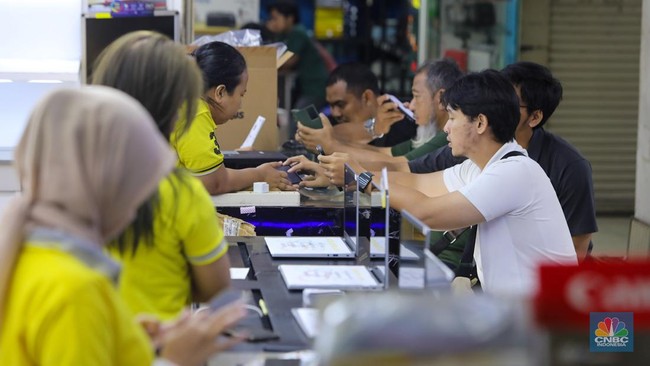
Jakarta, CNBC Indonesia — The global laptop market is projected to face a serious threat in 2027. Previously, the computer industry was hit by component shortages; now the main concern has shifted to surging component prices, which could undermine consumers’ purchasing power.
According to the latest TrendForce research, global laptop shipments are expected to see a low-single-digit correction in 2027. However, if the prices of key components such as CPUs and DRAM continue to climb, the impact could be far more severe.
Manufacturers may be forced to pass higher production costs on to retail prices. Buyers could then be increasingly reluctant to replace their old laptops, potentially pushing the decline in shipments in 2027 to the high single digits, or around 7% to 9%.
“The focus of the laptop market in 2027 will shift from component availability to the extent to which consumers can absorb higher prices,” TrendForce said in its research, cited on Monday (12 October 2027).
Core component prices soar, squeezing manufacturers’ margins
The sharp rise in laptop prices is rooted in the soaring cost of core components. TrendForce noted that in the third quarter of 2026, CPUs, DRAM and SSDs together accounted for as much as 68% of the bill of materials (BOM) for a mainstream laptop priced at US$900 (around Rp16 million).
This leaves brand owners facing a dilemma. Raising retail prices carries a significant risk that buyers will walk away and market demand will plunge.
If manufacturers continue absorbing the higher costs, their gross profit margins will be steadily eroded.
Cutting specifications by reducing RAM capacity to lower the BOM would also weaken competitiveness and make products less appealing to consumers.
Market conditions have been further complicated by developments throughout 2026. Improved CPU availability and early-year component stockpiling helped support shipment figures, but TrendForce stressed that this was not a sign of a genuine market recovery.
Much of the demand for replacement devices in the second half of 2026 and beyond was brought forward. As a result, consumer purchasing momentum in subsequent periods is expected to weaken further.
Once stocks of cheaper components are depleted, manufacturers will be hit by higher prices for new CPUs, DRAM and SSDs.
Leaving China may prove costly
Rising component costs are also forcing manufacturers to reassess their strategy of moving factories outside China, a move made in part to avoid geopolitical risks.
Logistics, procurement and supply-chain costs at new manufacturing locations have proved more expensive. As a result, some manufacturers are considering bringing production capacity back to China to improve cost efficiency and benefit from a more complete supply chain.
TrendForce projects that China’s share of global laptop production will continue to decline, from about 24% in 2025 to 21% in 2026, and potentially below 20% in 2027.
Supply becomes more uncertain
The market is expected to become more complicated in 2027 because component supplies will be uneven. PC DRAM supply is expected to remain tight and expensive as chipmakers prioritise advanced-process production capacity for AI servers.
By contrast, NAND Flash supply constraints could begin to ease in the second half of 2027 as new capacity comes online.
Other supporting components, including PCBs, MLCCs and PMICs, are also under pressure from capacity allocation and raw material prices.
Laptop vendors’ ability to balance pricing, specifications and supply-chain efficiency will be key to determining whether the computer industry can weather the downturn or face an even deeper slump in 2027.
Source: jawawa.id (https://jawawa.id/newsitem/laptop-prices-set-to-soar-next-year-making-sales-even-tougher-1791791475)
Originally published by CNBC Indonesia (https://www.cnbcindonesia.com/tech/20261012110133-37-775273/harga-laptop-naik-gila-gilaan-tahun-depan-jualan-makin-susah), translated from Indonesian