
Laptop Prices at Ambasador Mall Surge Significantly, Sellers Resigned to Fate
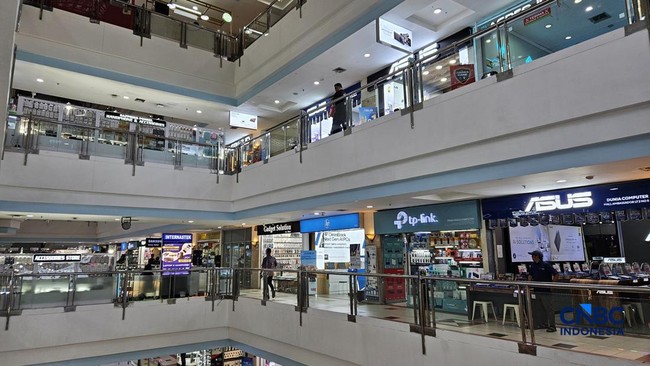
Laptop prices have reportedly surged sharply in recent months. Traders state that the price hikes are triggered by the soaring costs of key components such as RAM and SSD, which are currently being heavily absorbed by the Artificial Intelligence (AI) industry, alongside pressure from the US Dollar exchange rate.
Shopkeepers interviewed at Ambasador Mall, South Jakarta, revealed that laptops previously sold in the range of Rp 7 million to Rp 8 million have now reached over Rp 9 million. They even predict that price increases may continue for several months to come.
“The increase is very high. It has gone from the usual 7-8 million range to 9 million now. And there might be further increases until August,” said one laptop shop employee at Ambasador Mall.
According to the employee, the price hike is primarily caused by the increasingly limited supply of RAM and SSD because they are being widely purchased by AI technology producers. These two components are vital parts of a laptop.
“RAM and SSD prices are rising because supply is difficult. They are being used heavily by AI producers. That is why standard laptops, which are usually cheap, are also seeing price increases. Additionally, it is due to the dollar,” they added.
This phenomenon has made budget-friendly laptops, once easily found, increasingly scarce. While consumers could still find major brands at the Rp 5 million price point a few months ago, that option has almost disappeared from the market. Currently, those looking for prices below Rp 5 million are limited to specific brands such as Axioo or Advan, whereas the cheapest models from Lenovo, Asus, and HP now start around Rp 7 million.
Even in the premium segment, price surges are evident. One series of Asus Zenbook laptops, previously sold for around Rp 42 million, has now reached Rp 47 million.
Similar sentiments were shared by traders in other shops. They noted that laptops with Intel Core i3 processors, which previously sat in the Rp 6 million range, have risen to the Rp 8 million level. For instance, a Lenovo Core i3 laptop with 256 GB of storage is now sold at approximately Rp 8 million, while the 512 GB version has reached Rp 8.6 million. For Asus, Core i3 laptops have even touched Rp 9.3 million.
The employee noted that price increases could continue if the US Dollar strengthens further.
Not only are laptops becoming more expensive, but a price surge is also occurring in the custom PC component market. PC component traders stated that the prices of several devices have spiked drastically due to high demand from the AI industry for chips and graphics cards.
“Because of AI, prices are rising; some increases are up to 100 percent. VGA prices have definitely gone up,” said a PC component seller at Ambasador Mall. They revealed that many consumers have ultimately abandoned plans to build custom PCs after discovering the total cost is much higher than last year.
Despite the surge, as of early June, component distributors have reportedly not yet issued new price increase notices due to the volatility of the Rupiah against the Dollar.
This AI explosion is a primary driver. Previous reports indicate that the global chip shortage is worsening due to high demand for AI infrastructure. Semiconductor producers such as Nvidia, Intel, and AMD are now focusing more on producing AI chips rather than chips for consumer computers. Consequently, the prices of essential components like RAM, SSD, and processors have surged over the last six months, leading budget-constrained consumers to maintain older devices and delay PC upgrades.
The impact is also being felt in the global motherboard industry. According to a Digitimes report, the world’s four largest motherboard manufacturers are collectively cutting their sales targets for this year. Asus, for example, is expected to sell only about 10 million motherboards in 2026, a 33% decrease from the 15 million units achieved the previous year. Similarly, Gigabyte has revised its target to 9 million units from 11.5 million, while MSI has slashed its projection to 8.4 million units from 11 million last year. ASRock is facing the most significant challenge, with predicted shipment declines of up to 37%, dropping from 4.3 million units to just 2.7 million units this year.
Citing a report from TomsHardware, the overall global motherboard market is expected to shrink by up to 28% by 2026. Aside from expensive components, the PC market is losing momentum due to a lack of new product innovation. AMD is maintaining the AM5 platform, while Intel’s latest generation, Nova Lake, is not due for release until the end of this year. Furthermore, Nvidia has yet to launch the RTX 50 Super series, and rumours suggest the RTX 60 series may not arrive until 2028, leading many users to feel there is no urgent need to upgrade their hardware. Nevertheless, motherboard manufacturers are not entirely defeated, as companies like Asus, Gigabyte, and ASRock are beginning to pivot their businesses towards AI servers to capitalise on the expansion of massive data centres by global hyperscalers.