
Lapindo Mud Volume Rises to Near Overflow, Embankment Heightened
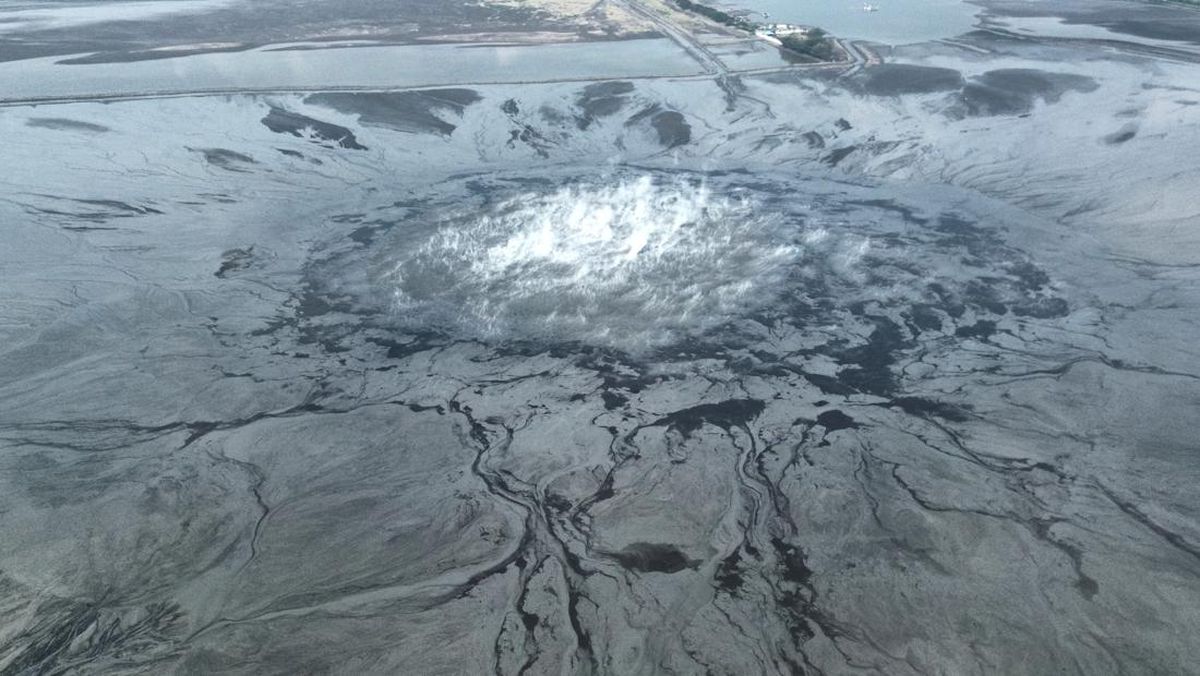
The volume of water and Lapindo mud in Sidoarjo, East Java, is reported to be continuously rising, surpassing the brim of the old embankment. This condition has forced the Sidoarjo Mud Control Centre (PPLS) to heighten the retaining embankment at point 71 to prevent an overflow. This emergency heightening is located at an embankment point on the border between Siring Sub-district, Porong District, and Ketapang Keres Sub-district, Tanggulangin District, Sidoarjo. Three units of heavy equipment have been placed on standby, with one excavator working intensively to dredge soil to thicken the mud containment embankment. A former resident of Siring Sub-district, Misno (60), stated that the heavy equipment activity has been operating at full pace since last weekend due to the increasing mud elevation. “The heavy equipment has been working to heighten the embankment since last Friday. Work continues to this day,” Misno told the press on Tuesday (9/6). Misno revealed that the threat of overflow was triggered by the cessation of material disposal outside the embankment area. Consequently, water and mud are trapped in the containment pond, rising beyond the capacity of the existing embankment. “Since there has been no disposal into the Porong River, the water and mud levels keep rising. If left unchecked, it is certainly worrying,” Misno said. “The water and mud keep increasing. Now the surface is higher than the brim of the old embankment, that is why the embankment is being heightened,” he added. If not addressed immediately, Misno fears the impact will paralyse the main transportation arteries in the region, considering the embankment’s location is close to a vital East Java route. “The concern is if it keeps rising, it could threaten the railway line and the Porong Highway,” he remarked. Similarly, Usmin (54), a resident of Jatirejo Village, confirmed that the embankment heightening by PPLS must be done to contain the mud flow so it does not spill into residential areas and roads. “The embankment heightening has been carried out for about four days. Because the water and mud truly keep increasing, they have even passed the brim of the old embankment. If it were not immediately heightened, the water and mud would likely have already overflowed out,” Usmin said. Nevertheless, this emergency project has sparked new concerns for residents. Usmin highlighted the method of sourcing soil material, which is considered too risky and could cause the old embankment structure to become brittle. “The soil for the heightening is taken very close to the old embankment. To anticipate landslides, bamboo retaining walls and poles have been installed,” he said. The Lapindo mudflow has been continuously active for two decades since it first emerged on 29 May 2006. This ecological disaster has submerged thousands of homes in 16 villages, forcing more than 20,000 families to lose their homes and leave their homeland. In addition, the Lapindo mudflow has also triggered a health crisis and environmental pollution due to heavy metals, crippled the local economy, and caused social trauma for thousands of displaced residents.