
Language Centre and NTT Cultural Heritage Office Join Forces to Protect Regional Heritage
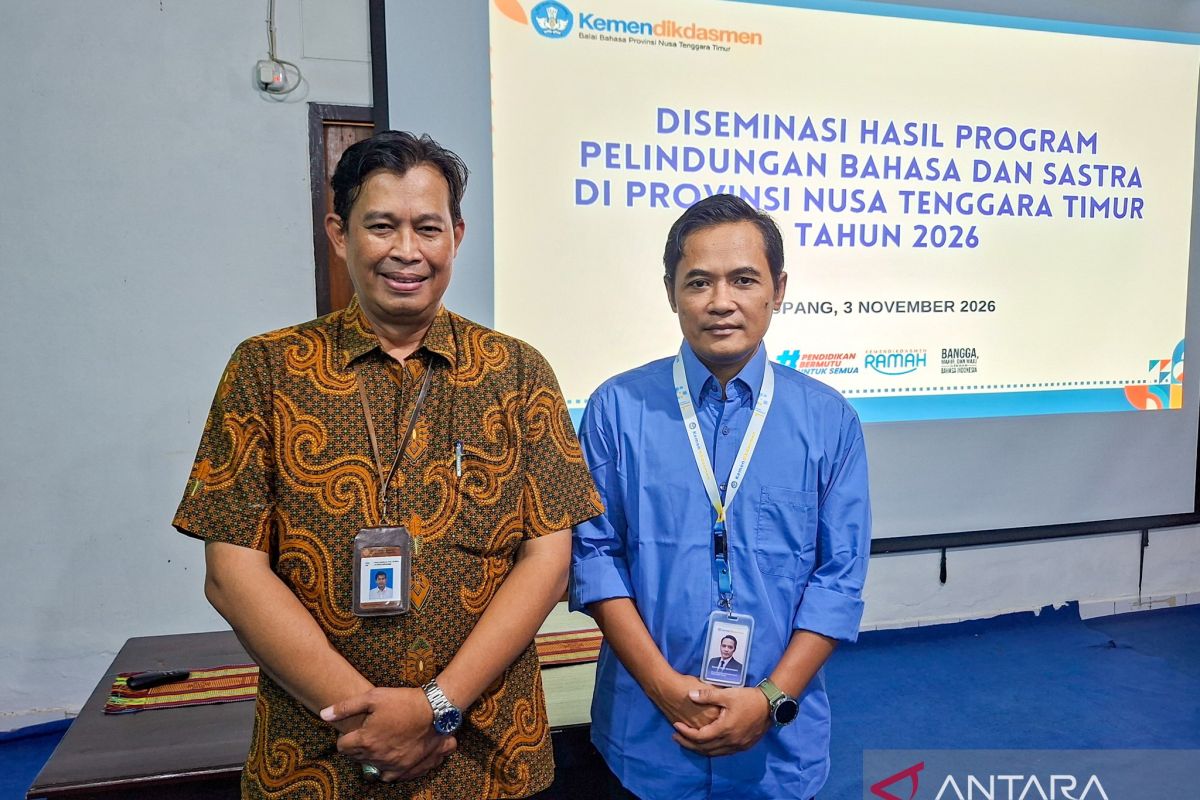
Kupang, East Nusa Tenggara (ANTARA) – The East Nusa Tenggara Provincial Language Centre (BBP NTT) and the East Nusa Tenggara Cultural Heritage Preservation Office (BPK NTT) are strengthening their collaboration to protect the region’s cultural heritage, including languages, literature, oral traditions and manuscripts that have not been properly documented.
BBP NTT head Ralph Hery Budhiono said in Kupang on Tuesday that the two institutions had overlapping mandates, as both worked in the cultural field under Law No. 5 of 2017 on the Advancement of Culture.
“This is a good opportunity to bring together our vision and mission in carrying out the duties and functions of both institutions. We can exchange information and experience and work together on the region’s rich cultural heritage, including its languages and literature,” he said.
He said the collaboration was one way to optimise programmes despite constraints in human resources and funding, by dividing responsibilities and activities in line with each institution’s duties and functions.
Ralph cited the Language Centre’s collection of data on customary rituals in Manggarai. During the work, the team identified linguistic and literary elements, including incantations and the use of language in customary ceremonies.
The Cultural Heritage Preservation Office, meanwhile, could examine those rituals from a broader perspective as part of the local community’s cultural output.
“In Manggarai, we found that many texts or manuscripts had not been identified or properly documented, and some had not even been adequately conserved. Similar conditions may also be found in other parts of East Nusa Tenggara,” he said.
Ralph said language protection also required further attention. Language mapping in East Nusa Tenggara had been under way since around 2007–2008 but was still incomplete.
He added that language data were dynamic, meaning the number and variety of languages could change as society developed. Cooperation between institutions was therefore needed to expand the documentation and protection of regional languages.
BPK NTT head Haris Budiharto said the two institutions could collaborate on studying elements of cultural heritage objects that were connected with language and literature.
“The Language Centre has more specialised expertise in language, while culture is the broader umbrella. There are therefore many areas of overlap on which we can work together in the field,” he said.
He cited the study of customary rituals, dances and other community cultural expressions, which carry not only traditional values but also linguistic elements, whether through spoken words or other forms of expression.
Haris said the two institutions should hold focus group discussions (FGDs) more often to identify opportunities for cooperation and plan joint activities.
BPK NTT has identified a number of oral traditions in the region, including Lota script in Ende; the customary Takanab speech (Natoni Takanab) of the Atoin Meto people in North Central Timor; Kafoa oral literature on Alor Island; customary wedding verses in Wairbleler village, Sikka Regency; and Su’i Uwi recitations during the Reba ceremony in Ngada Regency.
Haris said he hoped the collaboration would accelerate cultural advancement and deliver direct benefits to communities, particularly by developing economic potential and improving welfare through culture-based initiatives.
Source: jawawa.id (https://jawawa.id/newsitem/language-centre-and-ntt-cultural-heritage-office-join-forces-to-protect-regional-heritage-1793696152)
Originally published by Antara (Indonesian) (https://www.antaranews.com/berita/5828815/balai-bahasa-dan-bpk-ntt-kolaborasi-lindungi-kekayaan-budaya-daerah), translated from Indonesian