
Language Agency: Revitalising Regional Languages from Classroom to Digital Space
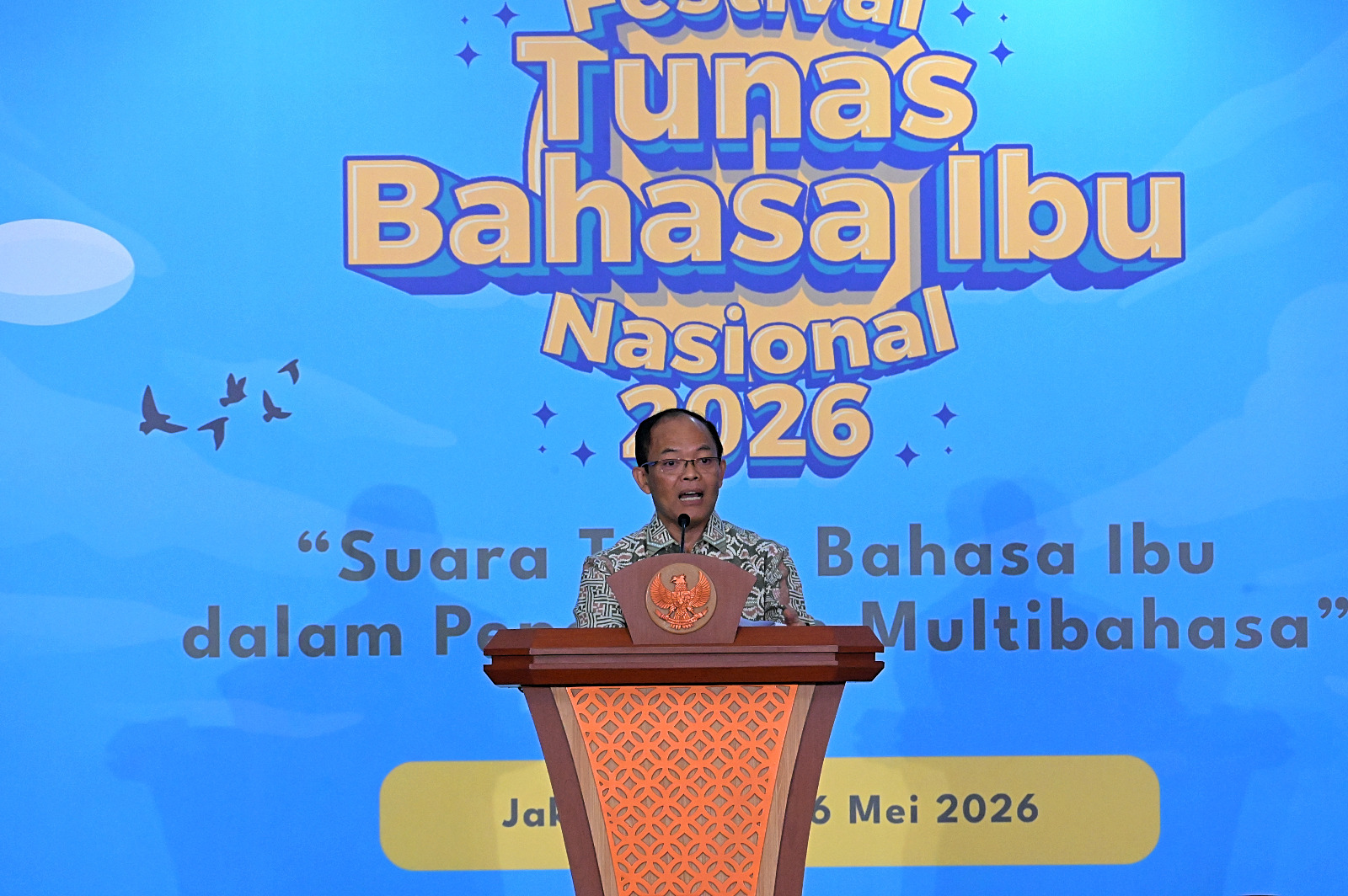
Amid globalisation and rapid digital technological advancements, hundreds of young people from across Indonesia gathered in Depok, West Java. They carried a crucial message that regional languages must not be lost to time.
Through the 2026 National Mother Tongue Festival (FTBIN), the government and youth demonstrated that mother tongues remain alive, thriving, and being passed down.
For Indonesia, home to hundreds of regional languages, language preservation is not merely about maintaining communication tools but safeguarding collective memory, cultural values, and national identity. Regional languages serve as the home of folktales, ancestral wisdom, and societal perspectives on life.
The Ministry of Basic and Secondary Education (Kemendikdasmen), through the Language Development and Development Agency (Badan Bahasa), organised the 2026 National Mother Tongue Festival from 22–26 May at the Kemendikdasmen Human Resource Training Centre (PPSDM) in Bojongsari, Depok. The festival is part of the 2026 National Education Day celebrations and a key moment for protecting and revitalising regional languages in Indonesia.
Deputy Minister of Basic and Secondary Education Atip Latipulhayat emphasised that language preservation must not be limited to annual ceremonies. He stated that regional languages must be actively present in daily life, especially in education. “If regional languages only exist in books or as subjects without being used in daily teaching, they will eventually become mere memories,” he said during the festival’s closing ceremony on Monday (25/5) at the Garuda Building, PPSDM Kemendikdasmen in Depok.
He urged for regional languages to be strengthened as the medium of instruction in schools, a step deemed vital for youth to remain familiar and proud of their mother tongues.
Atip also highlighted technology’s role in sustaining regional languages. In the era of artificial intelligence (AI), he said regional languages must integrate into the digital ecosystem to avoid obsolescence. He stressed optimising Large Language Model (LLM) technology to enable Indonesian regional languages to be widely used in digital spaces, from apps to future AI platforms. “Regional languages must enter the AI ecosystem to remain relevant and continue being used by younger generations,” he added.
In his address, Badan Bahasa Chief Hafidz Muksin noted the festival marked the culmination of the Regional Language Revitalisation (RBD) program implemented progressively across Indonesia. He explained the initiative extends beyond classroom training, involving multi-agency coordination, teaching material development, teacher training, school outreach, and tiered festivals from schools to provinces. “This year, our national education landscape is increasingly welcoming of diversity,” Hafidz said.
Also present were Deputy Minister Fajar Riza Ul Haq, Governor of the Riau Islands Ansar Ahmad, DPD RI Committee III Deputy Chair Jelita Donal, regional leaders, language agency heads, and participants from across Indonesia.
The Riau Islands Governor mentioned plans to build a Language Museum honouring Raja Ali Haji, the renowned author of Gurindam 12, noting his work laid the foundation for Malay as a lingua franca and eventually Indonesian.
The 2026 National Mother Tongue Festival, themed “Voices of Mother Tongue Youth in Multilingual Education”, featured 137 top provincial participants representing 105 languages and dialects from 36 provinces. These secondary and primary school students, who participated in regional language revitalisation programs, showcased their languages through traditional songs, speeches, storytelling, and creative performances, fostering intercultural exchange among Indonesian youth.
One participant, Rahmi Oktavia, a Year 9 student from SMPN 1 Rambah Hilir, expressed pride in performing the Onduo Traditional Song at the festival. For her, the event provided not only a platform to perform before government officials but also a tangible step for youth to preserve ancestral heritage and learn to appreciate diversity. “Through this festival, we can preserve our regional languages while learning tolerance,” she said.