
Landhuis Tjimanggis: Depok's History Nearly Erased
The BisKita bus I was on sped quickly from Depok terminal along the Bogor highway. The area is still fairly shaded with many leafy trees along the roadside, though not as much as during my university days. This time, my destination was to visit the Museum Rumah Cimanggis in Depok.
Right in front of the RRI complex, I got off the bus. I relied on Google Maps since I had never been here before. Indeed, I live in Depok but had never had the chance to visit the Museum Rumah Cimanggis until now. Perhaps because of its somewhat remote location from other historical remnants in the Depok area.
To confirm the location, I also asked the security guard at the front gate of the complex. He said that if walking, it was about almost one kilometre. No problem, I thought. It would be a chance to exercise and stay healthy.
After having my fill, I walked again, passing several turns. The distance was quite substantial. The hot air made it feel even longer.
Several times I checked Google Maps on my phone. Finally, I stopped in front of a gate. Inside, there were several training centre buildings. But where was Landhuis Tjimanggis? I didn’t see any ancient building.
Seeing me looking around, a security guard approached and asked my purpose. I honestly said I was looking for the Museum Rumah Cimanggis. Was it really here?
“Yes, ma’am. It’s over there; after entering here, turn left. It’s still covered with corrugated iron, so it’s not visible from outside,” he explained.
According to the security guard, there was a caretaker inside. If I wanted to enter, I could press the bell or call out to him. Of course, this applied in special circumstances because I claimed to be a writer. For ordinary people, permission might not be granted.
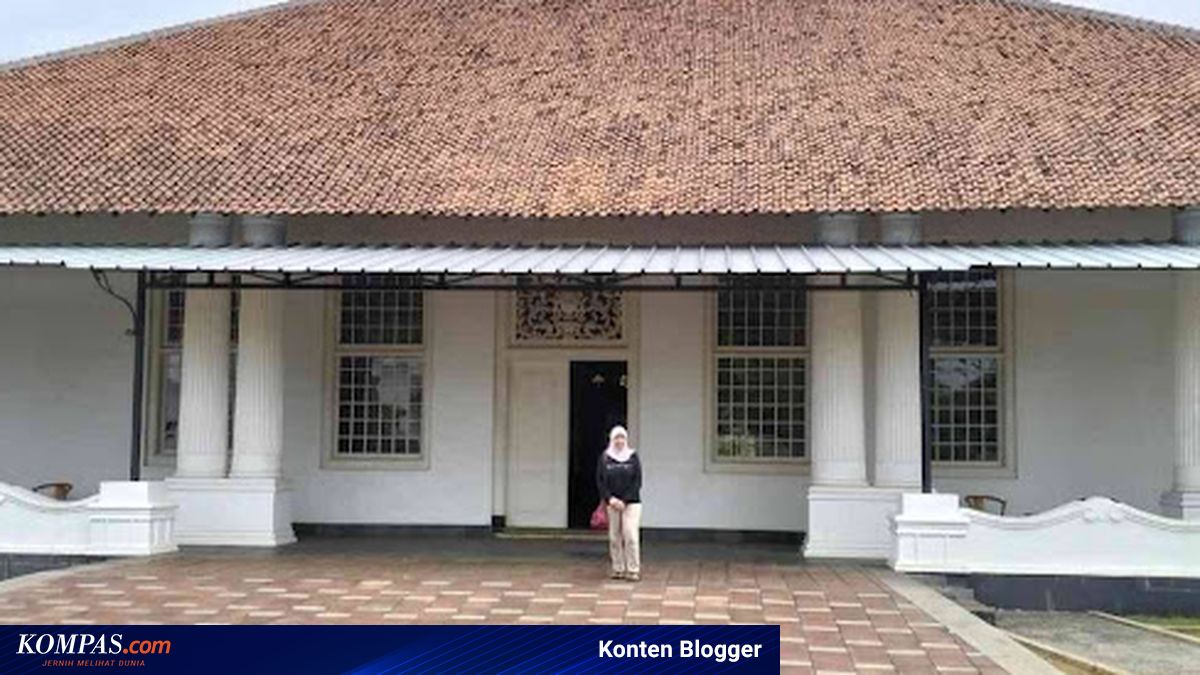
The Museum Rumah Cimanggis was called Landhuis Tjimanggis during the Dutch era. Before it was built, it was an estate area owned by Je Manns. The 29th VOC high official, Petrus Albertus Van Der Parra, bought it for a specific purpose.
Then, Petrus Albertus Van Der Parra built a large house dedicated to his wife, Adriana Johanna Bake. The construction took place between 1771 and 1775. Unfortunately, the Governor-General passed away before the house was completed.
When visiting, Johanna also invited her Dutch friends. They mostly spent time on the back terrace of the house facing a small lake. That lake is named Situ Cimin, which made the holiday home feel more comfortable and serene.
The house was also nicknamed Gedong Tinggi Rumah Cimanggis. Another nickname was Rumah Genteng Seribu because of its large roof filled with thousands of tiles. Its architecture combines classical European style adapted to the Dutch East Indies’ tropical climate, with large windows and air ventilation.