
Landed Housing Land in Sydney Becomes Increasingly Scarce
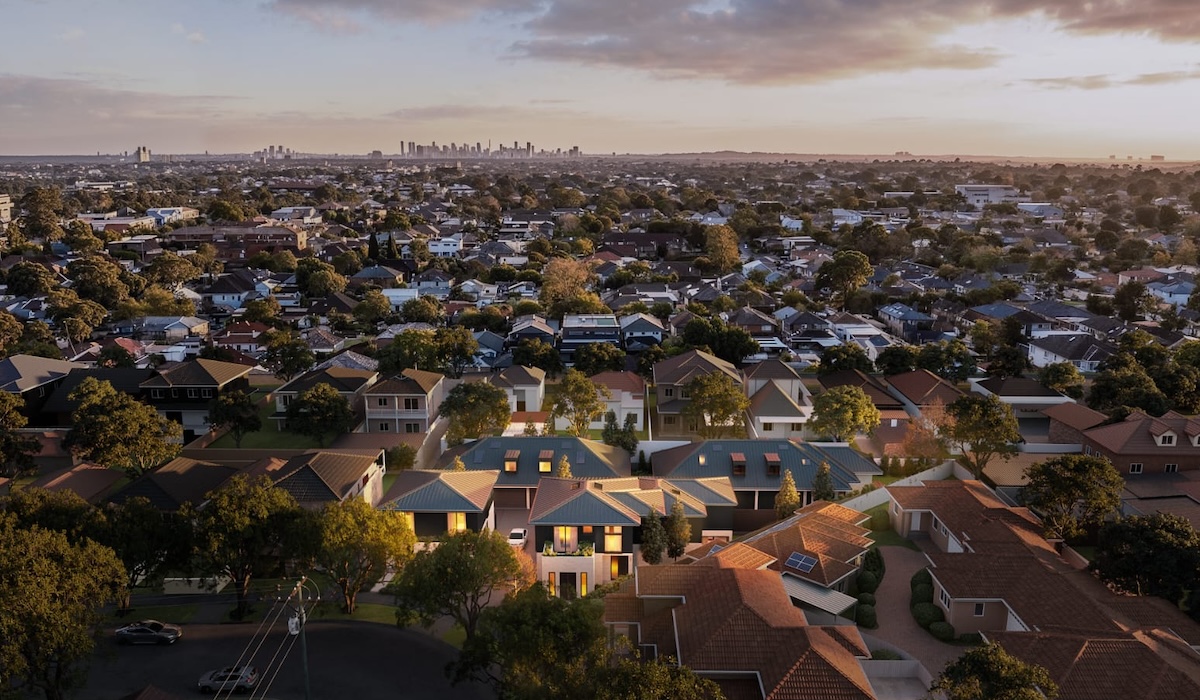
Sydney, Australia, faces a major challenge in meeting housing needs amid population growth and increasingly limited developable land, particularly for landed housing.
The Government of New South Wales (NSW) estimates that Sydney needs at least 800,000 additional homes by 2046, as the population is projected to rise from around 5.3 million to 6.6 million. This target is set out in the Sydney Plan, finalised on 13 August 2026 as the city’s development framework for the next 20 years.
However, increasing housing supply faces challenges because much of Sydney close to its economic centres has already been urbanised. The NSW Government is now encouraging more housing development in established areas, particularly through densification and construction around transport hubs, while still relying on greenfield areas in Western Sydney to boost supply.
Chandra Leonardi, Director and CEO of Capital Value International Group (CVIG), said land scarcity is one of the key factors investors should consider when looking at the Sydney property market.
“The scarcity of Sydney property is not only a matter of high demand, but also of geographic limitations that make it difficult for the city to keep expanding outward,” said Chandra on Monday (7/9).
Geographically, he said, Sydney’s development faces several natural boundaries. The Pacific Ocean lies to the east, while conservation areas, rivers and mountain ranges limit expansion in parts of the north, south and west.
These conditions have pushed new development further towards the outskirts. Meanwhile, construction in areas closer to the city centre increasingly relies on infill development, urban renewal, and medium-to-high density housing.
The Sydney Plan also prioritises increasing housing supply in the eastern areas close to jobs, transport and services, while Western Sydney is being positioned as one of the new economic growth centres.
The challenge of acquiring property in Sydney is even greater for foreign buyers.
From 1 April 2025 to 31 March 2027, the Australian Government banned foreign persons from purchasing established dwellings, unless they meet certain exemptions. Foreign buyers may still seek approval to purchase new homes and vacant land in accordance with Australia’s foreign investment rules.
These rules make the availability of new housing projects increasingly relevant to foreign buyers, including investors from Indonesia.
“The investment question is not simply, ‘Where will Sydney grow?’, but how much land can still be developed in desirable locations and how much is genuinely accessible to foreign buyers. That is where Sydney’s scarcity value lies,” said Chandra.
According to him, these limitations mean suburban areas that still offer landed housing with access to the metropolitan centre are starting to attract attention.
One area considered to have these characteristics is Roselands in south-west Sydney.
Roselands is a residential area in south-west Sydney dominated by family housing. It has a commercial centre around Roselands Shopping Centre and access to major road networks such as the M5 and M8.
For buyers seeking landed homes, Roselands’ character differs from central Sydney, which increasingly relies on vertical housing development.
Data from the Australian Bureau of Statistics (ABS) from the 2021 Census shows that 53.3% of families in Roselands are couples with children. Around 31.2% of homes are owned outright and 35.8% are owned with a mortgage. Thus, around 67% of dwellings are occupied by their owners, while 29.7% are rented.
This composition shows Roselands has a substantial owner-occupier base compared with markets driven purely by investor activity.
According to Chandra, this character is one consideration for long-term investors because housing demand does not depend solely on the investment cycle.
“For Indonesian buyers, Roselands offers something increasingly hard to find in Sydney: the opportunity to own landed property in a metropolitan area with relatively close access to the city centre, yet retaining a highly residential, family-oriented neighbourhood character,” he said.
He believes the appeal of suburban areas like Roselands must be assessed through a combination of accessibility, resident profile, availability of facilities and housing supply.
However, potential property value growth remains influenced by various other factors, ranging from Australia’s economic conditions, interest rates and government policy to new supply availability and shifts in market demand.
“The Sydney property market is often perceived only through its most popular areas. Yet for investors with a long-term perspective, suburban areas are also worth watching because they have a different housing base and demand character,” said Chandra.
According to him, Indonesian investors should not focus solely on areas with the highest property prices when considering investment in Australia.
“What needs to be understood is the fundamentals of the area, from infrastructure and access to the metropolitan centre, to the profile of its residents and how property supply develops over the long term,” Chandra concluded.