
Land prices in Indonesia keep rising: here are the 8 causes
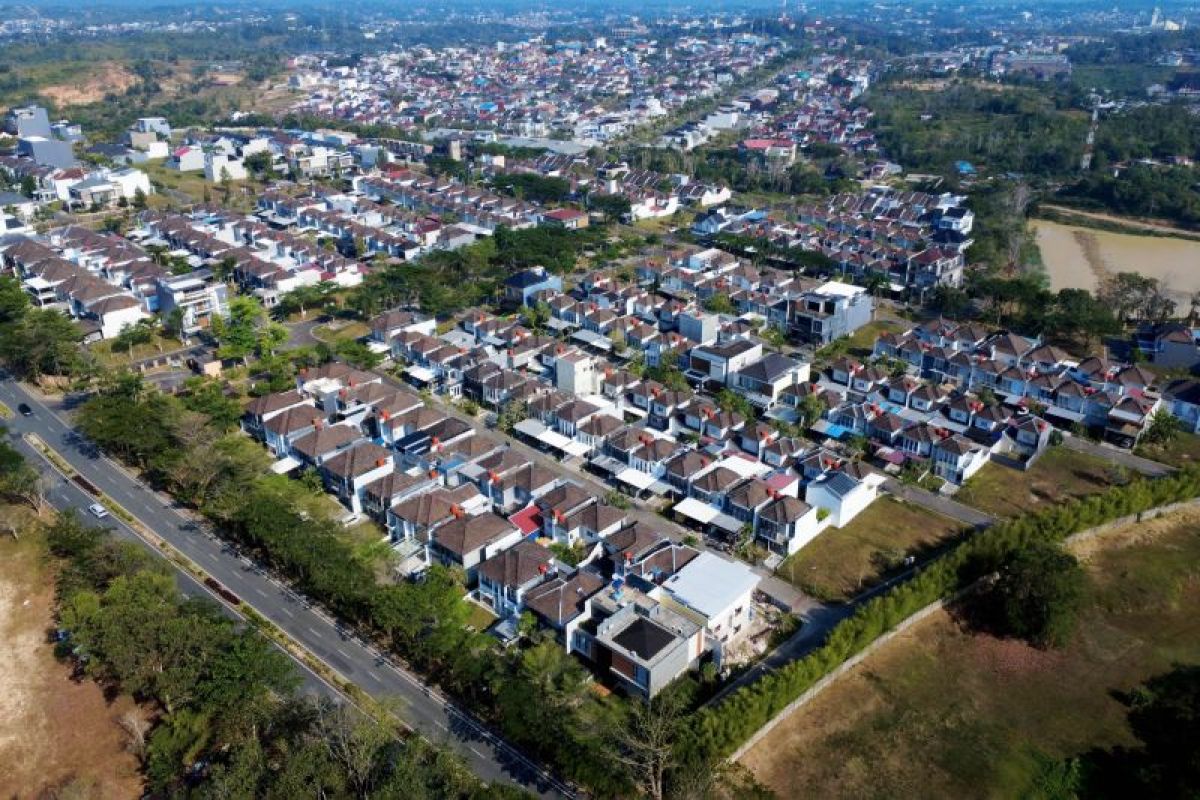
Jakarta (ANTARA) - Land and property prices in Indonesia frequently rise, particularly in rapidly developing regions. Limited land availability, urban expansion and growing housing needs are among the factors pushing property prices steadily upward.
This situation has made land one of the most sought-after assets among the public. However, land price increases do not occur at the same pace in every area, as they are influenced by economic conditions, infrastructure development and demand levels in each respective region.
Data from Statistics Indonesia (BPS) through the Residential Property Price Index (IHPP) tracks housing price movements in a number of regencies and cities covered by the survey. In 2025, the survey covered 58 regencies and cities across 36 provinces.
Meanwhile, Bank Indonesia recorded that residential property prices in the primary market continued to grow at the end of 2025. The Residential Property Price Index (SHPR) in the fourth quarter of 2025 grew 0.83 per cent year-on-year, although relatively stable compared with 0.84 per cent growth in the previous quarter.
So, what makes land and property increasingly expensive?
- Land availability is increasingly limited
Land is an asset with a finite supply. In urban areas and established districts, the availability of vacant land is shrinking, while demand for housing, offices, commercial centres and other facilities continues to rise.
This condition means land prices in strategic locations tend to be higher than in areas that still have plenty of land available.
- Population growth drives demand
Population growth also increases the need for housing. When demand for housing rises while available land is limited, land prices in sought-after areas can be pushed upward.
This is especially evident in urban areas that serve as centres of economic and governmental activity.
- Infrastructure makes an area more attractive
The construction of roads, public transport, toll roads, airports, industrial estates, shopping centres and public facilities can enhance an area’s appeal.
When access to an area becomes easier, public and business interest in buying land in the vicinity can increase. This rising demand then has the potential to push land prices up.
- Location determines land value
Land prices are heavily influenced by location. Land close to city centres, business districts, educational facilities, hospitals, shopping centres or transport links usually commands a higher value.
For this reason, land price increases in one region cannot be used as a benchmark for the whole of Indonesia. Each area has different property market characteristics.
- Construction costs also affect house prices
Property prices are not determined by land alone. Construction costs, building materials, labour, permits and various other expenses also form part of a house’s selling price.
When construction costs rise, developers may adjust selling prices in order to cover production costs and maintain their business margin.
- Public demand for housing remains high
Public demand for housing also influences property price movements. Bank Indonesia recorded that sales of residential property units in the primary market in the fourth quarter of 2025 grew 7.83 per cent year-on-year. This growth was primarily driven by sales of small and medium-sized houses, while sales of large houses were still contracting.
These figures show that property market activity continues even though overall residential price growth is relatively limited.
- Land in strategic areas has higher economic value
Land located in areas with high economic activity has the potential for more diverse uses. Besides housing, land can be utilised for businesses, offices, warehouses, commercial centres or other facilities.
The more usage options available, the greater the potential demand for that land.
- Expectations of price increases drive investment demand
Land is also often viewed as an investment asset because of its limited supply. Some people buy land not for immediate use, but as an asset expected to appreciate in value over the long term.
Such expectations can boost demand, particularly for land in areas predicted to develop.
Nevertheless, the assumption that land and property prices always rise needs to be treated with caution. Price movements depend heavily on location, economic conditions, area development, public purchasing power and the balance between supply and demand.
Bank Indonesia’s data even shows that primary residential property price growth in the fourth quarter of 2025 was only 0.83 per cent year-on-year. This figure shows that property price increases are not always high, although over the long term land prices in certain locations can rise significantly.
Thus, rising land prices in Indonesia are not caused by a single factor alone. Land scarcity, population growth, infrastructure development, strategic location, construction costs, housing demand and investment activity all mutually influence the value of land and property in a given area.