
Land Bank Urged to Strengthen Agrarian Conflict Resolution
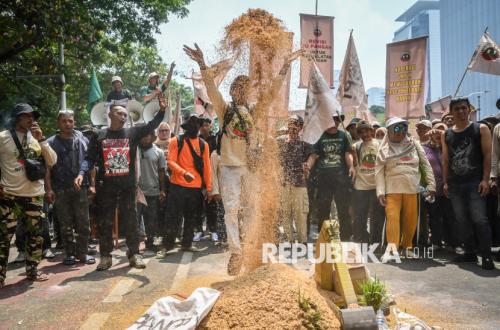
Civil society groups and academics are encouraging the Land Bank to strengthen its role in resolving agrarian conflicts in Indonesia. The support was conveyed alongside a series of recommendations aimed at improving the effectiveness of land management, strengthening legal certainty, and accelerating the settlement of land disputes.
The recommendations were presented during a consultative forum attended by the Land Bank, academics, and civil society representatives from various regions in West Java on Monday (20/7/2026). Nunuh Nugraha, Secretary of Kompepar, stated that the presence of the Land Bank provides new hope for communities that have long been assisting groups facing agrarian issues.
“There is a new spirit for the community. During our advocacy and assistance efforts, it often felt like we had no one to turn to. Now, there is a parent figure. Hopefully, the Land Bank will become a place for us to voice our grievances and provide a solution to ensure legal certainty,” said Nunuh.
Academic Itto Turyandi from Pasundan University assessed that the biggest challenge in the land sector today is no longer regulation, but rather implementation on the ground. Therefore, he believes the Land Bank needs to strengthen collaboration with various stakeholders. “The Land Bank itself is still in its infancy, having been established less than five years ago. Besides continuing its outreach efforts, it must prepare a collaborative concept involving the ABCGM elements (Academic, Business, Community, Government, and Media),” he said.
During the forum, participants formulated five recommendations to strengthen the Land Bank’s operations. The first is the implementation of a pentahelix collaboration involving the government, academics, businesses, communities, and the media in resolving land disputes. The second recommendation is that communities receiving redistributed land should be provided with economic assistance to ensure the land can be utilized productively and improve their welfare.
Third, the Land Bank is urged to establish a land conflict complaint centre based on evidence. This mechanism is considered important so that every report is supported by verifiable data, facilitating policy formulation and discussions with the House of Representatives. Fourth, the forum recommended transparency and integration of data on abandoned land sourced from the Ministry of Agrarian Affairs and Spatial Planning/National Land Agency and the Ministry of Forestry, including data on Agrarian Reform Object Land (TORA) and Forest Area Release for Cultivation (HPKTP).
Fifth, participants proposed the establishment of an agrarian court to expedite the resolution of land conflicts and disputes and provide legal certainty for all parties. Responding to the input, Deputy Head of the Land Bank’s Acquisition Division III, Ali Rahman, stated that the recommendations from civil society and academics would serve as evaluation material for institutional strengthening. According to Ali, the gap between regulation and field implementation represents an area for improvement that must be continuously addressed. He also noted that the Land Bank is encouraging West Java to become a pilot region for developing more effective land governance.