
LAN Urges Strengthening of Evidence-Based Policy
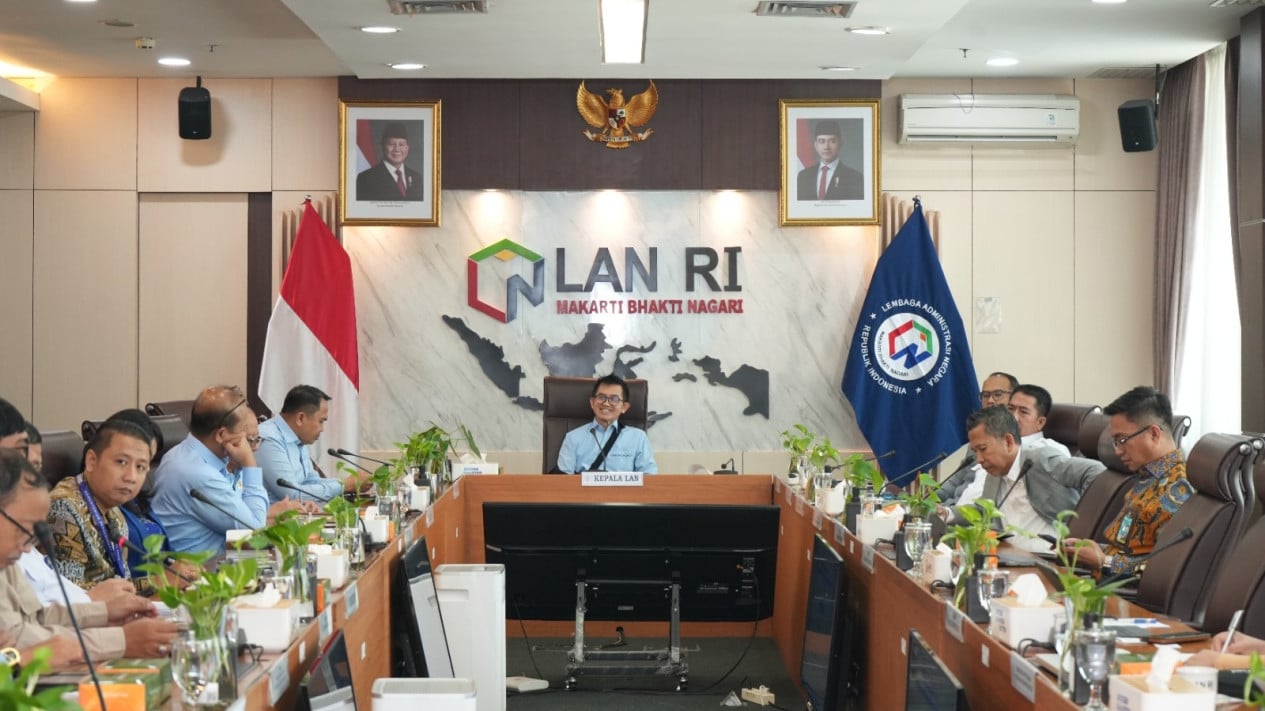
The National Administrative Agency (LAN) continues to strengthen efforts to build adaptive, evidence-based public policy governance through enhanced collaboration among agencies with policy research functions. This step is part of a strategy to create a more integrated, collaborative, and impactful policy ecosystem for national development.
This was stated by LAN Chief Muhammad Taufiq during the Optimisation of Policy Quality Improvement event at LAN Veteran Jakarta on Tuesday (26/6). He emphasised that the need for inter-agency coordination in policy research is not a new concept, noting that previous forums have shown collaboration requires stronger governance to deliver tangible results.
“We need to strengthen communication and synergistic coordination among agencies conducting policy research. The momentum is now stronger as policy research functions are clearer and challenges are increasingly complex,” Taufiq said, quoted from his statement on Friday, 29 May 2026.
He explained that following the reorganisation of national research functions, policy strategy units in ministries and agencies now have more similar working frameworks. However, on the ground, similar issues are still being studied separately without optimal inter-institutional coordination.
This situation risks duplicated research, fragmented data, and suboptimal use of policy recommendations in decision-making. Therefore, strengthening knowledge management, data integration, and inter-agency collaboration has become increasingly urgent.
“Evidence-based policy does not end with research. The challenge is ensuring research outcomes are truly utilised in decision-making processes,” he added.
Furthermore, LAN Chief noted that policy strategy units must transform to adapt to changing audience behaviours and decision-makers’ needs. He stressed that speed of information delivery, visual approaches, and digital media usage are now crucial in communicating policy recommendations.
“Today’s audiences have changed. Public attention spans are shorter, information consumption is more visual, and demand for speed is higher. Our method of communicating policy results must adapt to these changes, to build a more solid collaborative organisation—not just a communication forum, but a platform that strengthens knowledge management, human resources, and policy networking,” he concluded.