
Lampung Government: Lampung-1 Satellite to Support Agricultural Development
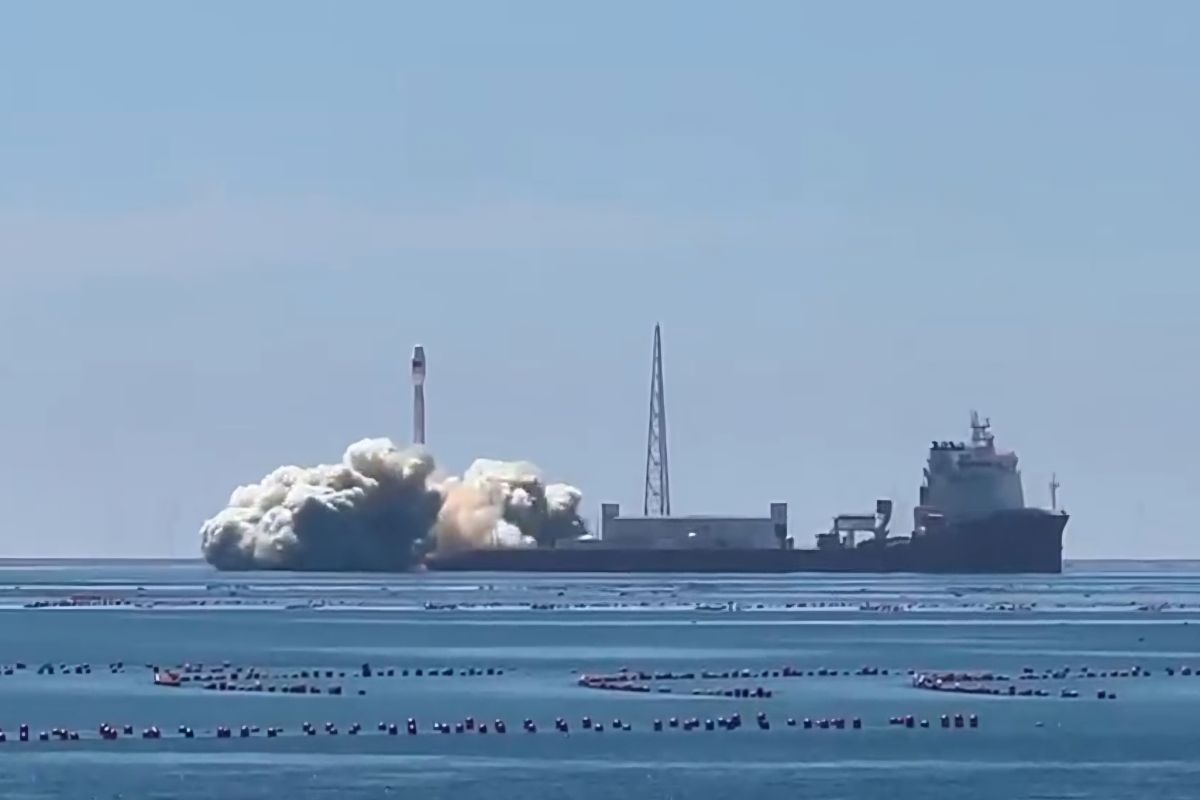
The Provincial Government of Lampung has stated that the Lampung-1 satellite can support the development of the region’s agricultural sector. Governor Rahmat Mirzani Djausal said in Bandarlampung on Thursday that the technology is not intended to replace farmers, but rather to assist them and the government in making better, faster, and more targeted decisions. He noted that agriculture is a priority sector, and the Lampung-1 satellite can support land mapping, crop condition monitoring, identification of water shortages, early detection of plant disturbances, and estimation of production potential. One of the commodities that has entered initial exploration is cassava. Beyond agriculture, the Governor added that data from Lampung-1 has the potential to be developed for environmental management, coastal and marine monitoring, flood and drought mitigation, monitoring land cover changes, and more precise development planning. In its implementation, the Lampung Provincial Government will cooperate with the National Research and Innovation Agency (BRIN), a national institution with a mandate and competence in the fields of space, remote sensing, research, and technology development. Satellite data will undergo processing, calibration, quality validation, analysis, and translation into relevant information. After this process, the analysis results can be utilised by the Lampung Provincial Government as a source of information for planning, policy, programme implementation, and development evaluation. The collaboration with BRIN also ensures that data utilisation proceeds in accordance with scientific standards, data governance, and remote sensing regulations applicable in Indonesia. He explained that the construction and launch of Lampung-1 did not use the Lampung Provincial Budget (APBD). The construction, ownership, operation, and technical responsibility for the satellite rest with STAR.VISION Aerospace, while the Lampung Provincial Government acts as a partner in developing the utilisation of technology and data for regional development needs. Any follow-up activities that potentially involve regional programmes or budgets will be discussed separately, according to needs, the principles of transparency and accountability, and statutory provisions. The Governor expressed a simple hope that this technology can become a solution for community problems and serve as an example that international cooperation can yield tangible benefits for regional development.