
Lampung Becomes National Priority for Bioethanol Development with Toyota and PNRE
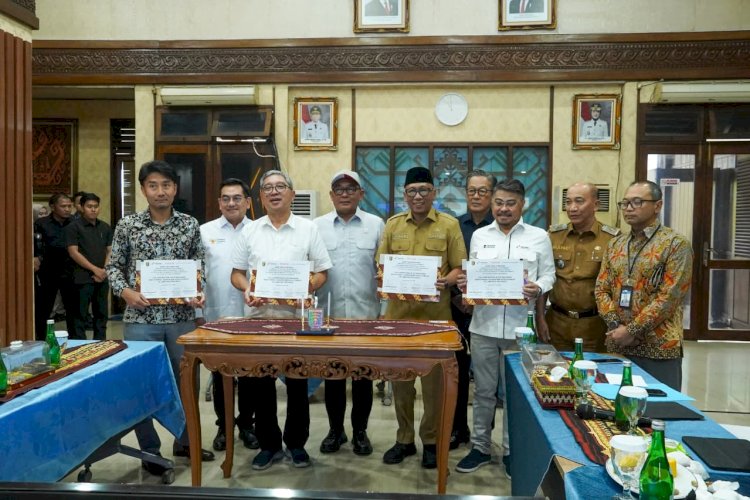
The central government, in collaboration with the Lampung Provincial Government, is accelerating the development of the bioethanol industry through direct inspections of potential sites for bioethanol plant construction and sorghum feedstock development areas in Lampung Province on Tuesday, 9 June 2026.
The visit was led by the Deputy Minister of Investment and Downstreaming/Deputy Head of BKPM RI, Todotua Pasaribu, alongside the Governor of Lampung, Rahmat Mirzani Djausal, following a Coordination and Synergy Meeting for Bioethanol Plant Construction held at Raden Inten II Airport, South Lampung.
The agenda involved several strategic partners, including Pertamina New & Renewable Energy (PNLE), Toyota Tsusho Corporation, Toyota Motor Manufacturing Indonesia, PTPN, academics, and other stakeholders.
The delegation inspected potential sites for a bioethanol pilot plant in Tegineneng District, Pesawaran Regency, and sorghum cultivation development areas in Rejosari District, South Lampung Regency. The inspection aimed to ensure land readiness, feedstock availability, infrastructure support, and the integration of areas that will form part of the bioethanol industry ecosystem in Lampung.
During the coordination meeting, Todotua Pasaribu emphasised that Lampung is a priority region for national bioethanol development. He noted that the province possesses various strategic advantages, ranging from abundant feedstock availability and adequate infrastructure to strong commitment from the local government in supporting investment.
Todotua explained that national bioethanol demand is expected to continue rising alongside the implementation of the E10 bioethanol blending programme for petrol, which is targeted for phased implementation starting in 2028. Consequently, the government is pushing for the accelerated construction of the bioethanol industry to strengthen national energy security and reduce dependence on fossil fuels.
“We must not stop at the planning stage. What is needed now is execution so that the benefits can be immediately felt by the community,” Todotua asserted.
Meanwhile, the Governor of Lampung, Rahmat Mirzani Djausal, stated that the development of the bioethanol industry is a strategic step in driving the downstreaming of the agricultural sector while simultaneously improving farmer welfare. According to the Governor, Lampung has significant potential to become a national bioethanol hub as it is one of Indonesia’s food barns, producing large quantities of rice, maize, cassava, bananas, coffee, and various plantation and livestock commodities.
Furthermore, nearly six million residents of Lampung depend on the agricultural sector. Rahmat Mirzani Dalsual revealed that improvements in agricultural commodity governance in recent years have had a positive impact on farmer welfare and regional economic growth. In 2025, Lampung’s economic growth even exceeded the national average.
Nevertheless, he assessed that increased agricultural production must be accompanied by the development of processing industries so that produced commodities are not merely sold as raw materials. “With cassava production reaching approximately 7.5 million tonnes per year, Lampung has great potential to be a primary supplier of feedstock for national bioethanol. The presence of the bioethanol industry will create new markets for farmers, maintain price stability, and increase the added value of Lampung’s agricultural products,” said Governor Mirza.
From the industrial perspective, CEO of PNRE John Anis explained that bioethanol development in Lampung is being carried out through collaboration with Toyota Tsusho Corporation and the Green Earth Institute (GEI) Japan. He noted that Lampung holds a strategic position due to its abundant feedstock, particularly cassava, which has long been a flagship commodity of the region.
John revealed that bioethanol development will not only utilise molasses and cassava as first-generation feedstock but will also utilise sorghum biomass and palm oil plantation waste as second-generation feedstock. “One of our focuses is to develop technology capable of converting agricultural waste into high-value energy, while simultaneously creating a sustainable circular economy,” he said.
PNRE is currently preparing the construction of a second-generation bioethanol pilot plant, which is targeted to begin operations in 2027. Additionally, the company is studying the reactivation of existing bioethanol facilities with a production capacity of approximately 60,000 kilolitres per year.
As part of strengthening the feedstock supply chain, PNRE will also collaborate with the University of Lampung to conduct sorghum planting trials across 10 hectares as an initial stage of cultivation development in Lampung.
The activity concluded with the signing of a Joint Declaration between the Lampung Provincial Government, Pertamina New & Renewable Energy (PNRE), Toyota Motor Manufacturing Indonesia, and Toyota Tsusho Indonesia as a form of commitment to accelerating the bioethanol project in Lampung.