
Lampageu Resilient School: When Architecture Makes Peace with Rain
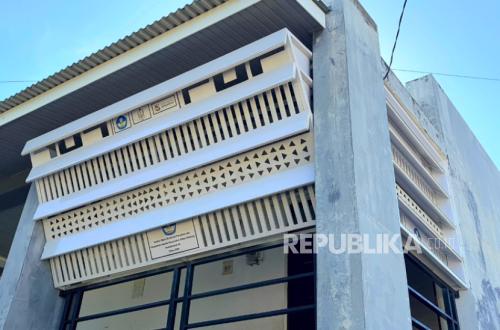
Two decades after the tsunami devastated Aceh’s coastline, a paradox has emerged in donor-funded school buildings. They stand sturdy on stilts yet are defenceless against tropical rain spray. At SDN Lampageu, a team of lecturers from ISBI Aceh has arrived with a participatory architectural solution: modular anti-drip panels that not only dry the corridors but also revive community resilience.
Aceh is a land familiar with grief and wounds following disasters. Twenty years after the 2004 earthquake and tsunami flattened its coast, the great floods of November 2025 once again tore apart the lives of more than 2.5 million people across several regencies and cities. Emergency response status was imposed four times in succession until January 2026, an indication of how deep the damage left behind has been.
In the education sector, the figures are distressing: 3,274 educational units damaged, 6,431 classrooms destroyed, 276,249 students lost their learning spaces, and 52 children and 15 teachers lost their lives. In Aceh Tamiang alone, 439 school buildings were damaged, 73 of them severely, most submerged in mud and buried under logs. This disaster did not merely damage buildings; it disrupted the rhythm of a generation’s growth.
The government moved quickly. The Ministry of Higher Education, Science and Technology, during the emergency response phase, deployed a number of universities in Aceh, including USK, Unimal, Lhokseumawe State Polytechnic, and ISBI Aceh, to serve as main posts for logistics, health services, and psychosocial support. During the recovery phase, the ‘Mahasiswa Berdampak’ programme was mobilised to involve students in knowledge-based recovery. Likewise, the Ministry of Primary and Secondary Education disbursed Rp 2.9 trillion in aid across various regions of Sumatra.
Revitalisation has been carried out massively at various levels. However, what often escapes attention is the fact that 22 years after the 2004 tsunami, the schools rebuilt at that time have now been worn down by age and require attention. Moreover, in the process of post-disaster school revitalisation, there is a tendency to ignore the aesthetic function of ornaments that hold the strong and rich collective memory of Acehnese culture.