
Lamongan Salt Production Reaches 1.3 Thousand Tonnes, Targeting 20,000 Tonnes by 2026
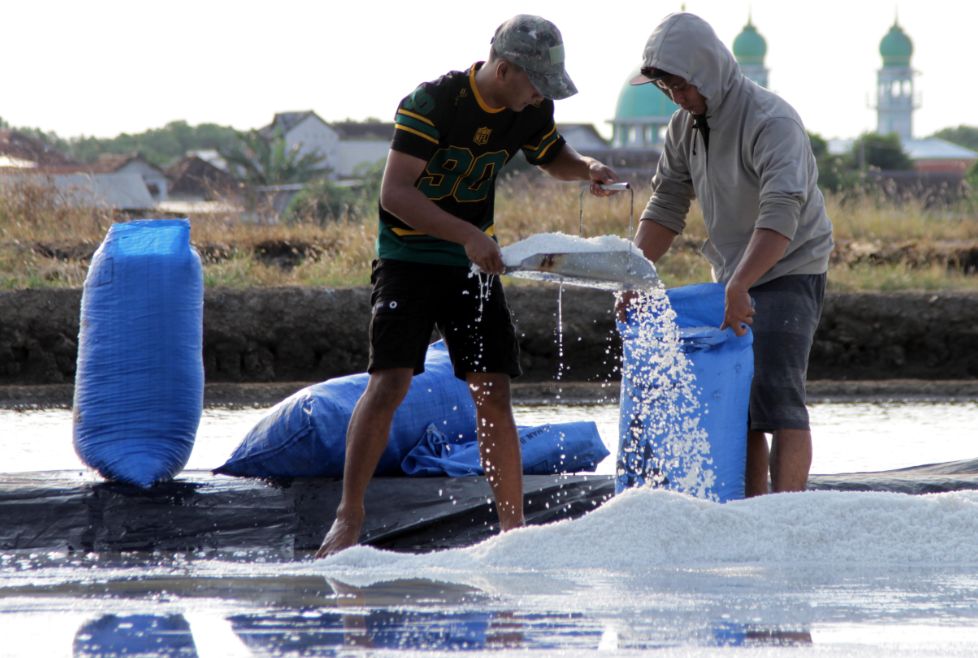
Salt production in Lamongan Regency, East Java, has recorded a positive achievement up to August 2026, with total production reaching 1,317.18 tonnes. The prolonged dry season affecting the region has contributed to production stability and pushed salt prices at the farmers’ level to Rp1,500 per kilogram.
The Lamongan Regency Government, through the Fisheries Department, is targeting a total salt production of 20,000 tonnes this year. This expectation is based on the production cycle, which is set to enter its peak period in the fourth quarter, specifically during October and November.
The Head of the Lamongan Regency Fisheries Department, Joko Nursiyanto, explained that the salt production season in his region is relatively short, lasting effectively for five months from August to December. July is typically used by farmers for land preparation.
“Salt production does indeed have a relatively short season. Peak production usually occurs in the fourth quarter, especially in October and November. Therefore, we are optimistic that production will continue to increase as production conditions become more optimal,” Joko said at his office on Wednesday (16/9).
Salt production centres in Lamongan for 2026 are concentrated in the Brondong District, covering the villages of Sedayulawas, Lohgung, Labuhan, Brengkok, and Sidomukti. Currently, there are 293 farmers organised into 26 People’s Salt Business Groups (Kugar), with a total land area of 217.33 hectares.
In terms of economic value, salt prices are showing an upward trend. In September 2026, salt prices stood at Rp1,500 per kilogram, a significant increase compared to August, which was around Rp1,000 per kilogram. Nevertheless, price fluctuations remain one of the primary dynamics faced by farmers on the ground.
Joko acknowledged that the salt sector is still shadowed by several challenges, ranging from the deterioration of production infrastructure and weather anomalies to the limited regeneration of salt farmers. In response, the Fisheries Department continues to provide guidance, training, and support through the provision of production tools.
In addition to physical assistance, the local government is also intensifying socialisation regarding permits for salt extraction utilisation and providing coaching to improve production quality to ensure higher competitiveness in the market.
Source: jawawa.id (https://jawawa.id/newsitem/lamongan-salt-production-reaches-1-3-thousand-tonnes-targeting-20-000-tonnes-by-2026-1789665137)
Originally published by Media Indonesia (https://mediaindonesia.com/nusantara/934585/produksi-garam-lamongan-capai-13-ribu-ton-targetkan-20-ribu-ton-di-2026), translated from Indonesian