
Lamaholot Festival Talk Show Highlights Cultural Preservation Challenges in the Digital Era
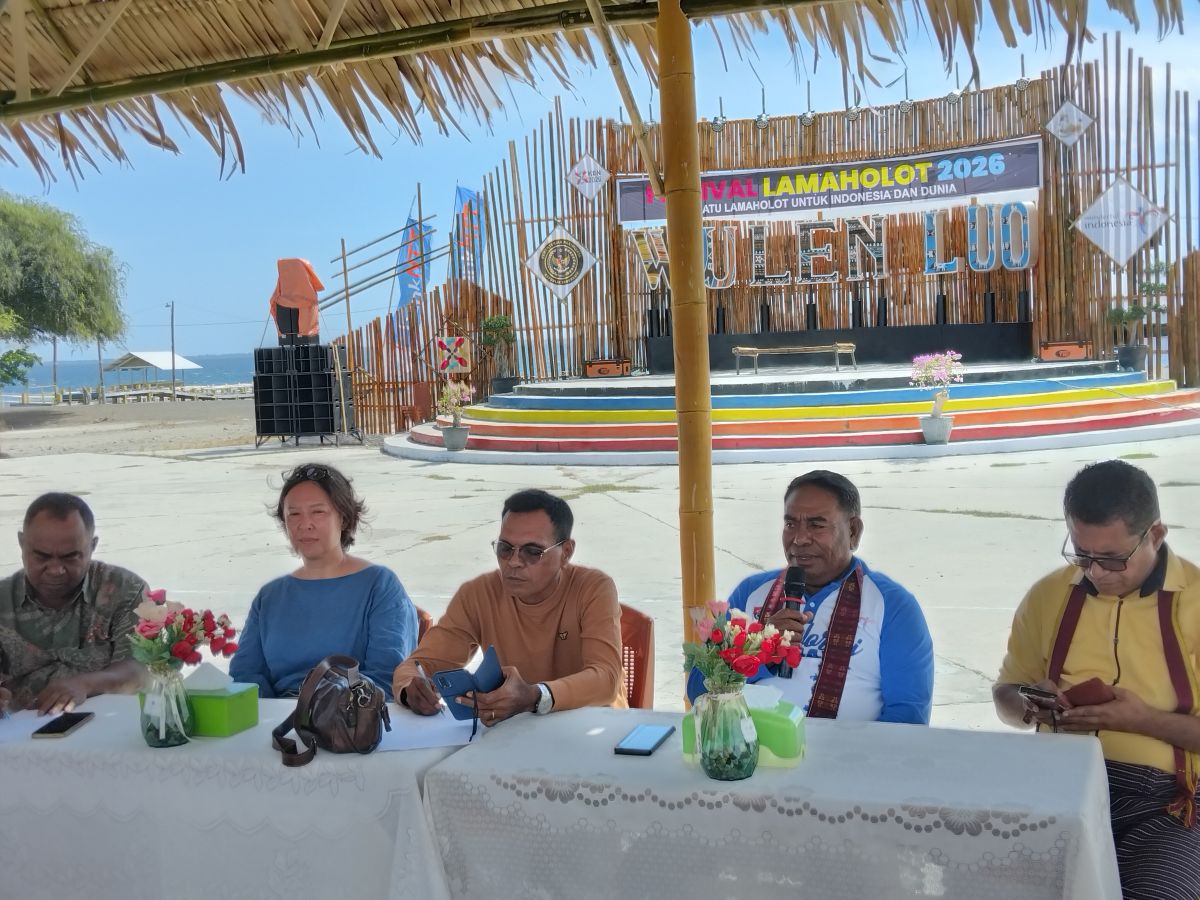
The existence of Lamaholot culture amid the tide of digitalisation was the main focus of a cultural talk show held as part of the International Lamaholot Festival. Speakers emphasised that digital technology should serve as a tool to strengthen cultural identity, not replace it. Head of the Regional Library and Archives Office, Anselmus Assan Olla, highlighted the weak regeneration of Lamaholot culture, from the use of the local language to the wearing of traditional attire, which is increasingly being abandoned by the younger generation. “The regeneration of Lamaholot culture is not happening. Cultural elements such as the local language and traditional clothing are starting to be abandoned. There are even foreigners who are more fluent in our language than our own children,” he said. According to him, the biggest challenge today is the presence of the digital world, which is often seen as a new civilisation. In fact, digital technology is merely a tool that should be used to preserve culture. He encouraged the creation of creative works based on local culture, including animated films or cartoons that feature Lamaholot folklore. For him, cultural preservation must start within the family through character education and the habitual use of the mother tongue. “I enforce a rule at home: on Saturdays and Sundays, we must use the Adonara language. Mobile phones can only be used afterwards. The question is, do we let Lamaholot culture become just a memory, or do we pass it on to the next generation?” he said. Meanwhile, Petrus Demong, Head of the Communication and Informatics Office, reminded that change is a certainty in social life. He quoted the view of a French novelist who said that nothing is permanent except change itself. In the context of digital governance, a representative from the Lembata Regency Communication and Informatics Office explained that the government is obliged to provide digital infrastructure, platforms, and services that support public services and community development. Currently, telecommunications infrastructure in Lembata has reached 37 points across nine sub-districts, although several areas still experience limited internet access. As a 3T category region, people with certain economic capabilities are starting to use satellite-based services such as Starlink. The government also hopes for the emergence of local digital platforms integrated with the official regional government portal so that the activities of all regional apparatus organisations can be monitored in an integrated manner. “A concrete step that can be taken now is for each OPD to have an official social media account without incurring large costs. Digital literacy, digital security, and media ethics are also important parts that we continue to promote,” he explained. Doctor of culture and Lamaholot weaving researcher, Miss Linda, assessed that the digital era actually opens up great opportunities for the preservation and development of traditional textile heritage. Having researched Lamaholot weaving for more than a decade, she sees the importance of digital documentation through electronic books, social media, and other online platforms. According to her, the development of a weaving-based creative economy must continue to maintain the use of cotton materials and traditional motifs so that cultural values are not lost amid market demands. “We can use Instagram or websites to market weaving. But the most important thing is to maintain the motifs, meanings, and stories behind each piece,” she said. She also appreciated the involvement of young people in promoting Lamaholot culture through digital media, while reminding that published content should not only display forms and decorative patterns but also the philosophy contained within them. Head of the Lembata Regency Bappelitbangda, Doctor Manto, asserted that culture has become the main foundation in both regional and national development documents for the 2025–2045 period. According to him, economic, social, and governance transformation must be based on socio-cultural resilience. He mentioned that local concepts such as muro and duang have been included in the Regional Medium-Term Development Plan as part of sustainable development based on ecology and culture. “Cultural development is not just about festivals. It includes cultural literacy, cultural economy, education, gender equality, and cultural ecology. All of this is already contained in the regional planning documents,” he said. Doctor Manto admitted that he himself is not yet fluent in the local language, but considered this a reminder that space for the younger generation to engage in cultural preservation must continue to be expanded. Meanwhile, Secretary of the Tourism Office, Kristianus Molan, highlighted the declining interest of millennials and Gen Z in cultural activities such as weaving and regional dancing. According to him, many 25-year-olds no longer possess weaving skills. He stressed the importance of digitalisation as a means of documenting culture that has so far been passed down orally. “Folklore, mother tongues, and customary traditions must be archived digitally. If not, we risk losing cultural heritage that has only been narrated from generation to generation,” he said. Closing the discussion, Anselmus Assan Olla invited all elements of society to collaborate in the cultural literacy movement. He cited the example of several communities that independently document the process of making woven cloth from cotton to finished fabric. “If others can do it with their own funds, why can’t we? The government is a facilitator. What we need now is willingness, collaboration, and drive so that Lamaholot culture remains strong amidst changing times,” he concluded.