
Lake Toba Water Levels Recede, Leading to Mass Fish Deaths
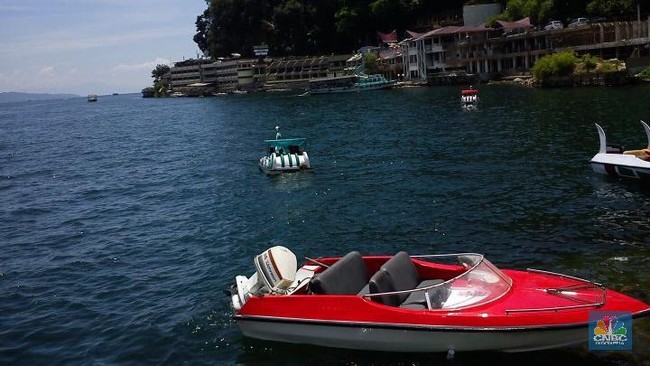
A decline in water levels in the Lake Toba region has been identified by the Bogor Agricultural Institute (IPB). This phenomenon is triggered by a prolonged dry season and is considered a potential threat to various activities around the lake, including the aquaculture sector.
Based on satellite altimetry data, the decline in Lake Toba’s water level has been recorded reaching approximately 1.6 metres during the period from June 2025 to March 2026. If prolonged drought conditions persist, the water level decline is estimated to reach 2 metres. This disaster could worsen as the BMKG (Meteorology, Climatology, and Geophysical Agency) has released predictions regarding the potential simultaneous occurrence of El Niño and the positive phase of the Indian Ocean Dipole (IOD) in 2026.
“This combination can trigger prolonged dry seasons in Indonesia, including the Lake Toba region, which ultimately accelerates the shrinkage of the lake’s water volume and can cause mass fish deaths in Floating Net Cages (KJA),” explained Jonson Lumban Gaol, an IPB Satellite Remote Sensing Expert, in a statement from the official IPB website.
Declining lake water levels are typically associated with mass fish death events in KJA. For instance, thousands of tonnes of fish died when water levels receded by two metres in 2016. Similar incidents occurred on a smaller scale in 2018, 2020, and 2023 during periods of relatively low water levels.
However, he explained that the direct cause of fish death is not the receding water level itself, but rather a combination of factors involving water mass mixing during extreme weather and strong winds. Strong winds stir up organic waste sediment in relatively shallow waters. The sediment lifted to the surface can clog the gills of the fish.
“At the same time, water from the lower layers, which is oxygen-poor, rises to the surface, causing a drastic drop in dissolved oxygen levels, leading to the death of fish in the KJA,” he explained.
Another factor is the accumulation of organic and household waste at the bottom of the lake. Under normal conditions, waste is decomposed by bacteria with the help of oxygen. However, when oxygen is depleted, the decomposition process occurs anaerobically, producing toxic gases such as hydrogen sulphide and methane.
Jonson explained that hydrogen sulphide can damage the respiratory systems of fish, while methane also contributes to declining water quality. Therefore, low oxygen levels, high concentrations of toxic gases, and increased water turbidity lead to mass fish deaths in KJA.
Jonson urged fishermen to increase vigilance. For example, when signs of extreme weather appear, such as high wind speeds or murky water, they should move their KJA to deeper waters or harvest the fish immediately. “On the other hand, local governments and stakeholders need to act more proactively, not just with advisories, but also with systems capable of providing accurate and rapid early warnings,” he concluded.
Source: jawawa.id (https://jawawa.id/newsitem/lake-toba-water-levels-recede-leading-to-mass-fish-deaths-1780840551)
Originally published by CNBC Indonesia (https://www.cnbcindonesia.com/tech/20260603131810-37-739755/danau-toba-surut-ikan-ikan-mati-massal-bergelimpangan), translated from Indonesian