
Labour Union Leader Exposes Prevalence of Outsourcing Systems in Indonesia, Detailing the Modus Operandi
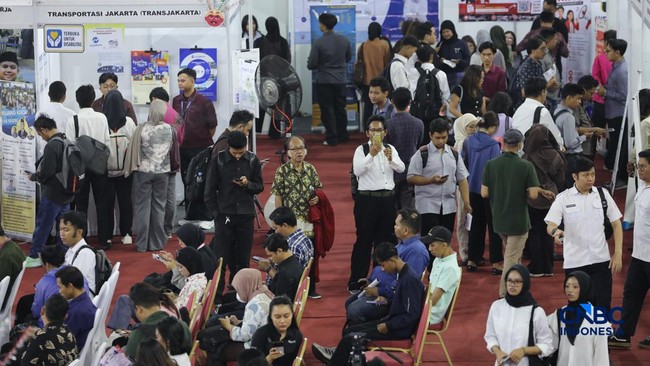
The world of work is facing a shift in recruitment patterns as companies strive to suppress costs. Following a reduction in permanent staff, vacant positions are not always being refilled with permanent employees as they were previously.
Mirah Sumirat, President of the All Indonesia Trade Union Association (ASPIRASI), observes that companies are now increasingly adopting more flexible employment relationship models. Recruitment through third parties or contracts with short durations is becoming an increasingly prominent choice.
“Currently, they are not recruiting directly. Their recruitment involves using second or third parties. Therefore, there is a greater tendency towards outsourcing. Even if they are not outsourced, they are also placed on much shorter contracts,” Mirah told CNBC Indonesia on Monday (28/9/26).
This change means the tenure of new workers is significantly different compared to permanent employees who previously held similar positions. Contract periods can even be set for only a few months, depending on the company’s needs.
In certain sectors, the use of outsourced labour is not a new phenomenon. However, this pattern has come under scrutiny when used as a replacement for permanent workers who previously enjoyed long-term service and more permanent employment relationships.
“For example, in banks, most tellers are employed through third parties or foundations, if I am not mistaken. Meanwhile, in other companies, many use short-term contract systems, such as one month, three months, six months, or one year,” said Mirah.
A one-year contract is even considered quite long within the observed recruitment patterns. Employment periods of less than one year have become a preferred option for various labour requirements.
This condition leaves new workers in a more precarious position. Once a contract ends, job continuity depends heavily on company decisions and labour needs for the subsequent period.
“If the contract is for less than one year, that is what is frequently done. So, when senior permanent employees depart, they recruit for short-term contract positions. It could be one month, three months, six months, or a year, or they use the services of outsourcing and third parties,” Mirah explained.
For companies, this pattern provides greater room to adjust the workforce size according to business needs. However, for workers, the short-term contract model limits the certainty of job security.
“It is no longer like before, when a company would recruit someone and appoint them as a permanent employee. Now, there is more use of short-term contracts or third parties. That is the recruitment pattern I have observed in companies lately,” concluded Mirah.
Source: jawawa.id (https://jawawa.id/newsitem/labour-union-leader-exposes-prevalence-of-outsourcing-systems-in-indonesia-detailing-the-modus-operandi-1790589255)
Originally published by CNBC Indonesia (https://www.cnbcindonesia.com/news/20260928141819-4-771473/bos-buruh-bongkar-marak-sistem-kerja-outsourcing-di-ri-ini-modusnya), translated from Indonesian