
Labour Strikes Erupt, Paralyzing Trains, Planes, and Schools
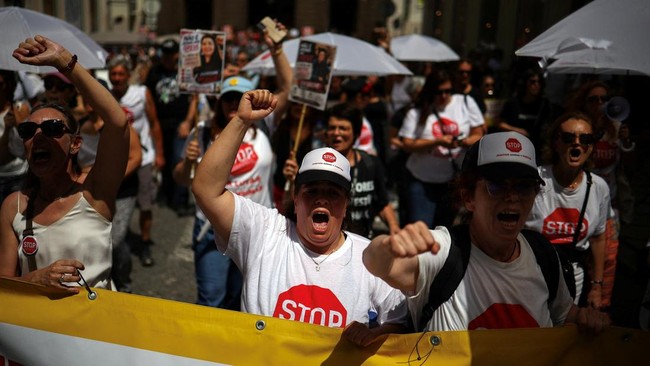
Portugal was hit by a general strike on Wednesday (3/6/2026) that paralysed various public services. This marks the second national strike in the last six months, triggered by trade unions’ rejection of proposed labour reforms being pushed by the government.
Tiago Oliveira, leader of Portugal’s largest trade union confederation, CGTP, believes the reforms will worsen working conditions. He argues that the changes could expand precarious employment practices, loosen working hour regulations, make redundancies easier, and limit the right to strike and protections for working parents.
“This reform package will worsen workers’ conditions by strengthening precarious work, deregulating working hours, making dismissals easier, and limiting workers’ rights,” Oliveira told Reuters on Thursday (4/6/2026).
The strike organised by the CGTP has had a widespread impact on public activity. The state-owned railway operator, CP, suspended long-distance and most regional train services, while the metro network in Lisbon was also forced to close.
Disruptions also extended to the education and healthcare sectors. Schools across various regions of Portugal were unable to operate due to staff shortages, and hospitals postponed most surgeries and consultations as nurses participated in the strike.
In the aviation sector, the national carrier TAP Portugal operated only 79 flights out of its usual daily schedule of over 300. Iberia also anticipated a 50% to 75% reduction in flight operations during the strike.
The Portuguese government, led by a centre-right coalition, is expected to pass the bill with support from the right-wing Chega party. The reform includes changes to over 100 articles in the national labour code, aimed at increasing productivity and encouraging economic growth.
However, workers believe the new regulations will further weaken labour positions. Rodrigo Azevedo, a 30-year-old bank employee, stated that the reform could trap young workers in uncertain contracts throughout their careers.
“This labour package is a major threat not only to the future of young workers but also to our current conditions,” said Azevedo. He noted that the reform could allow companies to request employees to work up to 50 hours per week without additional pay, up from the current 40-hour standard. The new rules are also seen as making it easier for companies to carry out redundancies and replace workers with cheaper outsourced labour.
On the other hand, Portugal’s Minister of Labour, Maria do Rosario Ramalho, asserted that the impact of the strike is not as significant as claimed by the unions, noting that participation levels in the private sector remain relatively low.
“Most workers continue to work, and the economy has not come to a standstill,” Ramalho told reporters.
Under the proposed reform, companies would find it easier to carry out redundancies for reasons deemed valid. Additionally, companies could refuse to reinstate workers to their original positions even if an illegal dismissal is proven, provided the company pays compensation. The reform also removes several restrictions regarding the use of outsourced labour.
This strike is a continuation of an increasing wave of protests in Portugal. Last December, the country experienced its first general strike since the large-scale demonstrations against austerity policies in 2013.