
Labour Regulations in an Era of Job Uncertainty
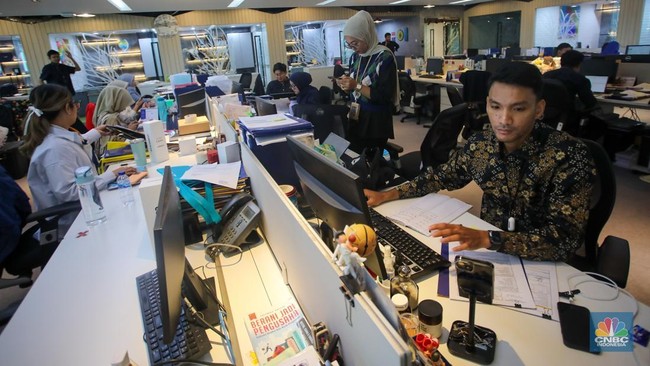
A worker loses their job when their factory reduces production. They then begin delivering goods via an application while searching for new employment. In statistics, they are recorded as employed once again. However, when they fall ill, suffer an accident, or fail to receive orders, what protection do they still possess?
This question deserves prominence in the discussions regarding the Labour Bill. Wages, contracts, outsourcing, and severance pay remain vital. However, the law must also address the reality that individuals may transition between corporate employment, self-employment, and digital platforms throughout their lives.
Constitutional Court Decision Number 168/PUU-XXI/2023 has requested that lawmakers separate labour regulations from the Job Creation Law and establish a dedicated law within two years of the decision pronounced on 31 October 2024. The quality of this reform will be determined by its ability to reach today’s workforce.
Working does not necessarily mean being secure. According to BPS, as of February 2026, 147.67 million residents were employed and the open unemployment rate fell to 4.68 per cent. However, the average labour wage is only Rp3.29 million per month. Approximately 87.74 million people, or 59.42 per cent of workers, are engaged in informal activities. About a quarter work part-time, and 7.27 per cent are classified as underemployed. Being recorded as employed does not necessarily mean having sufficient working hours and income.
Informal work is not always detrimental; many self-employed ventures thrive. The problem arises when workers with limited income must personally bear the risks of illness, accidents, loss of income, and old age. A law centred on a fixed relationship between one worker and one company struggles to encompass this reality.
BPJS Ketenagakerjaan reported 48.65 million active participants at the end of 2025, including 14.2 million from the non-wage earner group. This figure cannot be directly subtracted from the total employed population because the recording periods and categories differ. However, the sheer size of the informal group highlights the need for registration, contributions, and membership continuity that are suitable for fluctuating incomes.
Protection that follows the worker. The movement of labour towards more productive activities can drive growth, but workers bear the costs during transitions: interrupted income, the need for skill updates, and the uncertainty of new jobs. If all risks are borne individually, economic change becomes a source of anxiety.
Denmark combines labour market flexibility, income protection, and reintegration assistance through the ‘flexicurity’ approach. Indonesia cannot simply copy its funding scale. However, the principle remains useful: companies need room to adapt, while workers require a secure foothold to transition.
Therefore, social security rights and histories must be easily transferable when someone changes jobs or sources of income. Workers who lose their jobs require vacancy information, placement assistance, and relevant training. For workers with irregular incomes, realistic contribution rates will determine whether protection survives after the initial registration.
Human capital theory explains why skills are essential for productivity and income. However, the success of training lies not in the number of certificates obtained, but in whether participants secure jobs, remain employed, and earn better wages.
Singapore, through SkillsFuture, provides an example of supporting lifelong learning, accompanied by temporary assistance for eligible job seekers. The lesson is that workers need time, support, and a clear pathway from training to employment.
Digital platforms present additional challenges. Order distribution, performance ratings, and account restrictions by automated systems can determine income. The European Union has paid close attention to the determination of employment status and the transparency of algorithmic management.
Indonesia needs to assess employment relationships based on actual practice, establish responsibilities for safety, and grant workers the right to request explanations and lodge objections against detrimental digital decisions.
Measuring the results of reform. This Bill should be evaluated based on three outcomes: basic protection remains active when workers move; those who lose jobs receive effective assistance to return to work; and transitions open opportunities towards higher productivity and income.
To achieve this, labour services, skills information, and social security membership data must mutually support each other alongside personal data protection. Training should be evaluated by placement and income development, not the number of classes. Employer obligations must be clear so that protection operates alongside business certainty. The government must also clarify funding and oversight through data-driven dialogue with both workers and employers.
The success of reform cannot be measured solely by the birth of a new law. The true test occurs when someone loses their job, attempts a new livelihood, or learns a new skill. If, during that transition, they remain protected and have a path to progress, then labour law has successfully met the needs of its era.
Source: jawawa.id (https://jawawa.id/newsitem/labour-regulations-in-an-era-of-job-uncertainty-1791132659)
Originally published by CNBC Indonesia (https://www.cnbcindonesia.com/opini/20261004225232-14-773185/regulasi-ketenagakerjaan-di-era-kerja-tanpa-kepastian), translated from Indonesian