
Labour Protection Bill Nears Approval; Apindo Highlights 10 Key Issues
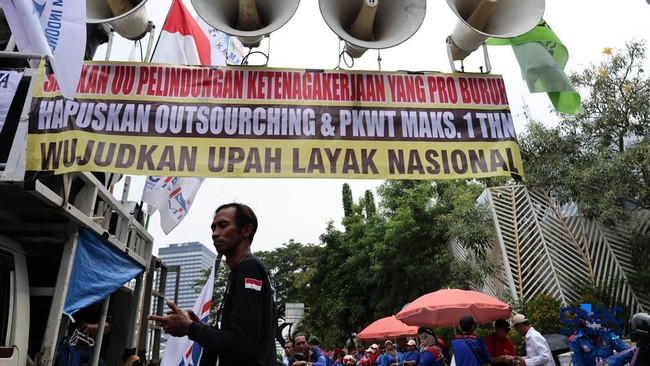
Discussions regarding the Labour Protection Bill are currently underway between the House of Representatives (DPR RI) and the government, involving seven ministries and agencies.
According to the Deputy Minister of Manpower, Afriansuitah Noor, the government and the DPR RI aim to have this Bill passed into Law by October 2026.
How, then, do business players view this proposed labour protection legislation?
The Indonesian Employers Association (Apindo) has expressed its support for the formation of this Law, which follows the mandate of Constitutional Court Decision Number 168/PUU-XXI/2023. The deadline provided for this implementation is two years from the decision’s pronouncement on 31 October 2024.
However, Apindo has highlighted several issues within the Bill. The association warned that newly established policies must not make formal recruitment more difficult or hinder the transition of workers into more protected employment.
Meanwhile, Indonesia faces significant challenges in job creation. According to BPS data, the open unemployment rate in Indonesia reached 4.68% as of February 2026, with the number of unemployed individuals recorded at 7.24 million.
There are 10 priority issues highlighted by Apindo:
Direction of the Law and expansion of job opportunities: Apindo proposes renaming the Bill to the ‘Labour Protection and Job Opportunity Expansion Bill’. The association emphasises the need for concrete success metrics, suggesting a target of 2 million new formal jobs per year and 30% of workers being competency-certified by 2030, alongside improvements in purchasing power and welfare.
Fixed-term employment contracts (PKWT) suited to job characteristics: Apindo proposes clarity regarding duration, extensions, and contract renewals related to PKWT regulations, while respecting Constitutional Court decisions and ensuring certainty of worker rights.
Wages that maintain purchasing power and job-creating capacity: Apindo views the minimum wage as a safety net. Technical proposals include using BPS-determined Basic Needs (KHL) as the upper limit, a two-year validity period for the minimum wage, and adjustments based on inflation and economic growth using an alpha index starting from 0.1.
Outsourcing with certainty of rights and oversight of service providers: Apindo proposes that outsourcing regulations focus on labour supply services, with job types regulated by the Minister of Manpower in accordance with the Constitutional Court ruling.
Severance pay and guarantees that ensure rights without double burdens: Apindo suggests referring to Law No. 6/2021 and Government Regulation No. 35/2021, while considering relevant Constitutional Court decisions.
Prevention of layoffs and certain dispute resolution: Apindo proposes a fast and affordable industrial relations dispute resolution process, with a target completion time of no more than 60 days.
Training that assists workers in securing employment: The association encourages the consolidation of training programmes, including the Job Loss Guarantee (JKP), the Pre-employment Card (Kartu Prakerja), vocational incentives, and portions of the Foreign Worker Usage Compensation Fund, supported by the State Budget (APBN), without imposing new mandatory contributions on employers.
Working hours and rest periods suited to sectoral needs: Apindo proposes a maximum regular working limit of 45 hours per week.
Proportional sanctions and effective law enforcement.
Platform workers with protection according to actual relationships: Apindo encourages regulations that consider the partnership nature of the platform economy rather than applying a one-size-fits-all model to all business types.
In addition to these 10 focus areas, Apindo is calling for a study on the cumulative impact on formal recruitment, labour-intensive industries, MSMEs, cash flow, and worker income, using transparent assumptions and methodologies. The association also highlighted the need for consistency in implementing regulations with the Law, supported by transition periods, supervisory capacity, and ready service systems.