
Labour Minister: Private companies can determine their own WFH implementation day
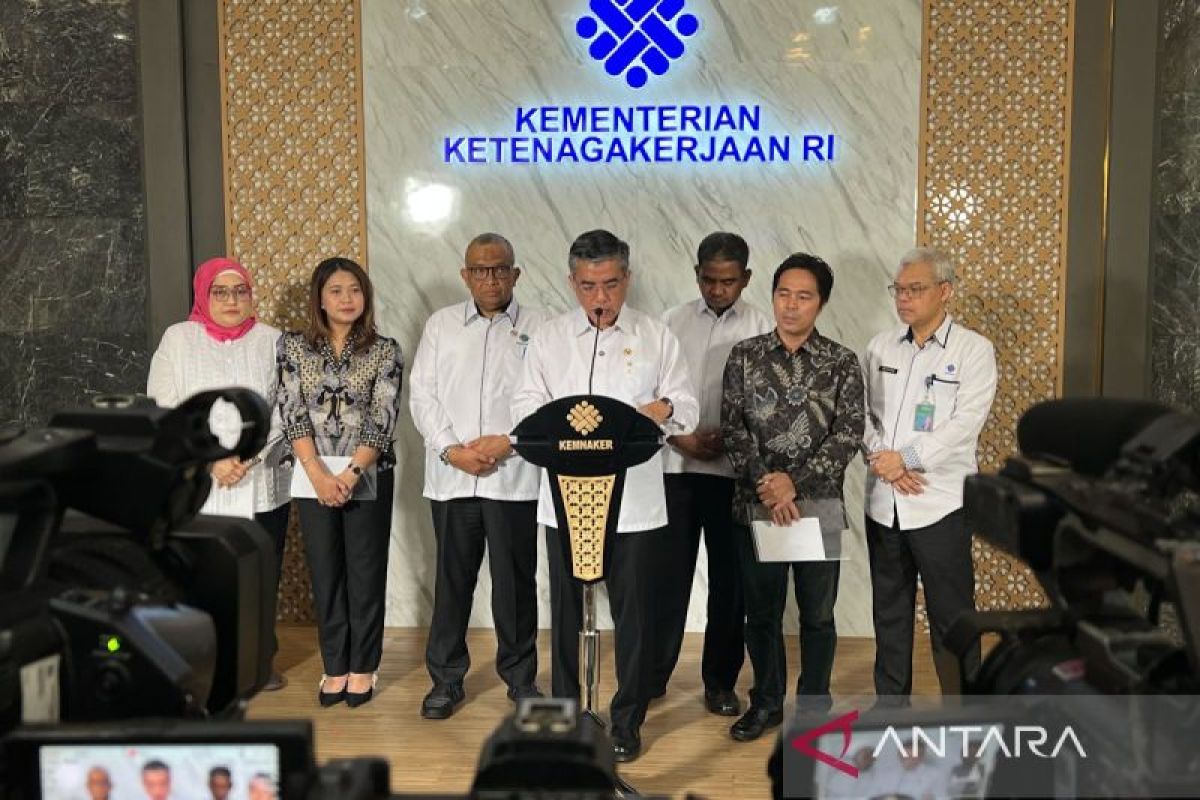
Jakarta (ANTARA) - Labour Minister Yassierli stated that private companies can flexibly determine the day for implementing work from home (WFH) one day per week according to their operational needs and respective policies. Yassierli explained that the private sector has the leeway to choose the WFH implementation day based on each company’s policy, which may differ from civil servants (ASN) who carry out WFH on Fridays. “Regarding the day (for WFH implementation) for private workers, it is flexible with many day options (companies can choose). But if they want to align with ASN colleagues, the option is Friday,” he said in Jakarta on Wednesday (1/4). According to him, when there are multiple day options for implementation, companies can adjust to civil servant policies, including choosing Friday if deemed aligned and relevant to the company’s operational needs. Nevertheless, he acknowledged that each company has its own characteristics and uniqueness, so the technical arrangements for WFH implementation are fully left to each company according to applicable conditions and needs. “But each company certainly has its own characteristics and uniqueness, so the technical aspects are returned to each company,” he said. He emphasised that the determination of the WFH implementation day is not rigidly regulated by the government because the policy is in the form of a recommendation, with flexibility as the main consideration for companies. The final decision remains with each company. Furthermore, Yassierli explained that the evaluation of the WFH policy for private workers, including SOEs and regional SOEs, will follow the same mechanism as its application to civil servants, namely conducted over a two-month period. He stated that the policy is a package, so the evaluation will comprehensively cover the implementation of the WFH recommendation. “What will be evaluated is related to the WFH recommendation,” he said. Previously, Yassierli urged leaders of private companies, SOEs, and regional SOEs to implement WFH activities for employees one day per week. The WFH implementation takes effect from 1 April 2026. “We want 1 April to become a national momentum together. So this recommendation should be followed and implemented effectively starting today,” he said. In the Circular Letter (SE) of the Indonesian Minister of Manpower Number M/6/HK.04/III/2026 on Work From Home and the Energy Optimisation Programme in the Workplace, companies are still required to provide workers’ rights even during WFH, such as full salaries and annual leave. In addition, the implementation of WFH has exceptions for companies operating in the energy, health, infrastructure, and public services sectors, retail/trade, industry and production, services, food and beverages, transportation and logistics, and finance.