
Labour Minister hopes WFH policy will not reduce worker productivity
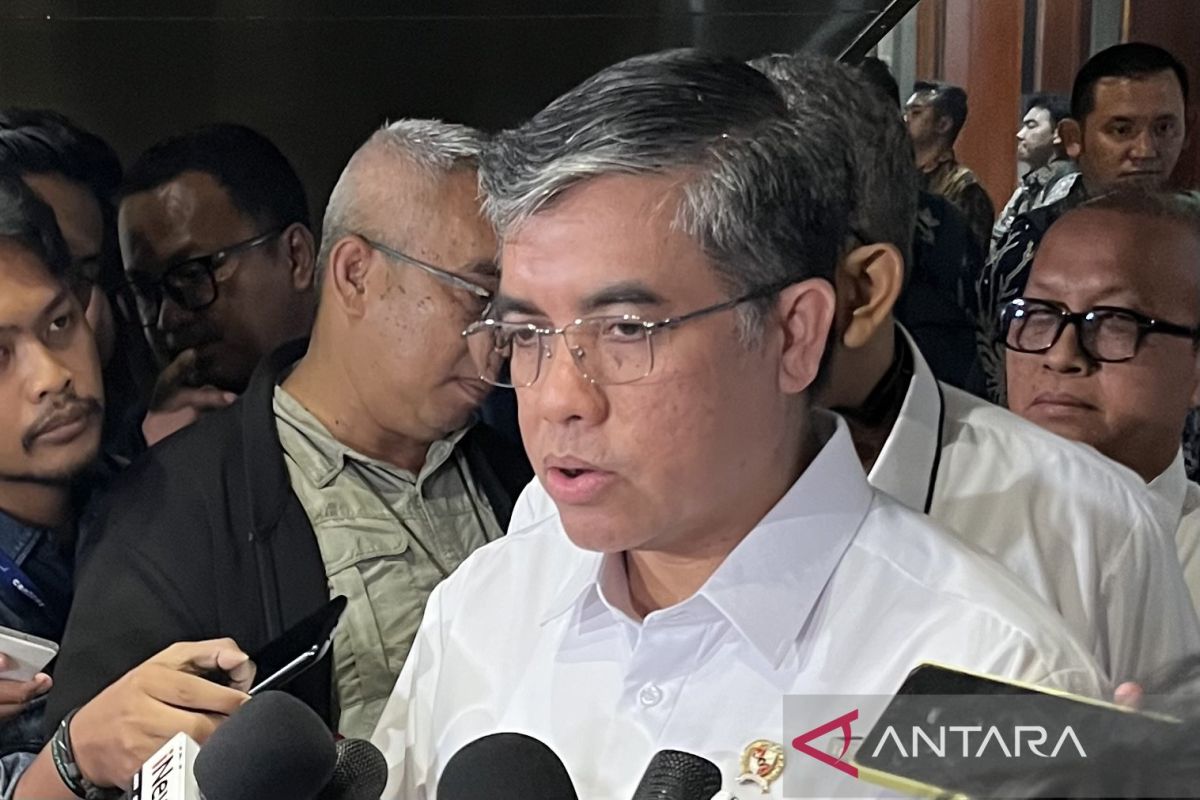
Jakarta (ANTARA) - Minister of Manpower (Menaker) Yassierli hopes that the work-from-home (WFH) policy once a week will not reduce worker productivity.
“In that circular, we also specifically stated that we do not want this circular to impact economic growth. So we still want economic growth to rise, fellow workers to be productive, and our industry to continue advancing. That is our hope,” said Menaker Yassierli after the Working Meeting of Commission IX of the House of Representatives at the Parliamentary Complex in Senayan, Jakarta, on Thursday.
Previously, the government issued Circular Letter (SE) of the Minister of Manpower of the Republic of Indonesia Number M/6/HK.04/III/2026 on Work From Home and the Energy Optimisation Programme in the Workplace.
The Minister stated that the exhortation is intended to strengthen national energy resilience while encouraging productive, adaptive, and sustainable work patterns, thus requiring systematic steps in energy utilisation at workplaces.
“That circular was made to encourage more adaptive behaviour regarding our attitude towards energy optimisation, especially fuel oil. So we are very aware that companies have unique characteristics, so we cannot generalise,” said Yassierli.
The implementation of WFH, he continued, can be exempted for certain sectors such as the health sector, energy sector, infrastructure sector and public services, retail or trade sector, industrial and production sector, services sector, food and beverage sector, transportation and logistics sector, and financial sector.
“We have also determined the sectors that can be given exemptions, (namely sectors) that directly concern public services and so on,” said Yassierli.
In addition, the Minister emphasised that the policy is an exhortation for the private sector, taking into account the operational needs and policies of each company.
He said that the implementation of WFH is entirely left to each company, considering the business characteristics and activities carried out so that they continue to run optimally according to operational needs and maintain employee work productivity.
“For the private sector, we did not specifically write or determine the day. So once again, as I conveyed to Commission IX of the DPR, the work from home is in the nature of an exhortation,” he said.