
Labour Day and the Challenges of the Modern Economy
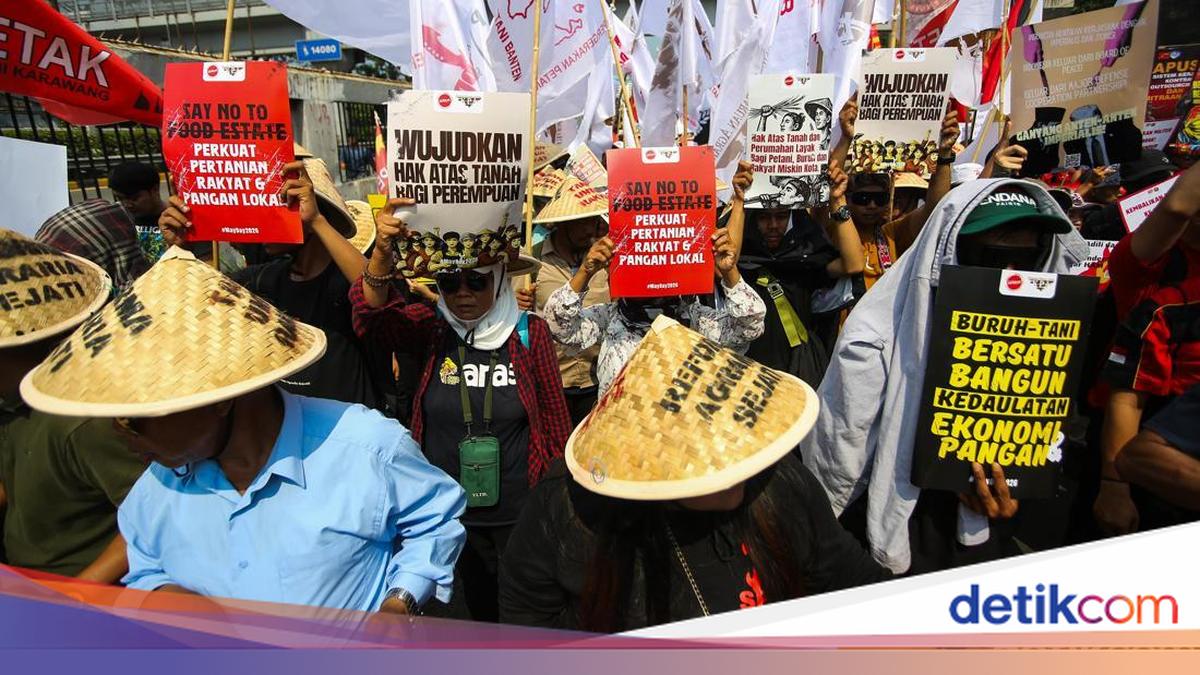
Labour Day is not merely an annual ritual, but a mirror of the relationship between humans, work, and the constantly changing economic system. In the modern era marked by globalisation, digitalisation, and economic uncertainty, the meaning of Labour Day has become even more complex. Today, it no longer speaks only of eight-hour working days or safety in factories, but also of algorithms, the gig economy, inflation, and global inequality. The question then arises: how do we interpret Labour Day amidst an increasingly dynamic and often uncertain economic landscape? The meaning of Labour Day cannot be separated from its history. This commemoration was born from exploitative working conditions in the 19th century, when workers were forced to work 14–16 hours a day without adequate protection. The peak of resistance occurred in the Haymarket incident in Chicago in 1886, which became a symbol of the global workers’ struggle. From there, the demand for an “eight-hour workday” became a universal standard. However, if we look at today’s conditions, that standard has indeed been achieved in many countries. Working hours have been regulated, leave rights recognised, and occupational safety has become part of regulations. But does that mean the workers’ struggle is over? Today, workers’ challenges are no longer just about the duration of work, but the quality of life from that work itself. In many cases, a person can work full-time yet still live in economically fragile conditions. This phenomenon is known as the “working poor” or workers who remain poor despite having jobs. In Indonesia, for example, data shows that nearly 40% of the poor population comes from the active worker group. This condition is a paradox of the modern economy, where working no longer guarantees welfare. One way to understand this situation is through the concept of real wages. Simply put, nominal wages are the amount of money received by workers, while real wages are the purchasing power of that money after accounting for inflation. In practice, salary increases do not always mean improved welfare. When inflation is higher than wage increases, workers’ purchasing power actually decreases. A simple example shows that a 5% salary increase can be “defeated” by 8% inflation, making workers actually poorer in real terms. This phenomenon has become increasingly relevant in recent years, when many countries have faced inflationary pressures due to global crises, supply chain disruptions, and geopolitical conflicts. In Indonesia itself, workers’ demands every year almost always include adjustments to the minimum wage to align with rising living costs. In other words, the workers’ struggle has shifted from “how long to work” to “how decently to live from the results of work”. If in the 19th century the main threat was physical exploitation, then in the 21st century the greatest threat is uncertainty. The world of work today is undergoing a major transformation due to digital technology. Automation, artificial intelligence (AI), and robotics have changed the structure of jobs. Many manual jobs are replaced by machines, while new jobs emerge with higher skill demands. On one side, this opens opportunities. However, on the other side, this condition creates instability. Mass layoffs have become an increasingly frequent phenomenon, especially when companies carry out technology-based efficiency. In Indonesia, this situation is evident from the increasing threat of layoffs and stagnation in wage growth in recent years. Furthermore, the emergence of the gig economy, such as online motorcycle taxi drivers or digital freelancers, has changed the concept of work itself. Jobs become more flexible, but also more vulnerable. Many gig workers lack social security, insurance, or income certainty. This condition presents a new dilemma: freedom versus security. Is work flexibility worth the loss of protection? The modern economy is also marked by increasingly stark inequality. Not all workers receive the same benefits from economic growth. Wage disparities between sectors, gender, and employment status remain a global issue. Formal workers tend to have better protection compared to informal workers. Meanwhile, workers in the technology and finance sectors often enjoy much higher incomes compared to the manufacturing or agriculture sectors. In Indonesia, wage disparities between regions are also quite significant. Data shows that the minimum wage in one city can be more than twice that of another city in the same province. This condition indicates that geographical location still greatly determines workers’ welfare. This inequality not only impacts individuals but also overall economic stability. When most workers lack sufficient purchasing power, domestic consumption weakens, even though consumption is one of the main drivers of economic growth. Amid all these challenges, one thing remains unchanged: workers are the backbone of the economy. Without workers, there is no production, distribution, or services. Workers are not just a factor of production in economic theory, but also the main actors in social life. They are parents, consumers, citizens, and part of communities. However, ironically, in many economic policies, workers are often positioned as a cost variable—something that must be suppressed to increase efficiency. This logic is seen in practices such as outsourcing, short-term contracts, and excessive labour flexibility. In fact, an approach that is too focused on short-term efficiency can harm the economy in the long term. Unprosperous workers tend to have low productivity, poor health, and weak consumption levels. In other words, workers’ welfare is not just a social issue, but also an economic strategy. It is here that the role of the state becomes crucial. The government has a responsibility to
Source: jawawa.id (https://jawawa.id/newsitem/labour-day-and-the-challenges-of-the-modern-economy-1777719145)
Originally published by detikcom (https://news.detik.com/kolom/d-8471072/hari-buruh-dan-tantangan-ekonomi-modern), translated from Indonesian