
Labour Coalition Urges Acceleration of New Manpower Law Deliberations
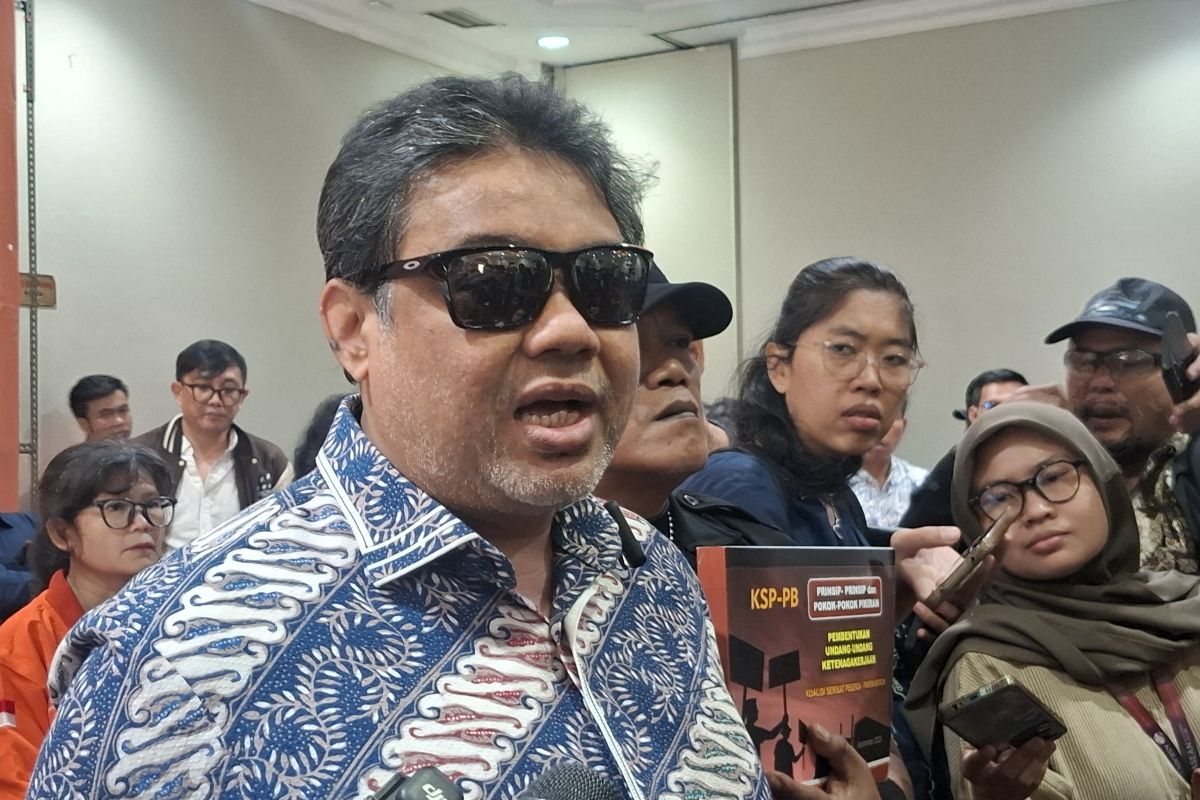
The Labour Party and Workers’ Coalition (KSP-PB) is urging the government and the House of Representatives (DPR) to immediately accelerate the deliberation of the new Draft Manpower Law (RUU Ketenagakerjaan) so it can be completed before the October 2026 deadline. Labour Party President and Special Adviser to the President on Manpower and Labour Welfare, Said Iqbal, stated that the formation of the new law is mandated by Constitutional Court Decision Number 168/PUU-XXI/2023, which instructs the government and DPR to draft new manpower regulations. “We ask the government and DPR to immediately hold open discussions, conduct public hearings, absorb aspirations, and disseminate drafts related to the Manpower Bill,” Said Iqbal said during a press conference in Jakarta on Monday. He stressed that the Constitutional Court ordered the creation of a new Manpower Law, not a revision, by October 2026 at the latest. The coalition has submitted a draft concept of the Manpower Bill to the DPR and the government as input for the deliberations. The proposal includes expanding the definition of workers to not only cover manufacturing labourers but also workers in other sectors evolving with changes in the world of work and economic digitalisation. “We want to broaden the definition of workers or labourers. So not just manufacturing labourers, but also digital platform workers, media workers, creative workers, campus workers, medical workers, and other sectors,” he said. Said Iqbal added that the coalition hopes the deliberation of the Manpower Bill will be conducted openly, involving all stakeholders, including labour organisations, so the resulting regulation can provide legal certainty while strengthening protection for workers across various sectors. “We are confident that President Prabowo Subianto and the DPR leadership will side with the labour struggle proposals in the formation of this new Manpower Law,” he stated. At the same event, Acting Secretary-General of the Labour Party and KSP-PB representative Said Salahudin explained that the coalition had compiled a concept document of approximately 250 pages, which was submitted to the DPR and the government on 30 September 2025. He detailed that the concept contains 59 issues for improvement to existing provisions and 17 new issues considered not yet regulated in Law Number 13 of 2003 on Manpower or Law Number 6 of 2023 on Job Creation. Proposed improvements include regulations on decent wages, a new method for calculating minimum wages, sectoral wages, outsourcing, contract workers, layoffs, severance pay, occupational safety and health, and restrictions on foreign workers. Meanwhile, the proposed new issues cover protection for digital platform workers, medical and health workers, education personnel, transport workers, domestic workers, ship crews, migrant workers, media workers, and creative industry workers. Chairman of the Confederation of Indonesian Labour Unions (KPBI), Ilhamsyah, said the deliberation of the new Manpower Bill needs to be accelerated because the regulation will serve as the basis for long-term worker protection. He said the new law is expected to provide protection from the moment a worker enters employment, throughout their working life, until they enter retirement. Separately, Deputy Chair of DPR Commission IX, Nihayatul Wafiroh, has stated that the deliberation of the Manpower Bill is targeted for completion before October 2026, in accordance with the mandate of Constitutional Court Decision Number 168/PUU-XXI/2023. She mentioned that Commission IX has scheduled a series of meetings during the sitting period from 12 May to 21 July 2026, involving employers, labour organisations, and academics. President Prabowo Subianto on 1 May 2026 also instructed the Minister of Manpower and the Minister of Law to complete the drafting of the Manpower Bill together with the DPR this year as a follow-up to the Constitutional Court ruling. The ruling requires the government and DPR to form a new manpower law and separate it from Law Number 6 of 2023 on Job Creation. The Constitutional Court also gave a maximum of two years from the ruling’s reading on 31 October 2024 and reminded that the drafting process must involve the active participation of labour unions.