
Labour Bill responds to changes in the digital work ecosystem
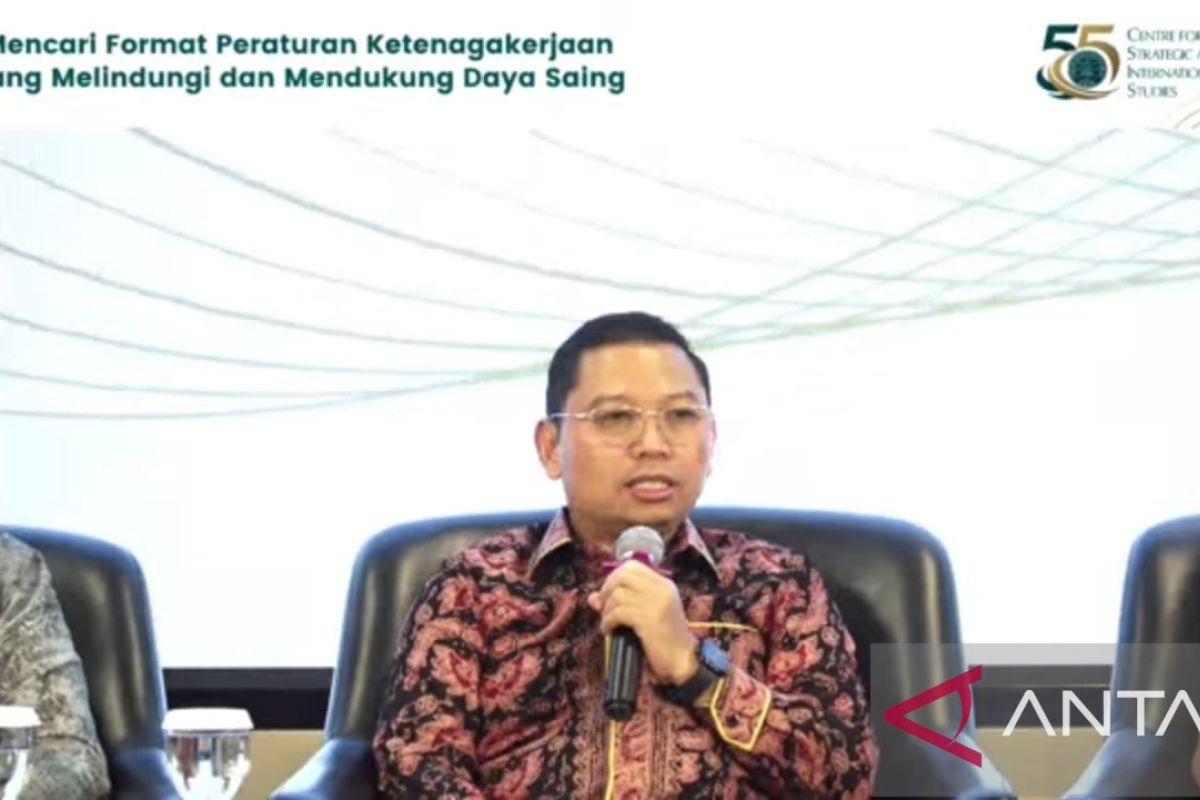
Jakarta (ANTARA) - The Draft Labour Protection Bill responds to changes in the global work ecosystem that are increasingly influenced by technological developments, including the emergence of digital platform workers with flexible job characteristics, stated Zainul Munasichin, a member of the DPR RI Labour Protection Bill Working Committee.
“There are now digital platform workers. This is our response to observing a new work ecosystem with very high flexibility. Technological developments have changed work patterns so that employment relationships are no longer solely based on permanent employment models,” Zainul said during a CSIS discussion held online in Jakarta on Thursday.
Zainul stated that digital platform workers will be included in the Labour Protection Bill, though the regulations remain general and consist of only a few articles. More detailed provisions, he noted, could be regulated through separate legislation.
He continued that the characteristics of new types of work must be considered when formulating labour protection. He cited online motorcycle taxi drivers, who possess a high level of flexibility in determining their work patterns, as an example.
The Chairman of the PKB Faction Group in Commission IX of the DPR RI cited survey results of online motorcycle taxi drivers showing that the majority of respondents would have originally chosen to be employees if given the choice between being an employee and a partner.
According to Zainlag, this condition demonstrates a new work ecosystem that cannot be entirely equated with conventional work patterns.
These changes also necessitate a shift in the approach to labour protection. Zainul said that protection should not merely be directed at maintaining someone in a specific job, but also at ensuring workers are able to adapt when types of work change or disappear due to technological progress.
He gave the example of cashier roles, which may decrease with the use of accounting applications. In such circumstances, workers can choose to enhance their skills to keep pace with changing job requirements.
“What is being protected is the worker, not forcing them to remain an employee,” he said.
The protection scheme in the Bill, according to Zainul, is also linked to support when workers change jobs, including through the Job Loss Guarantee (JKP), training, as well as upskilling and reskilling.
Furthermore, the Bill is directed towards strengthening vocational training. Zainul mentioned that the funding sources for training are still under discussion, including proposals regarding the percentage of funds allocated from the State Budget (APBN).
He added that the update to labour regulations is not only aimed at regulating existing employment relationships but also at preparing protection for workers facing changes in work patterns due to digitalisation and technological development.
The regulation of digital platform workers is also part of an effort to align regulations with increasingly diverse forms of employment, while still considering the flexibility that is a primary characteristic of many platform-based jobs.