
KY Calls for Omnibus Law to Reform Judicial Power Legislation
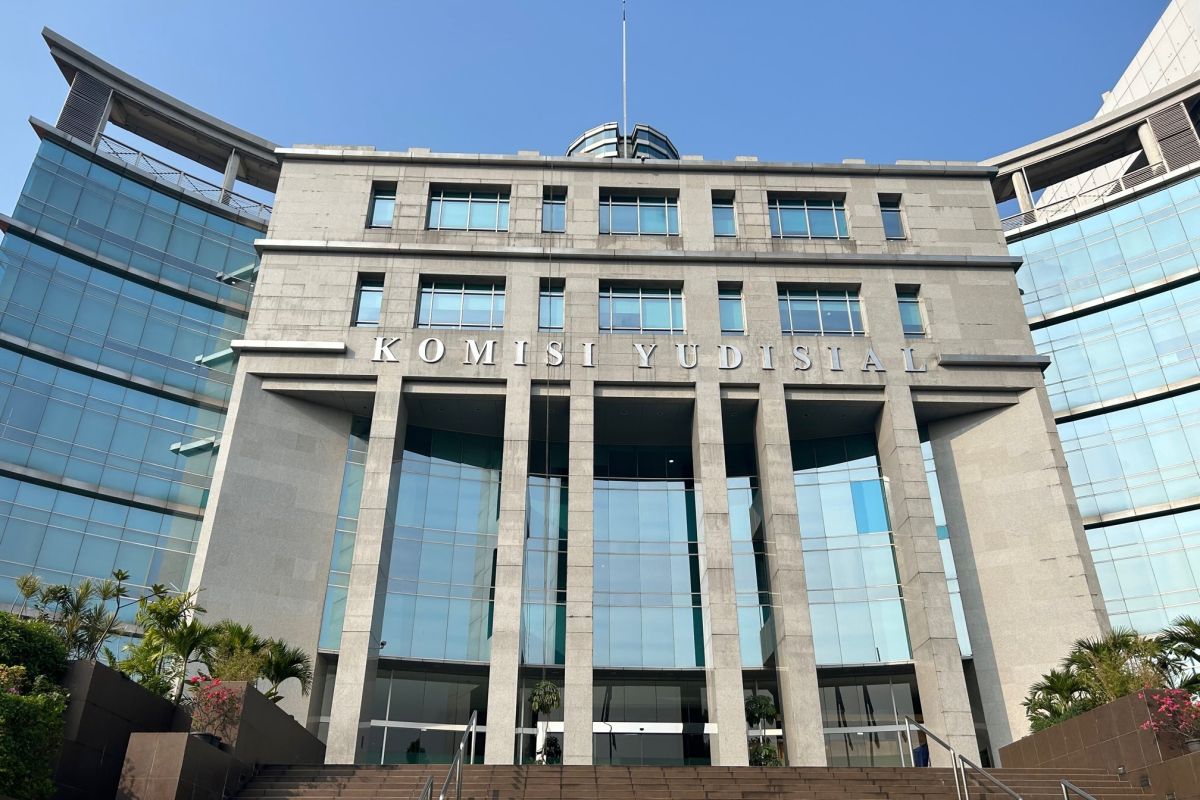
Jakarta (ANTARA) - The Judicial Commission (KY) believes that legislation governing judicial power urgently needs to be reorganised through an omnibus-law approach to strengthen ethical oversight of judges and harmonise Indonesia’s judiciary.
KY member Andi Muhammad Asrun said the move was urgent to resolve the dual system of oversight, in which the Supreme Court Supervisory Body (Bawas MA) conducts internal supervision while KY carries out external oversight over the same subject matter and scope of conduct.
“Many laws in the field of judicial power need to be reorganised through the omnibus-law method so they are brought into alignment, and so KY is positioned as the ethical oversight body,” Asrun said in a statement confirmed in Jakarta on Saturday.
Asrun made the call while speaking at a public discussion entitled “Repositioning KY as a Complement to Judicial Power: Strengthening Authority, Institutions and Judicial Integrity” in Palembang on Thursday (29 October).
He explained that ethical oversight has a strong philosophical basis as a moral guide for law enforcement. Judges who uphold ethical standards are expected to deliver fair and integrity-driven rulings.
He also emphasised the fundamental difference between breaches of the law and ethical violations. Defective rulings can be challenged through successive legal remedies, from appeal and cassation to judicial review, whereas ethical breaches require a separate corrective mechanism run by an independent institution.
“Ethical violations require another institution to carry out the review,” he said.
According to Asrun, breaches of the Code of Ethics and Guidelines for Judicial Conduct (KEPPH) cannot always be uncovered through procedural legal examination alone. A hearing that appears formally compliant with procedure does not necessarily guarantee that a judge has acted fairly and impartially.
“Such matters cannot be proven through procedural law; they must be examined through an ethics process,” he stressed.
Asrun said KY was not intended to seek out judges’ faults or punish them, but to safeguard the honour and integrity of the judiciary through objective and proportionate oversight.
“KY must be balanced and look for positive aspects. If KY and the Supreme Court work together, the result will be positive,” Asrun said.
Source: jawawa.id (https://jawawa.id/newsitem/ky-calls-for-omnibus-law-to-reform-judicial-power-legislation-1793447496)
Originally published by Antara (Indonesian) (https://www.antaranews.com/berita/5823759/ky-dorong-penataan-uu-kekuasaan-kehakiman-lewat-omnibus-law), translated from Indonesian