
KY Apologises to Supreme Court, Clarifies 121 Ethical Violations Occurred Before Judicial Pay Rise
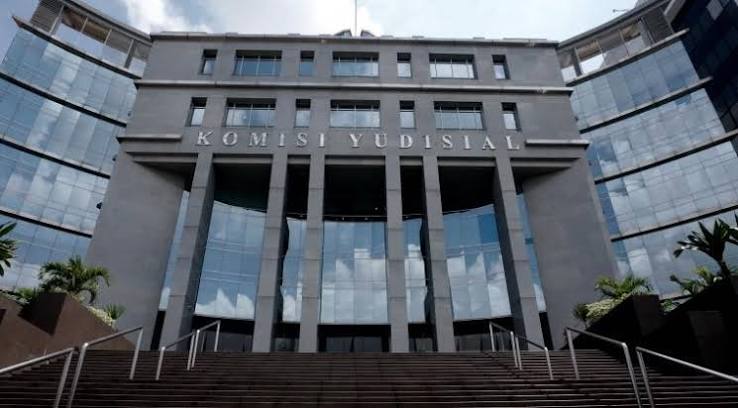
The Chairman of the Judicial Commission (KY), Abdul Chair Ramadhan, has apologised to Chief Justice of the Supreme Court (MA) Sunarto and all judges in Indonesia after a press conference regarding judicial oversight results for the first half of 2026 caused a public misunderstanding. KY emphasised that the published data on ethical violations did not indicate an increase in violations following the judges’ pay rise, but rather represented the handling of cases that occurred before the policy took effect. “As Chairman of the KY, I apologise to him (the Chief Justice) and to all judges in Indonesia for this issue. I hope it will not happen again,” Abdul said during the opening of the open interview selection for Supreme Court candidates in Jakarta on Monday.
Abdul stated the need to correct the narrative that developed after the press conference on Thursday, 30 July, regarding the judicial oversight report for the first half of 2026. He said the emerging narrative had caused a misunderstanding and needed to be corrected. “I need to clarify to my media colleagues and the public, especially to all judges in Indonesia under the auspices of the Supreme Court, that there was a misunderstanding regarding the press conference held on Thursday, 30 July 2026, and therefore it needs to be corrected,” he said. He stressed that this clarification is important to prevent friction that could hinder collaboration between the Supreme Court and the Judicial Commission in building a judicial system based on the principle of judicial independence.
“Therefore, it must be clarified that the number of violations of the Code of Ethics and Judicial Conduct (KEPPH) was not intended to indicate an increase in ethical violations by judges in the first semester of January to June 2026,” Abdul said. According to him, the figures reflect an increase in the KY’s oversight performance during the first half of 2026. The reports processed and resulting in sanction recommendations stemmed from alleged violations that occurred before the government raised judges’ salaries and allowances. “That performance is nothing other than an increase in performance in the first semester, where it occurred before the increase in salaries and allowances for judges,” he said.
Abdul also revealed that he had communicated directly with Chief Justice Sunarto to convey his apology for the misunderstanding. “Yesterday I spoke directly to His Excellency Professor Sunarto regarding the misunderstanding and the erroneous narrative that was conveyed during the press conference,” he said. Previously, KY member for Judicial Oversight and Investigation, Abhan Misbah, had confirmed that the 121 judges recommended for ethical sanctions in the first half of 2026 committed violations before the 280 percent judicial salary increase policy was implemented. “The majority of these KEPPH violations occurred long before the increase in salaries, allowances, and financial facilities for judges,” Abhan said in a statement on Friday, 31 July.
Abhan explained that the recommendation for sanctions against 121 judges was the result of examinations decided through KY plenary sessions from January to June 2026. The majority of the decided cases originated from public reports received before 2026. During the first half of 2026, KY received 1,402 public reports, consisting of 740 alleged violations of the Code of Ethics and Judicial Conduct (KEPPH) and 662 external confirmations. Of these, 676 reports, or 87.37 percent, were declared eligible for processing, while the remainder are still under verification. In the period from January to June 2026, the KY held plenary sessions on 207 reports. As a result, 73 reports were proven, leading to the proposal of sanctions against 121 judges.