
Kuwait reopens airport operations after suspected Iranian attack
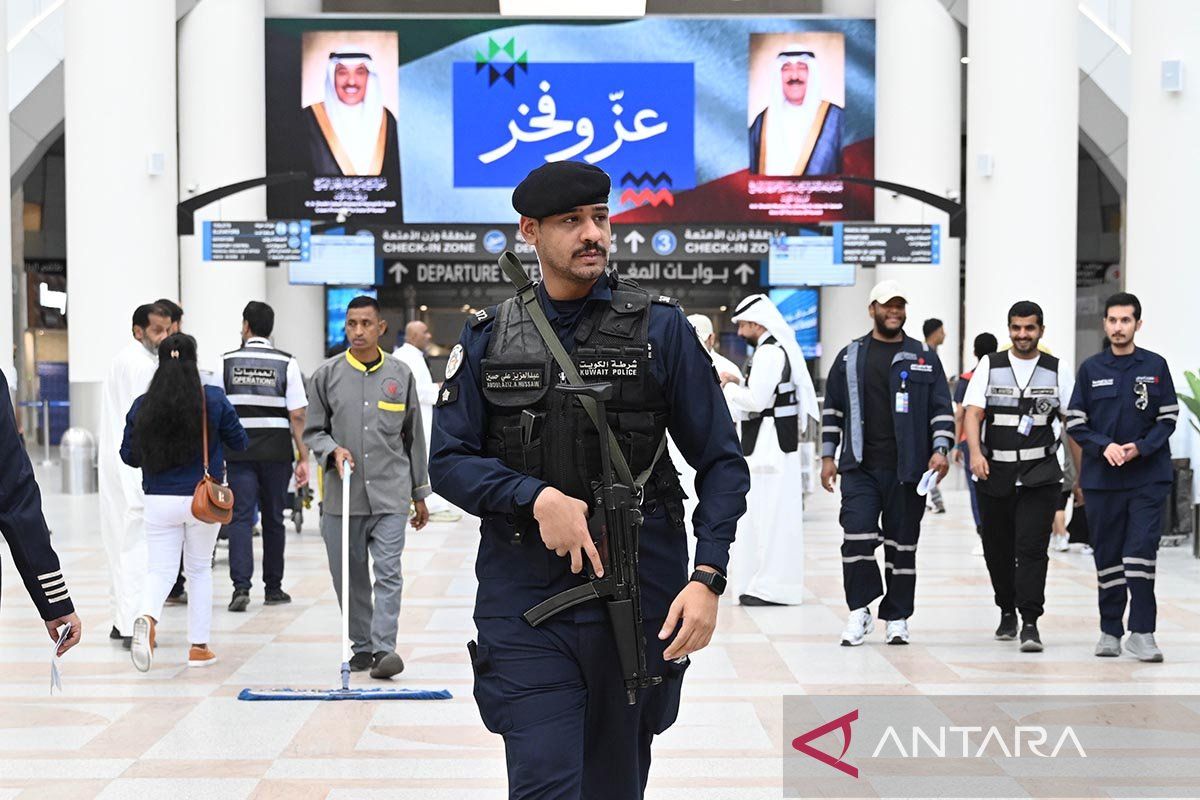
Kuwait City (ANTARA) - The Directorate General of Civil Aviation (DGCA) of Kuwait announced on Wednesday (3/6) the reopening of all Kuwait Airways flights through Terminal 4 at Kuwait International Airport, following an alleged Iranian attack that left one person dead and 63 others injured.
In a statement posted on the social media platform X, the DGCA conveyed that the decision was made following field inspections and extensive technical evaluations conducted by a special team and relevant authorities. These measures were intended to verify the terminal’s operational readiness and its ability to serve flights and passengers safely.
Earlier on Wednesday (3/6), the Kuwaiti Ministry of Foreign Affairs revealed that one person had died and several others were injured after ballistic missiles and drones struck civilian and vital facilities across the country, including Kuwait International Airport, in an attack that Kuwait linked to Iran.
In a statement, the ministry strongly condemned what it described as ongoing Iranian attacks targeting key civilian infrastructure.
Later that same day, Kuwaiti health authorities reported that 6_3 people were injured in the attack, triggering the activation of emergency response plans and the mobilisation of medical teams throughout the Gulf nation.
Kuwaiti Ministry of Health spokesperson Abdullah Al-Sanad stated in a press release that the ministry had been on full alert since the early hours of the attack and had implemented emergency measures to treat the victims.
Al-Sanad noted that hospitals had received 63 casualties and performed seven large-scale emergency surgeries following the incident.
The injured included civilians, airport employees, and travellers, he explained, adding that the victims suffered a variety of injuries, including fractures, head injuries, brain haemorrhages, amputations, blast injuries, and cases of smoke inhalation.